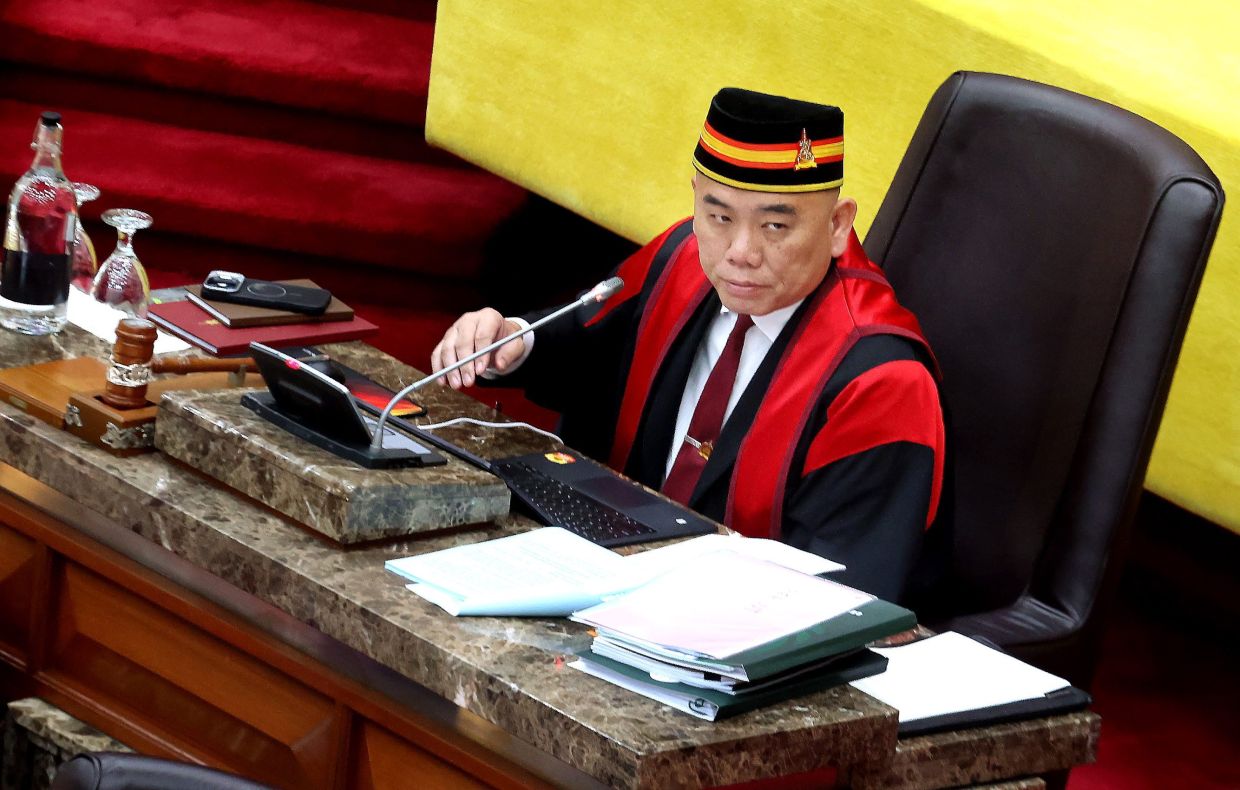
An investigation has begun into a Selangor state assemblyman allegedly facing bankruptcy proceedings, the state assembly's presiding officer disclosed on Monday. Speaker Lau Weng San stopped short of revealing the legislator's identity or offering a timeline for the completion of inquiries, choosing instead to await the outcome of a comprehensive examination before making public statements on the matter.
The Speaker's measured approach reflects the sensitivity of the situation and the procedural complexities that accompany such investigations. Lau emphasised that the probe would encompass input from multiple stakeholders and would examine all dimensions of the allegations, rather than relying on preliminary findings or incomplete information. His decision to withhold the assemblyman's name underscores the principle of procedural fairness that should apply even to public figures facing scrutiny.
A critical question surrounding the case concerns the constitutional and electoral implications should the allegations prove substantiated. Lau clarified that responsibility for determining whether a by-election becomes necessary rests exclusively with the Election Commission rather than with the state assembly leadership. This delineation of authority ensures that decisions about replacing a legislator follow established electoral protocols rather than being determined through ad hoc political judgment, preserving the integrity of the state's democratic processes.
The investigation's scope extends beyond the simple question of whether an individual was declared insolvent. Rather, authorities are examining contextual factors, involvement of various constituencies, and connections to other relevant parties or circumstances that may illuminate the full picture. This comprehensive approach, while potentially time-consuming, reduces the risk of drawing premature conclusions based on incomplete evidence.
When asked whether the absent legislator from Monday's assembly sitting might be the individual under investigation, Lau cautioned against such assumptions. He noted that lawmakers frequently miss proceedings for legitimate reasons ranging from medical emergencies to planned leave arrangements. Distinguishing between ordinary absences and those that might signal deeper problems requires careful investigation rather than speculation based on attendance patterns alone.
The Selangor State Constitution establishes clear parameters for when a seat becomes vacant due to non-attendance, creating objective standards rather than leaving such decisions to subjective judgment. Under the constitutional framework, a legislator's position may only be formally declared vacant when the member fails to appear at assembly sessions for six consecutive months without providing proper notice to the Speaker. This threshold provides breathing room for genuine hardship cases while still holding representatives accountable for their duties.
Lau referenced the precedent established by the Batang Kali constituency, where former assemblyman Harumaini Omar's seat was declared vacant in February 2023 following an extended absence that exceeded six months without authorisation. That case illustrates how the constitutional mechanism operates in practice, establishing clear procedures and timelines that guide such decisions. The six-month window represents a balance between protecting members facing temporary difficulties and ensuring that vacant seats are eventually addressed to maintain legislative representation.
The timing of the current investigation comes at a moment when Selangor's political landscape continues to evolve following the 2022 state elections. The state assembly comprises 56 members representing diverse constituencies across one of Malaysia's most populous and economically significant regions. Any vacancy triggered by bankruptcy or disqualification would carry implications extending beyond the individual affected, potentially influencing legislative dynamics and coalition configurations in the state house.
Bankruptcy cases involving public office holders raise broader questions about governance standards and the expectations society places on legislators. While bankruptcy itself need not automatically disqualify someone from public service, the circumstances surrounding insolvency and any associated misconduct require careful evaluation. Malaysian electoral law already contains provisions addressing fitness to hold office, and bankruptcy statutes intersect with these considerations in complex ways that demand thorough investigation.
The Speaker's insistence on concluding the investigation before commenting further demonstrates appropriate restraint in the face of allegations that could damage reputations or mislead public understanding if addressed prematurely. In an era when preliminary reports and incomplete information can rapidly spread through social media and news outlets, official bodies have a responsibility to verify facts thoroughly before confirming details to the public. Lau's approach respects this principle while acknowledging the public interest in transparency.
For Malaysian readers and the broader Southeast Asian context, this situation underscores how state-level governance mechanisms function independently from federal oversight while remaining subject to constitutional constraints. Selangor, as a sophisticated state administration, maintains institutional procedures designed to address such contingencies professionally. The outcome will likely influence how similar cases are handled across other Malaysian states and may prompt discussions about standardising approaches to legislator misconduct and disqualification across the federation.

