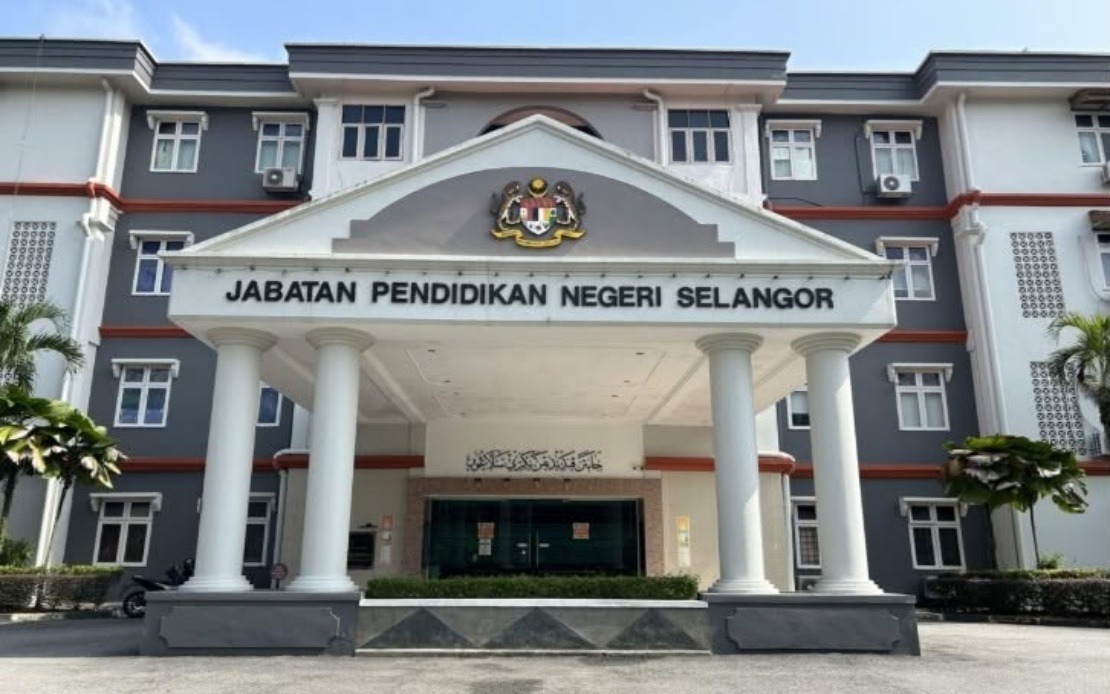
The Selangor State Education Department has committed itself to a full investigation into an alleged bullying incident involving secondary school students in Rawang that recently captured public attention after circulating widely on social media platforms. In a formal statement released on July 12, the department emphasised that it would neither shield any individual implicated in the matter nor hesitate to enforce penalties against those found accountable, in accordance with established protocols and disciplinary frameworks.
The incident gained traction online after video footage emerged showing what authorities have characterised as misconduct among students. The Selangor JPN, in its response, acknowledged the sensitive nature of the situation and indicated that the matter has already been referred to police for formal investigation. The department's public stance reflects growing pressure on education officials to respond swiftly to student safety concerns, particularly when incidents achieve viral prominence that can damage institutional reputation and parental confidence.
Malaysia's education sector has faced increased scrutiny in recent years regarding student welfare and the adequacy of anti-bullying measures within schools. The Rawang incident exemplifies a broader pattern whereby social media accelerates the visibility of school-related misconduct, transforming what might have remained localised issues into matters demanding immediate high-level attention. For parents throughout Selangor and beyond, such incidents underscore the importance of institutional accountability and transparent handling of student discipline matters.
The Selangor JPN's explicit statement that "no individual involved would be protected" carries significance in a context where concerns persist about inconsistent enforcement and potential preferential treatment based on family connections or social status. By publicly declaring a zero-tolerance approach, the department appears conscious of the reputational stakes involved and the necessity of demonstrating impartial action. This messaging also serves to reassure the broader school community that bullying allegations will be treated with appropriate gravity rather than minimised or overlooked.
The department further urged the public to allow the investigation process to proceed without interference, a standard appeal that reflects the tension between transparent public accountability and the need for authorities to conduct inquiries without external pressure that might compromise investigative integrity. In Malaysia's digital age, however, such calls for restraint often compete with the rapid spread of information and commentary across social platforms, where alternative narratives and incomplete accounts can proliferate unchecked.
Bullying remains a persistent challenge within Malaysian schools, with previous studies and anecdotal reports suggesting that incidents frequently go unreported or are handled informally through school-based interventions rather than formal disciplinary procedures. The escalation of the Rawang case to police involvement indicates either the severity of the incident or the determination of those affected to pursue justice through official channels rather than relying solely on school-level mechanisms. This escalation pattern has become increasingly common as parents and students recognise the limitations of internal school discipline systems.
For Selangor specifically, which encompasses significant urban and suburban populations across cities like Shah Alam, Rawang, and the Petaling Jaya region, educational standards and school safety form key election issues and parental concerns. The state's education department operates under pressure to maintain discipline while simultaneously promoting inclusive learning environments. Incidents like this test the department's capacity to balance these competing imperatives while maintaining public confidence.
The police investigation running parallel to the department's review introduces a procedural complexity, as outcomes of criminal investigations may differ from administrative disciplinary findings. This dual-track approach, while ensuring multiple levels of accountability, can also create uncertainty for affected families and the school community regarding timelines and the eventual consequences for those involved. Coordination between education authorities and law enforcement becomes crucial in such circumstances to ensure coherent messaging and sequential handling.
The broader implications extend beyond the immediate school and Selangor state level. How authorities handle this case will likely influence how similar incidents surface and are reported in other states, potentially setting precedent regarding expectations for official responsiveness. Educational institutions across Malaysia will be monitoring the transparency and fairness demonstrated in this investigation, recognising that their own capacity to address misconduct depends partly on public perception of how similar institutions handle comparable situations.
The emphasis on student safety and well-being in the Selangor JPN's statement reflects evolving international standards regarding child protection in educational settings. Malaysia's commitment to such principles, whether through policy or enforcement, increasingly determines its standing relative to regional peers and influences how international school accreditation bodies and expatriate communities assess the safety of Malaysian educational institutions. The Rawang case thus carries implications extending beyond immediate local disciplinary concerns to touch on Malaysia's broader developmental and institutional standards.

