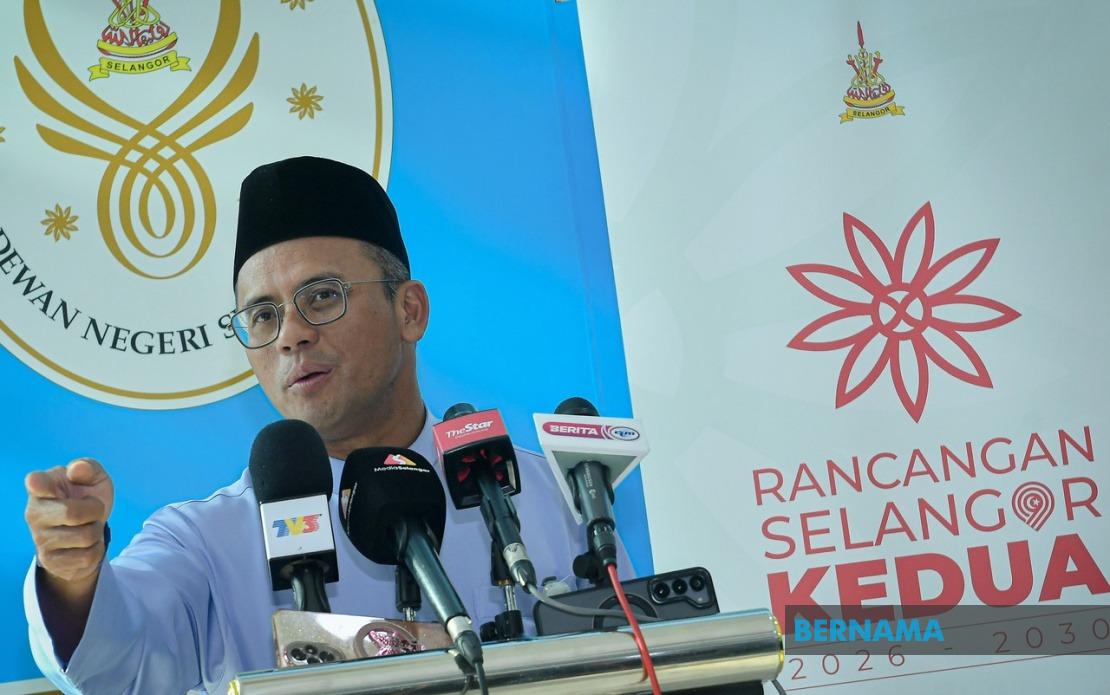
The Selangor state government has set an ambitious target of constructing 200,000 affordable residential units as part of its broader housing affordability strategy, according to Menteri Besar Datuk Seri Amirudin Shari. The initiative, which he outlined during the State Legislative Assembly sitting this month, represents a significant commitment to addressing the persistent shortage of reasonably priced homes that has constrained homeownership opportunities across Malaysia's most developed state.
Progress toward this substantial goal is already substantial. To date, the state has completed 64,188 units while maintaining another 69,014 units in active construction phases, combining to reach 133,202 units overall. This trajectory indicates that roughly two-thirds of the envisioned housing stock is either available or nearing completion, suggesting the state government believes it can bridge the gap to its full target within a reasonable timeframe. The sheer scale of this undertaking underscores how acute the affordable housing challenge has become in Selangor, where rapid urbanization and rising property values have outpaced wage growth, making conventional home purchases increasingly unaffordable for median-income households.
Beyond simple construction, the Selangor government has embedded innovative financing mechanisms into the RS-2 framework that transform housing accessibility for lower-income residents. Under the rental-to-ownership component, tenants who lease units through the scheme will have thirty percent of their monthly rental payments automatically accumulated and held by the Selangor Housing and Property Board (LPHS). When these residents accumulate sufficient funds and demonstrate financial readiness, they can withdraw these accumulated savings to serve as a down payment toward purchasing their own home. This approach elegantly converts what would otherwise be monthly expenses into genuine wealth-building opportunities, directly addressing the barrier that prevents many Malaysians from moving beyond renting into homeownership.
The state government recognizes that successful housing delivery requires more than simply constructing units; it demands robust supporting infrastructure and community planning. Menteri Besar Amirudin has committed to expanding public transport frequency specifically to enhance resident access to rapid transit systems, including LRT and MRT networks. This connectivity emphasis reflects growing understanding that affordable housing serves limited value if residents cannot reliably reach employment centers and commercial districts. The planned expansion of covered walkways at every station responds to Malaysia's challenging tropical climate, making pedestrian access both safer and more comfortable during intense afternoon rainfalls and midday heat.
Integrating bus services directly into residential developments represents another practical dimension of this comprehensive approach. Every Rumah Selangorku Harapan and Rumah Selangorku Idaman development, the two primary affordable housing schemes under RS-2, will now incorporate dedicated bus stops. This requirement ensures that residents, particularly those without personal vehicles, enjoy genuine mobility options from their residential locations. For a state managing rapid sprawl across increasingly distant suburbs, such connectivity becomes essential to preventing affordable housing from becoming isolated and inaccessible.
Data-driven decision-making will underpin this transport and urban planning integration. The Selangor government intends to establish a new statistical unit capable of deploying technology to identify traffic concentration zones, public gathering points, and residential areas requiring additional transit infrastructure. This analytical framework will enable policymakers to target small bus stop placement strategically rather than deploying resources haphazardly. Such precision planning reflects international best practices in urban development, where technology helps align housing location decisions with actual transportation demand patterns.
The state government has additionally developed a dedicated household assistance monitoring index designed to evaluate program effectiveness comprehensively. This evaluation framework will assess how well various state support initiatives actually improve recipients' economic circumstances and household stability. Rather than assuming programs work as intended, the Selangor administration has committed to systematic assessments conducted at twelve and twenty-four month intervals, allowing rapid identification and correction of underperforming initiatives. This commitment to accountability represents a departure from traditional Malaysian governance approaches that sometimes lacked rigorous outcome measurement.
These initiatives arrive at a critical moment for Malaysian housing policy. Despite rapid economic development, homeownership has become increasingly concentrated among wealthy demographics, with first-time buyers and younger households particularly squeezed. Selangor, as Malaysia's economic engine and population center, experiences this pressure most acutely. The state's comprehensive approach—combining construction scale with innovative financing, transit connectivity, and data-driven planning—offers a potential model for other states grappling with similar affordability challenges.
The RS-2 initiative also carries broader implications for regional economic development. When working-class Malaysians can afford stable housing, they gain foundation for other investments in education, health, and economic participation. Reduced housing cost burdens typically correlate with improved educational outcomes for children and enhanced workforce productivity. By targeting 200,000 units, Selangor is essentially investing in its human capital development alongside physical infrastructure expansion.
However, sustaining this momentum presents ongoing challenges. Construction cost inflation, labor availability, and land acquisition constraints all threaten housing delivery timelines. The rental-to-purchase model, while innovative, requires careful financial structuring to ensure program sustainability without creating unsustainable obligations on the LPHS. Additionally, ensuring these developments genuinely integrate with surrounding urban systems rather than creating isolated enclaves demands continuous coordination between housing, transport, and planning authorities.
The Selangor government's articulation of these interconnected policies—housing construction at scale, innovative financing mechanisms, public transport enhancement, and rigorous outcome measurement—demonstrates sophisticated understanding of what comprehensive housing solutions require. Whether execution matches ambition will determine whether this initiative substantially alleviates Malaysia's affordable housing crisis or becomes another well-intentioned program constrained by implementation realities. The next several years will prove instructive for Malaysian housing policy more broadly.

