Selangor's government has earmarked RM3.5 million for a research funding initiative designed to propel the state's medium-term economic and social development agenda forward. The allocation, approved through the Standing Committee on Education and Human Capital, represents a significant investment in knowledge creation and evidence-based policymaking as the state embarks on its Second Selangor Plan (RS-2) period spanning 2026 to 2030.
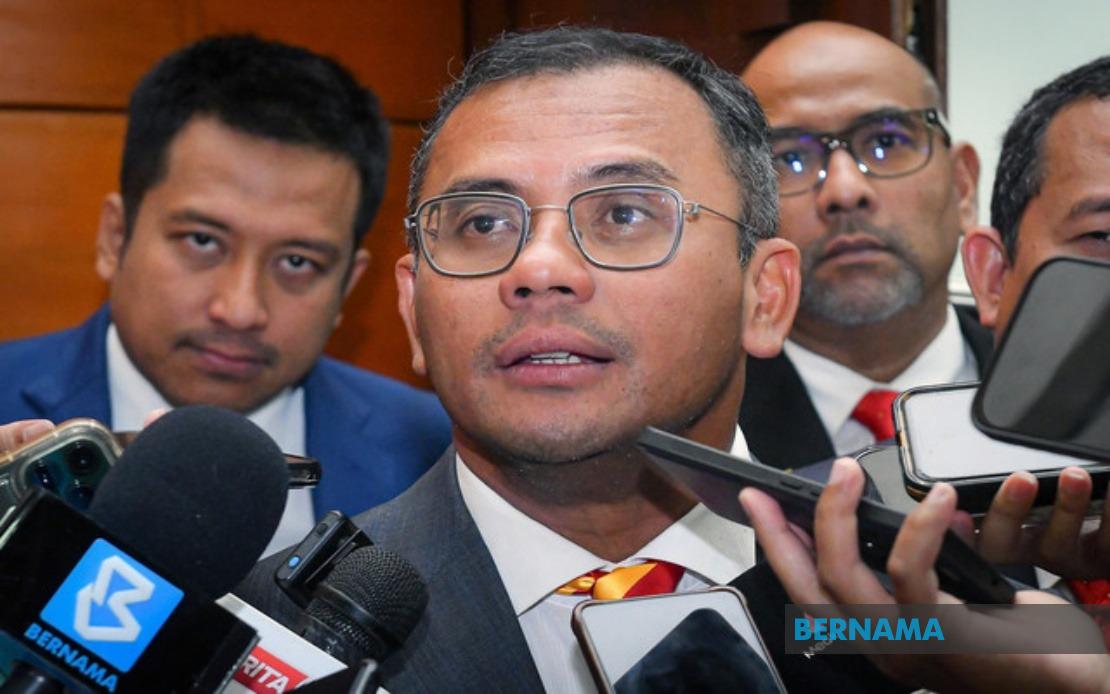
Menteri Besar Datuk Seri Amirudin Shari unveiled the scheme at a grant handover ceremony at Bangunan Sultan Salahuddin Abdul Aziz Shah, describing the Selangor Development Grant (SELidik) 2026 as an evolution of the previous Selangor Research Grant (GPNS) 2024. Unlike its predecessor, SELidik operates under a more expansive framework that explicitly anchors research activities to the state's strategic priorities rather than funding studies in isolation. This structural shift reflects growing recognition among Malaysian policymakers that research must serve tangible development objectives to justify public investment.
The initial phase of the programme concentrates resources on Selangor's two state-owned universities, Universiti Islam Selangor (UIS) and Universiti Selangor (UNISEL), with RM2.5 million allocated to these institutions. During this foundational stage, both universities have been tasked with producing concrete research outputs ranging from educational modules and software applications to working prototypes that can demonstrate practical utility. This focus on deliverables rather than academic publication alone signals a shift towards applied research that bridges the traditional gap between theoretical inquiry and real-world implementation. The remaining RM1 million will support research activities across other institutions throughout Selangor, expanding the programme's reach beyond state-owned universities.
Selangor's RS-2 framework, which was formally announced on August 7, establishes six broad missions intended to guide state development through 2030. These missions encompass economic leadership, balanced territorial development, social welfare provisions, workforce quality, environmental sustainability, and governance effectiveness. Collectively, they target an economic value of RM600 billion over the five-year period. By tethering the SELidik research grants to these six missions across 25 specific policy areas, the state government aims to ensure that publicly funded research directly informs and supports the implementation of its development programmes.
The programme structure requires all research applications to demonstrate a clear link between their proposed study and one of the RS-2 missions, alongside alignment with relevant government departments. This requirement represents a deliberate strategy to integrate research into the policymaking pipeline. Rather than allowing research findings to languish in university libraries or academic journals, Amirudin outlined plans to channel results through the state's standing committees, ensuring that department heads and policy officials receive findings in formats suited to their decision-making needs. Previous projects covering agriculture, innovation, and related fields will similarly be connected to departmental policy development and subsequent government programmes.
The involvement of Yayasan Selangor in managing the initiative indicates an institutional commitment to sustaining the programme beyond the current allocation. By placing stewardship with a dedicated foundation rather than a single government department, Selangor attempts to create structural continuity and reduce vulnerability to budgetary fluctuations or administrative reshuffles. The foundation structure also facilitates potential expansion and diversification of funding sources, creating space for private sector collaboration or international partnerships.
Amirudin indicated that future phases will broaden participation beyond state universities to include other public research institutions across Malaysia, signalling Selangor's ambition to establish itself as a research and innovation hub at the national level. This expansionist vision extends to potential collaboration with international universities, contingent upon budget availability. Such an approach mirrors successful research and development ecosystems globally, where domestic institutions build capacity through international partnerships and knowledge exchange. For Southeast Asia, where research collaboration remains uneven across the region, Selangor's openness to international engagement could catalyse broader networks that enhance innovation capacity across national borders.
The economic rationale underpinning SELidik rests on the assumption that research investment generates returns through multiple channels: direct economic activity, elevated academic credentials that attract talent and investment, and enhanced human capital development. This return-on-investment framework positions research not as an academic luxury but as essential infrastructure for competitive advantage. States competing for foreign direct investment and global talent increasingly recognise that research ecosystems signal economic dynamism and provide tangible benefits beyond publications. Selangor's framing of SELidik within this economic logic reflects understanding among Malaysian policymakers that knowledge economy transitions require institutional commitment extending beyond symbolic gestures.
The timing of SELidik's implementation coincides with Malaysia's broader aspirations to elevate research and development spending and develop domestic innovation capacity. Currently, Malaysia's R&D expenditure lags peer nations in the region, constraining capacity to move up value chains and develop locally-driven solutions to policy challenges. State-level initiatives like Selangor's programme contribute incrementally to this national objective while addressing priorities specific to the state's development stage. By concentrating resources on universities and policy-relevant research, Selangor establishes a model that other states facing similar development challenges might adapt.
Implementation challenges will likely centre on ensuring research quality while maintaining policy relevance, a tension that has plagued other government research funding schemes globally. Universities and researchers historically prioritise methodological rigour and theoretical contribution, while policymakers demand timely, actionable findings addressing immediate challenges. The SELidik framework must navigate this tension by setting clear expectations at the outset, providing researchers with adequate time and resources for quality work, and ensuring policy officials understand research's inherent limitations and timescales. Transparency about this relationship will determine whether the programme produces genuine synergies or disappoints both academic and policy communities.
For Malaysian researchers, particularly those in Selangor-based institutions, SELidik represents a significant funding opportunity during a period when competitive research grants remain limited. The requirement for policy alignment may constrain certain research directions but could also channel academic talent toward problems of genuine national importance. Success or failure of this initiative will influence how other state governments approach research funding, potentially reshaping the landscape for university-based researchers across Malaysia over the coming years.

