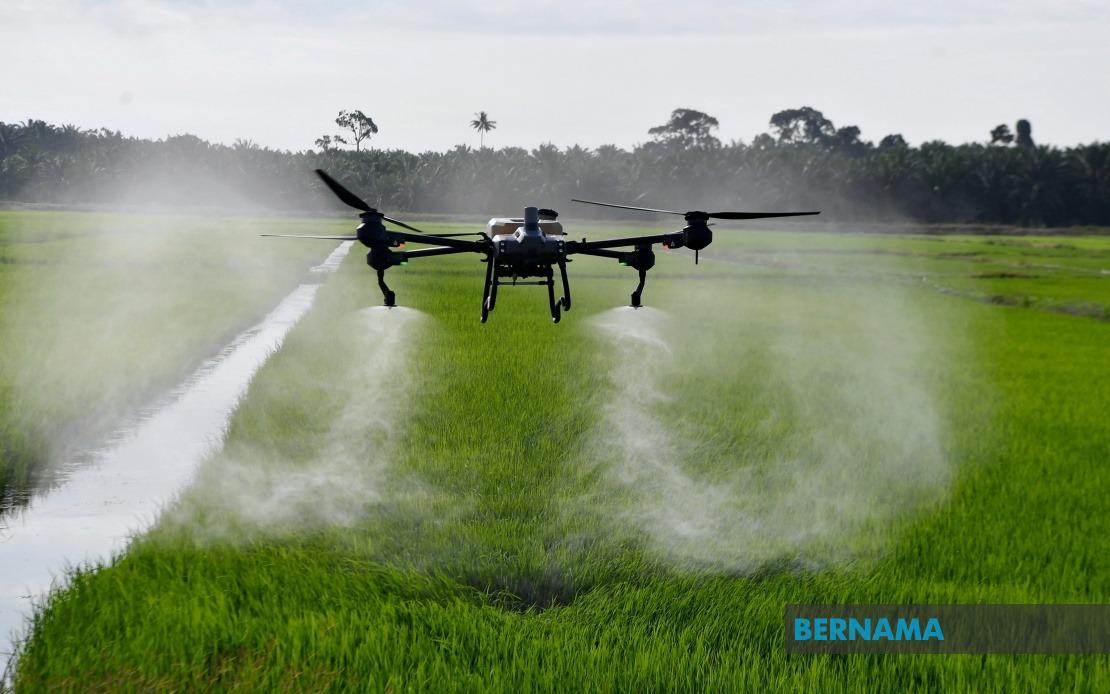
The Selangor state government is making a significant push into aerospace innovation by committing RM500,000 towards developing a comprehensive drone technology ecosystem that spans hardware manufacturing, software engineering, and artificial intelligence applications. The allocation, unveiled during the pre-launch ceremony of Droneport-1000 at Universiti Selangor, represents an increase from previous funding rounds and reflects the state's determination to position itself as a regional leader in this rapidly evolving sector. According to Dr Mohammad Fahmi Ngah, chairman of the State Islamic Affairs and Innovation Culture Committee, this investment prioritises completing essential infrastructure upgrades at existing facilities while simultaneously building strategic partnerships with private sector organisations.
The centrepiece of this initiative is the Droneport-1000 project, an ambitious airspace corridor that encompasses 24 square kilometres of designated testing and operational space across Selangor. This designated airspace spans altitudes of up to 1,000 metres and currently ranks as Malaysia's largest designated airspace zone for drone operations. The facility is in the final stages of securing full certification from the Civil Aviation Authority of Malaysia (CAAM), a regulatory milestone that will unlock commercial operations and attract international drone manufacturers, service providers, and technology companies seeking testing grounds in Southeast Asia. For context, the monitored area available through this initiative is approximately ten times larger than Singapore's comparable airspace, offering significant operational advantages for companies developing autonomous systems and aerial surveillance technologies.
Dr Mohammad Fahmi emphasised that the state is preparing an incentive framework designed to entice both domestic and foreign industry participants. Matching grant programmes are under consideration, along with other financial instruments aimed at reducing entry barriers for companies seeking to establish operations within Selangor's drone ecosystem. This approach recognises that attracting investment requires not merely infrastructure but also competitive financial incentives that can sway location decisions for businesses evaluating multiple jurisdictions across Southeast Asia and the Asia-Pacific region. The strategy acknowledges that drone technology development clusters require critical mass and coordinated investment to generate the network effects necessary for rapid innovation and talent attraction.
Beyond the hardware dimension, Selangor's vision encompasses the entire value chain of drone-related industries. The sector encompasses software development capabilities, artificial intelligence and machine learning applications, and semiconductor chip manufacturing currently being developed in Puchong. This vertically integrated approach distinguishes Selangor's strategy from narrower initiatives focused solely on airframe assembly or remote operations. By developing complementary technologies in tandem, the state is positioning itself to capture greater economic value and create resilient supply chains less vulnerable to disruptions originating from single points of failure.
The project is being spearheaded through a collaborative structure involving Selangor Aviation & Technology Innovation (SELATI), the state government subsidiary Geospatial SmartSel (SELGEM), and partnerships with established technology firms including Aerodyne. This multi-stakeholder approach brings together public sector coordination, academic research capacity through Universiti Selangor, and commercial expertise from industry operators. According to Zannifa Azura Ahmad, SELATI's chief executive officer, the objective is deliberately designed to bridge the persistent gap between academic research output and commercial market demands. Universities often produce innovative research with limited pathways to commercialisation, whilst industry operates within time and budget constraints that limit fundamental innovation. Droneport-1000 aims to function as the connective tissue between these worlds, facilitating technology transfer and enabling young researchers to transition innovations into marketable products.
For Malaysian policymakers and regional observers, Selangor's drone investment carries implications extending well beyond aviation technology. The state government is explicitly framing drone development as a tool for environmental monitoring and natural resource management. Forest reserve encroachment, coastal erosion, and embankment breaches represent persistent challenges across Southeast Asia where traditional monitoring relies on labour-intensive manual surveillance. Autonomous aerial platforms equipped with multispectral sensors and AI-powered image analysis can detect environmental violations more rapidly and comprehensively than conventional approaches. This application demonstrates how high-technology sectors can address concrete governance and environmental challenges facing developing economies.
The ambitions articulated by state officials suggest that Droneport-1000 extends beyond serving purely as a testing ground for commercial operators. The facility is envisioned as a comprehensive innovation hub bridging academic research, government applications, and commercial development. This model potentially offers lessons for other Malaysian states and ASEAN neighbours seeking to develop high-technology sectors without requiring massive capital outlays for traditional manufacturing infrastructure. Drone technology clusters require relatively modest land area compared to automotive or semiconductor facilities, yet can generate substantial high-value employment and intellectual property.
The 2027 timeline mentioned by state officials provides a planning horizon that aligns with broader Malaysian technology development roadmaps and international drone market growth projections. Global drone markets are expanding at double-digit annual rates across industrial applications including agriculture, infrastructure inspection, logistics, and public safety. By establishing regional capabilities and certifications now, Selangor positions itself to capture market opportunities as demand accelerates throughout Southeast Asia. Companies operating in the region often seek to establish testing and certification facilities within target markets rather than relying exclusively on overseas validation.
The involvement of the Malaysian Communications and Multimedia Commission (MCMC) and CAAM in supporting this initiative indicates that the project enjoys backing across multiple regulatory agencies. This multi-agency coordination is essential for resolving the complex technical, legal, and safety issues inherent in integrating drone operations within existing airspace management systems. Beyond Malaysia, regional countries including Singapore, Thailand, and Indonesia are developing parallel drone initiatives. Selangor's strategy positions the state as a competitive alternative to established centres, particularly for companies seeking to establish operations in a jurisdiction with established intellectual property protections, English-language business environments, and existing engineering talent pools.
The emphasis on attracting international participation reflects realistic assessment that early-stage drone technology clusters require external expertise and capital. No single state possesses all necessary capabilities, and knowledge transfer from established international leaders accelerates local capability development. By creating conditions attractive to multinational technology companies, Selangor is not merely importing jobs but also facilitating the flow of technical knowledge and management practices that strengthen local supply chains and academic institutions. Over time, this external knowledge becomes embedded in local institutions and spin-off ventures.
For Malaysian businesses and investors, the Selangor initiative opens clear opportunities for participation at multiple value chain points. Component suppliers, software developers, training providers, and systems integrators all represent potential roles. The explicit welcoming of private sector participation and emphasis on public-private collaboration signals that this will not become a purely government-controlled operation but rather a collaborative ecosystem where private initiative can flourish within a supportive regulatory framework. This balance between public coordination and private dynamism has proven effective in technology clusters globally.
The broader significance of this RM500,000 allocation extends beyond Selangor's borders and touches on Malaysia's positioning within the global technology economy. Autonomous systems, artificial intelligence, and sensor technologies represent growth sectors where Malaysia can develop comparative advantages in serving Southeast Asian markets. Rather than competing head-to-head with mature technology economies, Selangor's strategy wisely emphasises regional leadership and application to local challenges. This approach acknowledges resource constraints whilst leveraging geographic advantages, existing talent, and proximate market demand to build sustainable competitive advantages in emerging technology sectors that will drive economic growth through the coming decade.

