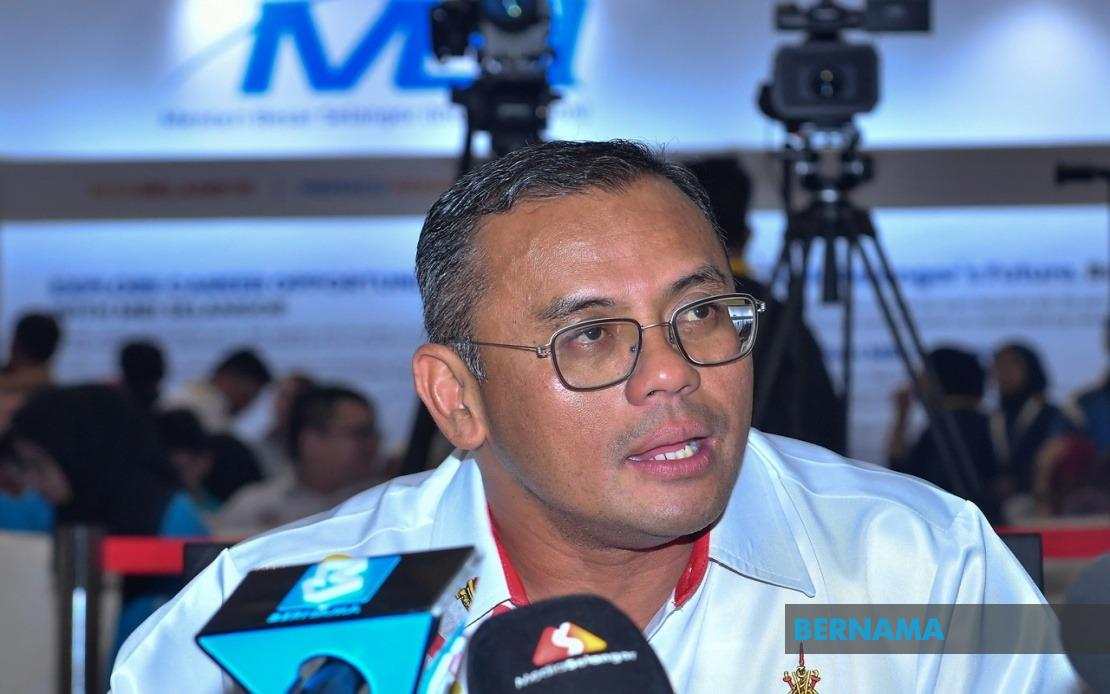
The Selangor state government is mobilising its resources to cushion the impact of a significant industrial shutdown affecting hundreds of workers in the state's crucial manufacturing sector. Menteri Besar Datuk Seri Amirudin Shari announced that officials will engage with employees expected to lose their positions following Panasonic AVC Networks Kuala Lumpur Malaysia Sdn Bhd's decision to cease television production operations, with detailed discussions scheduled for the coming week. The proactive stance reflects growing attention among state authorities to the downstream consequences of factory restructuring and workforce displacement in Malaysia's competitive manufacturing landscape.
The shutdown will impact approximately 400 workers when production halts at the end of March 2026, according to an earlier statement from Panasonic Malaysia Sdn Bhd. The company is discontinuing operations for two product lines, forcing a comprehensive workforce adjustment that represents a considerable loss of livelihoods within Selangor's industrial ecosystem. This closure underscores the ongoing volatility in the electronics manufacturing sector, where global demand fluctuations and supply chain reconfiguration continue to reshape employment patterns across Southeast Asia's major production hubs.
Leading the state's intervention efforts will be V. Papparaidu, chairman of Selangor's Human Resources, Poverty Alleviation, Indigenous & Minority Affairs Committee, who will coordinate with representatives from the Social Security Organisation (PERKESO). This collaborative approach seeks to gather comprehensive information directly from the affected workforce, ensuring that support mechanisms are tailored to genuine needs rather than assumptions about worker circumstances. The decision to involve PERKESO from an early stage demonstrates institutional recognition that financial safety nets and structured assistance prove most effective when implemented promptly, before workers exhaust personal savings or face acute hardship.
Beyond immediate crisis management, the state government has committed to a two-pronged strategy combining short-term humanitarian relief with longer-term employment facilitation. Initial interventions will include provision of food baskets and other basic necessities, acknowledging that sudden income loss creates immediate material pressures requiring swift response. However, state officials have signalled that sustaining affected families depends fundamentally on identifying genuine alternative employment pathways rather than temporary handouts. This reflects a more sophisticated understanding of labour market transitions, recognising that workers require genuine opportunities to rebuild their economic standing within Selangor's diverse industrial economy.
PERKESO's emerging insurance scheme represents a significant policy evolution in Malaysia's social safety net architecture. Under this new initiative, retrenched workers who remain unemployed receive graduated unemployment assistance beginning at 80 per cent of their former salary during the first month following job loss. The benefit structure then declines to 50 per cent in the second month and 30 per cent subsequently, creating a descending payment schedule designed to encourage swift labour market re-entry while providing meaningful income replacement during the critical transition period. For Panasonic workers accustomed to stable manufacturing employment, this structured approach offers substantially greater security than previous systems that often left displaced workers with minimal institutional support.
Parapraidu emphasised that PERKESO's financial protection serves as a form of employment insurance specifically designed for circumstances like the Panasonic closure. The scheme acknowledges that modern labour markets contain inherent disruption risks beyond individual worker control, and that institutional mechanisms should absorb some of these costs rather than placing entire burden on affected employees and their families. By providing graduated income replacement, the system preserves worker dignity while avoiding the stigmatisation often associated with purely means-tested welfare assistance. For Selangor residents already embedded within the state's social and economic fabric, such mechanisms facilitate smoother transitions than alternatives requiring relocation or fundamental occupational reorientation.
The state government's intervention coincides with a broader employment initiative highlighting Selangor's ongoing labour market dynamism. The Selangor Mega Jobcare 2026 programme, unveiled during the week's official activities, connects job seekers with 147 employers offering more than 11,000 vacancies across diverse sectors. Notably, 62.2 per cent of participating employers offer monthly salaries exceeding RM3,000, suggesting that alternative opportunities exist within wage bands comparable to displaced Panasonic workers' previous compensation. The career fair targets participants aged 18 to 60, encompassing both younger workers seeking initial stable employment and mid-career professionals requiring transitional opportunities following factory closures.
Held at the Shah Alam Convention Centre across a two-day period, the Mega Jobcare programme represents systematic efforts to match labour supply with genuine employer demand rather than relying on ad-hoc placement mechanisms. Collaboration with MYFutureJobs, a dedicated employment services platform, suggests integration of digital labour market matching tools alongside traditional career fair components. For Panasonic workers possessing manufacturing experience, assembly competencies, and demonstrated work reliability, such platforms potentially unlock positions in electronics assembly, automotive supply chains, consumer goods production, and related sectors where transferable skills command employer interest.
The Panasonic situation illustrates broader vulnerabilities within Malaysia's manufacturing sector, where even established multinational corporations periodically restructure operations in response to evolving global supply chains and technological shifts. Television production, historically a cornerstone of Malaysia's electronics manufacturing reputation, faces persistent pressure from lower-cost production locations and changing consumer preferences favouring digital streaming over traditional set-top hardware. For workers employed across manufacturing hubs spanning Selangor, Penang, and other states, such sectoral transitions present genuine risks requiring policy responses extending beyond individual company-level severance arrangements.
State-level coordination through entities like PERKESO and the Human Resources committee reflects institutional capacity to implement granular support mechanisms more rapidly than federal bureaucracies managing nationwide labour market transitions. Selangor's relatively sophisticated governance infrastructure and fiscal capacity enable targeted interventions combining immediate relief, financial safety nets, and employment facilitation that less-resourced states might struggle to coordinate effectively. This asymmetry in state capacity carries implications for workers in less-developed regions facing similar manufacturing closures, highlighting potential equity concerns within Malaysia's federal employment support architecture.
Looking forward, the Panasonic closure represents a test case for whether coordinated state-level responses can genuinely facilitate smooth labour market transitions or whether structural factors limit reemployment prospects regardless of institutional support. Success metrics extending beyond immediate job placements should encompass wage trajectory maintenance, occupational stability, and worker subjective wellbeing in new employment. The coming months will reveal whether Selangor's proactive approach, incorporating PERKESO insurance, food assistance, and job matching services, successfully enables workforce adaptation or whether displaced Panasonic workers experience lasting income and occupational downgrading. Such outcomes will likely inform subsequent state policy responses to inevitable future manufacturing restructuring within Malaysia's evolving industrial economy.

