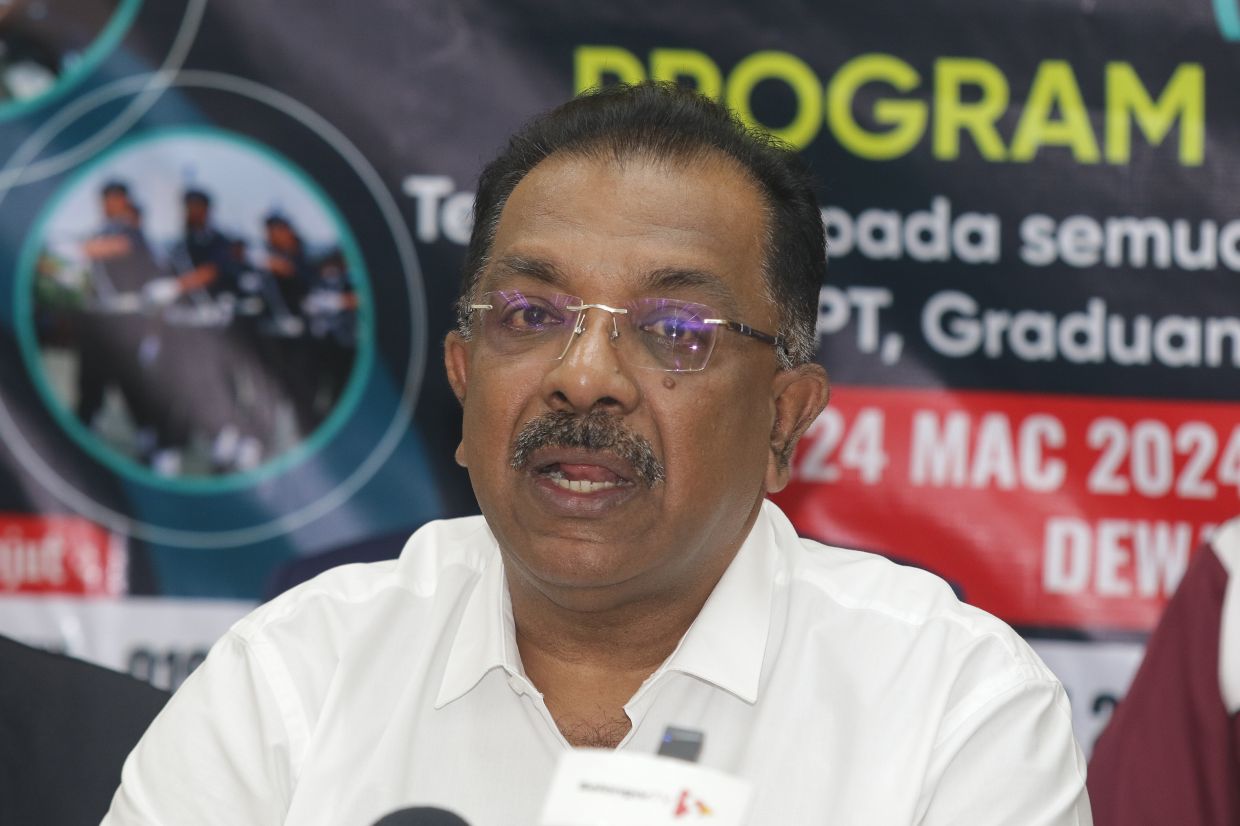
Sentosa assemblyman Gunaraj George has highlighted the urgent need for a more systematic and collaborative framework to tackle mounting complications surrounding non-Muslim religious sites in Selangor, advocating during a state assembly sitting in Shah Alam that resolving such matters requires coordinated dialogue between multiple stakeholders rather than ad-hoc decisions.
The assemblyman's intervention during Wednesday's sitting at Bangunan Dewan Negeri Selangor underscores growing tensions in Malaysia's most developed state, where rapid urbanisation increasingly conflicts with the presence of temples, churches, and other non-Muslim worship spaces that have served communities for generations. George articulated a vision where economic progress and religious preservation operate in tandem rather than opposition, suggesting that mature governance demands careful consideration of each site's unique circumstances and historical legitimacy.
Many of the temples now facing challenges have maintained continuous operations for decades, often established with the explicit consent of original landowners to serve populations whose ancestors settled in these areas. What complicates matters substantially is the transformation of surrounding landscapes—when farmland or undeveloped plots become suburban estates or commercial hubs, these long-standing religious institutions suddenly find their legal status questioned and face potential demolition orders classifying them as unauthorised structures, despite their evident community utility and historical roots.
George's statement reflects frustrations among non-Muslim communities who perceive inconsistency in regulatory treatment. Temples that functioned openly for fifty years or more under implicit local acceptance now encounter bureaucratic obstacles suggesting illegality, even as their congregations represent thousands of residents who depend upon these facilities for spiritual practice and cultural continuity. The assemblyman emphasised that authorities must examine the broader context before reaching judgement, advocating against what he termed hasty labelling without regard for lived reality and established presence within neighbourhoods.
The proposed framework would institutionalise dialogue among state government bodies, local municipal councils, private landowners, property developers, and temple management committees—entities whose interests often diverge but whose cooperation remains essential. By formalising this engagement through structured mechanisms rather than reactive crisis management, Selangor could establish protocols for investigating property disputes, assessing structural safety concerns, exploring relocation possibilities where necessary, and identifying compromise solutions that accommodate both development aspirations and community requirements.
George articulated that if genuine land disputes exist, formal discussion could clarify ownership and usage rights. Should planning complications arise, specialist review could identify technical resolutions. Where legitimate safety concerns emerge, designated engineering and safety authorities could undertake proper assessment and remediation rather than presumptive demolition. Importantly, the assemblyman stressed that decisions affecting communities and their spiritual spaces demand contextual understanding rather than formulaic application of regulations designed for different circumstances.
The situation reflects broader tensions across Southeast Asia's rapidly urbanising corridor, where development-driven economies frequently clash with preservation of culturally and religiously significant spaces. Malaysia's plural society has historically managed such matters with relative success, but mounting development pressures in economically vibrant areas like Selangor test established accommodations. The challenge intensifies because land values surge dramatically when areas transition from rural to urban status, creating financial incentives for developers and authorities to disregard long-standing religious uses.
George's advocacy for balanced advancement carries particular resonance given Selangor's demographic composition and economic importance. As Malaysia's wealthiest state and primary commercial hub, Selangor sets precedents that influence governance approaches throughout the country. How authorities there address temple preservation amid development could either entrench minority anxieties about religious security or demonstrate that pluralistic societies can accommodate modernisation while respecting established communities' fundamental needs for worship spaces.
The assemblyman advocated that Selangor possess sufficient sophistication and resources to achieve both objectives simultaneously—continued economic development and maintained religious harmony. This perspective rejects the false dichotomy sometimes presented in public discourse suggesting that protecting religious minorities necessarily impedes progress, or conversely, that unfettered development necessarily threatens minority interests. Instead, George proposed that mature governance creates space for both imperatives through genuine collaboration and mutual respect.
His call resonates particularly among non-Muslim communities, particularly Hindus and Christians, who constitute significant population segments within Selangor and contribute substantially to the state's economic and social fabric. These communities increasingly expect that their spiritual infrastructure receives equivalent protection to that afforded other essential services and cultural assets. The framework George advocated would institutionalise this expectation rather than leaving religious minority protections dependent upon individual sympathetic officials or community advocacy campaigns.
Implementing such a mechanism requires genuine political will and resource commitment. It demands that Selangor authorities establish clear protocols, designate responsible agencies, establish timelines for resolution, and genuinely empower stakeholder committees with meaningful decision-making authority rather than advisory-only roles. Where relocation becomes genuinely necessary, the framework should guarantee compensation, assistance securing alternative sites, and transparent processes rather than unilateral demolition orders.
The broader implications extend beyond immediate temple protection. Successfully managing such sensitive matters demonstrates Malaysia's capacity to navigate religious and developmental tensions through dialogue rather than confrontation, positioning Southeast Asia's most developed nation as a model for pluralistic governance amid rapid change. Conversely, allowing religious minority facilities to disappear under development pressure risks eroding the intercommunal trust that historically anchored Malaysia's relative stability.
Government responsiveness to George's proposal will signal whether authorities genuinely commit to balanced development respecting all residents' fundamental needs, or whether economic imperatives overwhelmingly dominate policy despite rhetorical commitments to pluralism. For Selangor's non-Muslim communities and concerned observers across Malaysia, this moment tests whether development and harmony truly constitute compatible objectives or whether pragmatic accommodation remains aspirational rather than practised.

