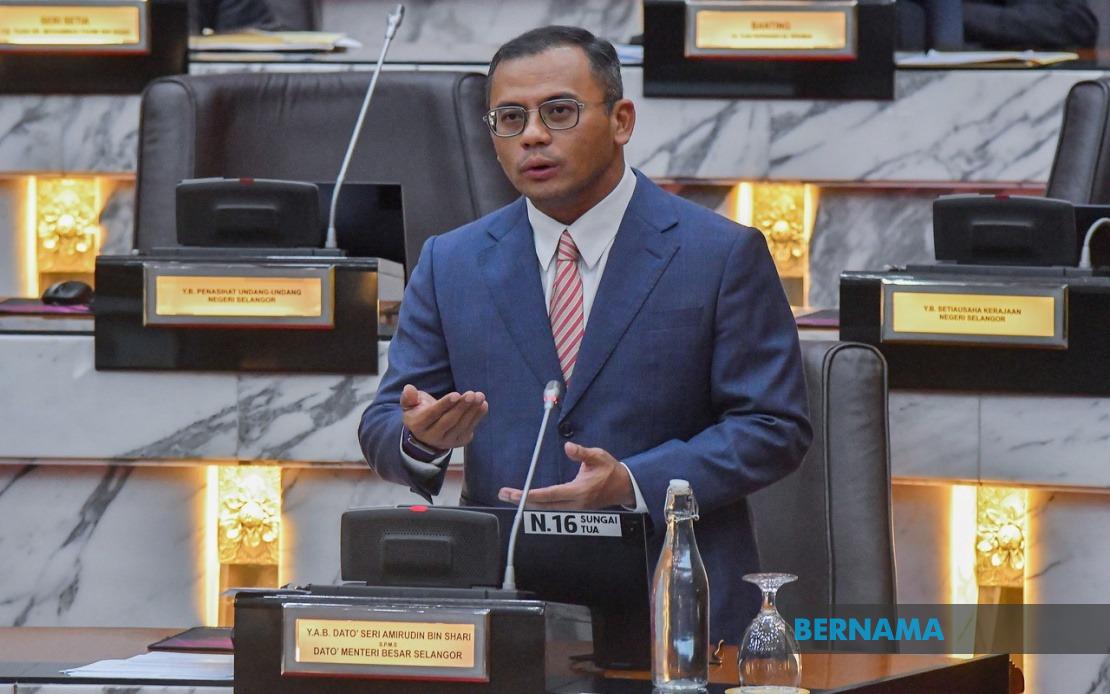
Selangor's Menteri Besar Datuk Seri Amirudin Shari has ordered the state's local authorities to conduct a comprehensive review of public transport connectivity infrastructure, signalling renewed government commitment to addressing longstanding gaps in the first-mile and last-mile journey experience that have frustrated commuters across the state.
The directive emerged during debate on the Selangor Resilience Strengthening Package in the State Legislative Assembly, where assemblyman Danial Al-Rashid Haron Aminar Rashid from Batu Tiga highlighted persistent connectivity problems linking major transport hubs such as LRT3 stations to surrounding residential and commercial areas. The issue had gained considerable traction on social media platforms, reflecting growing public frustration with incomplete transport networks that force users to rely on private vehicles despite the availability of public transit.
Amirudin emphasised that the state government stands ready to commit additional financial resources to improve facilities and infrastructure, particularly safer and more comfortable pedestrian walkways that connect public transport nodes to wider communities. However, he stressed that these investments must be pursued cost-effectively and aligned with the broader state mobility strategy aimed at encouraging greater reliance on public vehicles rather than private cars.
The Menteri Besar's tone suggested frustration with the pace of local government response to community concerns, noting that local authorities should not wait for problems to circulate on social media platforms including X and Threads before taking action. Instead, he called for more proactive engagement with council members and key stakeholders, creating opportunities for early identification and resolution of infrastructure deficiencies.
Central to the state's approach will be a detailed service mapping exercise to be overseen by Investment, Trade and Mobility Committee chairman Ng Sze Han, who will coordinate meetings with all public transport operators active in Selangor. This mapping exercise aims to pinpoint specific geographical areas and time periods where connectivity gaps exist, providing a systematic foundation for targeted interventions.
The state has indicated willingness to provide operational subsidies to transport operators to help bridge connectivity gaps and improve service provision. However, Amirudin made clear that subsidies alone cannot resolve the problem if operators fail to align their schedules and routes with commuter demand patterns. The underlying challenge is that even with financial support, operators must commit to extended operating hours and strategic route planning that genuinely serves first-mile and last-mile functions rather than focusing solely on trunk routes.
This situation reflects a broader tension in Southeast Asian urban transport planning: the gap between political commitment and operational reality. While state governments can allocate funding and set policy direction, private and semi-public transport operators often optimise routes and schedules based on commercial viability rather than comprehensive network coverage. Subsidies help offset costs, but without regulatory requirements or performance-based contracts, operators may continue prioritising higher-density corridors over less profitable but socially essential connector services.
For Malaysian readers, particularly those in the Klang Valley region, this announcement has immediate relevance. Commuters have long complained about incomplete transit networks where reaching certain destinations requires combining multiple transport modes inefficiently, or abandoning public transit entirely. The LRT3 extension, which serves the Bandar Utama corridor, has been cited repeatedly as a facility that lacks adequate pedestrian access and connecting services in its surrounding areas, effectively reducing its utility for many potential users.
The connectivity challenge also intersects with Malaysia's broader sustainability and urban planning objectives. The government has set targets for increasing public transport modal share and reducing private vehicle dependency to ease congestion and improve air quality. Yet these goals cannot be achieved if commuters must drive to transit stations or face lengthy walks through unsafe or uncomfortable environments. The first-mile and last-mile problem essentially undermines the entire value proposition of public transport investment.
Amirudin's reference to the Kinrara assemblyman represents another dimension of the governance approach—leveraging representation at multiple levels to pressure operators and coordinate solutions. This suggests the state recognises that centralised directives alone are insufficient; implementation requires sustained engagement across administrative levels and with private sector partners who retain significant operational autonomy.
The financial commitment to improved pedestrian infrastructure, while welcome, will only succeed if accompanied by genuine coordination between urban planning, traffic management, and transport operations. Too often, public transport hubs are developed without adequate surrounding infrastructure, or pedestrian pathways remain incomplete because responsibility for different segments falls across multiple agencies.
Moving forward, the service mapping exercise and subsequent operator meetings will be critical test cases for whether Selangor can translate political will into coordinated action. Success will require not just identifying gaps but establishing clear performance metrics and accountability mechanisms that incentivise operators to provide genuinely integrated service networks rather than isolated trunk routes.
For commuters across Selangor, this review represents both opportunity and test. If executed effectively, it could meaningfully improve transport accessibility and encourage modal shift toward public vehicles. However, the history of transport planning in the Klang Valley suggests that sustained political attention and adequate resourcing remain necessary to overcome entrenched operational patterns and institutional silos that have perpetuated connectivity failures for years.