The Selangor state government has launched a fresh appeal to non-pensioned members of the Armed Forces and the Royal Malaysia Police (PDRM) to collect their Warriors' Day shopping vouchers, warning that the claims window will close on August 31. With uptake remaining disappointingly low since the scheme's launch on July 29, officials are concerned that many of the 8,391 eligible veterans may miss out entirely on the RM200 benefit if they do not act soon.
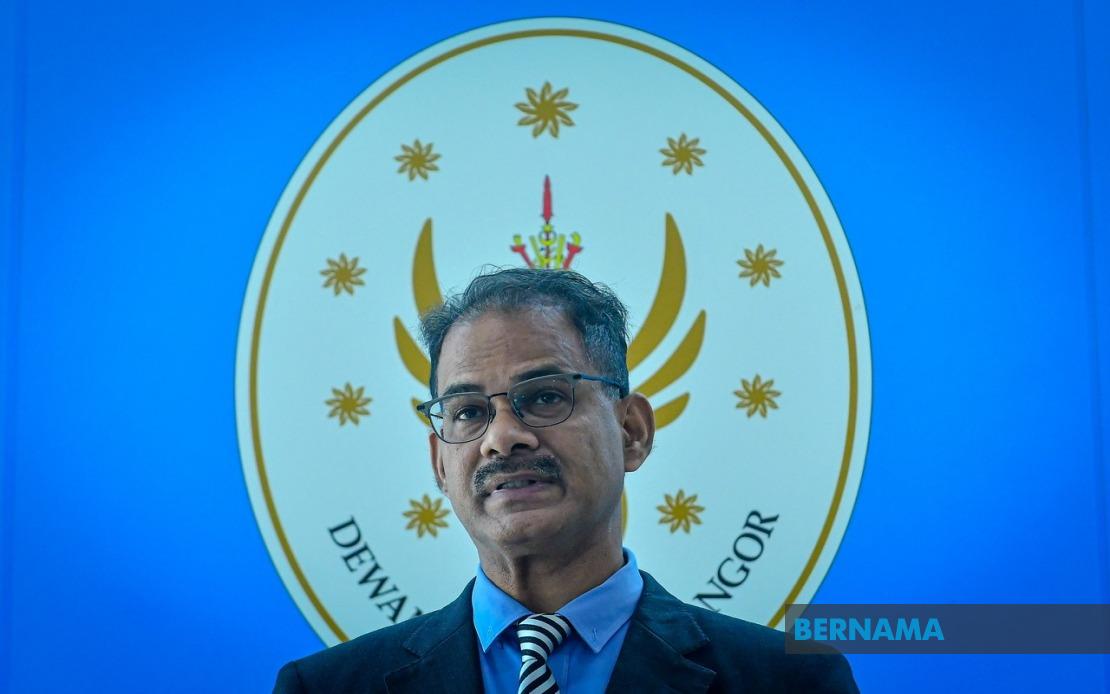
V. Papparaidu, chairman of the Human Resources and Poverty Eradication Committee, revealed that merely about 500 claims have been processed so far—a fraction of the total eligible population. The sluggish response has prompted state officials to reassess their outreach strategies and adjust administrative barriers. Papparaidu disclosed that contact attempts with many recipients had proven futile because veterans had changed telephone numbers or relocated, necessitating a rethink of how the initiative reaches its target audience.
Recognising these practical hurdles, the Selangor government has now relaxed the claiming process to permit family members and authorised representatives to lodge applications on behalf of the actual recipients. This flexibility is intended to accommodate veterans who may face mobility constraints or logistical challenges in visiting State Legislative Assembly service centres themselves. The modified arrangement reflects an understanding that a one-size-fits-all bureaucratic approach can inadvertently exclude those most in need of support.
Crucially, the voucher scheme operates on a pre-selected basis rather than a competitive application model. Eligible recipients were identified through official rosters submitted by the Department of Veterans Affairs (JHEV) and the Royal Malaysia Police, then cross-checked by the Selangor Economic Planning Unit (UPEN) and validated at local assembly service centres. This methodology eliminates paperwork burdens for beneficiaries and reduces administrative friction, yet the messaging around eligibility appears to have not reached all intended parties effectively.
The initiative represents a substantial state investment in veteran welfare, with total allocation reaching RM1.7 million. The shopping vouchers can be redeemed at participating supermarket chains for approved household necessities, with restrictions on purchases of cigarettes and alcoholic beverages. By channeling support through everyday shopping, the state seeks to provide tangible relief on household budgets whilst maintaining standards around responsible spending.
For Malaysia's veteran community, particularly those without pension entitlements, such schemes carry material significance. Non-pensioned veterans often lack the financial safety nets available to those who have completed full military careers, making targeted assistance programmes important supplements to their livelihoods. The Warriors' Day initiative, named to honour service members' contributions to national security, positions veteran support as a government priority beyond mere symbolic recognition.
The timing of the announcement underscores an administrative challenge common across government benefit distribution in Southeast Asia: the gap between eligibility and uptake. Even when state resources are allocated and mechanisms established, reaching dispersed populations with ageing members—who may be less digitally connected or prone to migration—requires sustained, multi-channel communication. Papparaidu's candid acknowledgment of contact difficulties suggests the state is learning from implementation gaps.
For Selangor specifically, the programme exemplifies how state governments can supplement federal-level veteran support through localised initiatives. As Malaysia's most economically developed state and a major population centre, Selangor's resources allow it to pilot welfare schemes that other states may eventually emulate or adapt. The voucher programme thus carries implications beyond immediate beneficiary relief, potentially influencing veteran policy discourse across the federation.
The remaining weeks before the August 31 deadline create urgency for eligible veterans and their families to access state assembly service centres. Word-of-mouth dissemination, community leader engagement, and possibly targeted media outreach may prove more effective than telephone contact alone in reaching this population. The relaxation of proxy-claiming rules should theoretically ease access barriers, yet awareness of the scheme's existence and terms remains a critical bottleneck.
Ultimately, the Selangor government's push reflects both commitment to veteran welfare and recognition that good policy intentions require sustained implementation effort. As the deadline approaches, the success of the Warriors' Day voucher scheme will be measured not merely by design quality but by how effectively the state mobilises remaining eligible veterans to claim their benefits. For a population that has served national defence interests, ensuring they can access state support demands proactive, persistent engagement rather than passive availability of funds.

