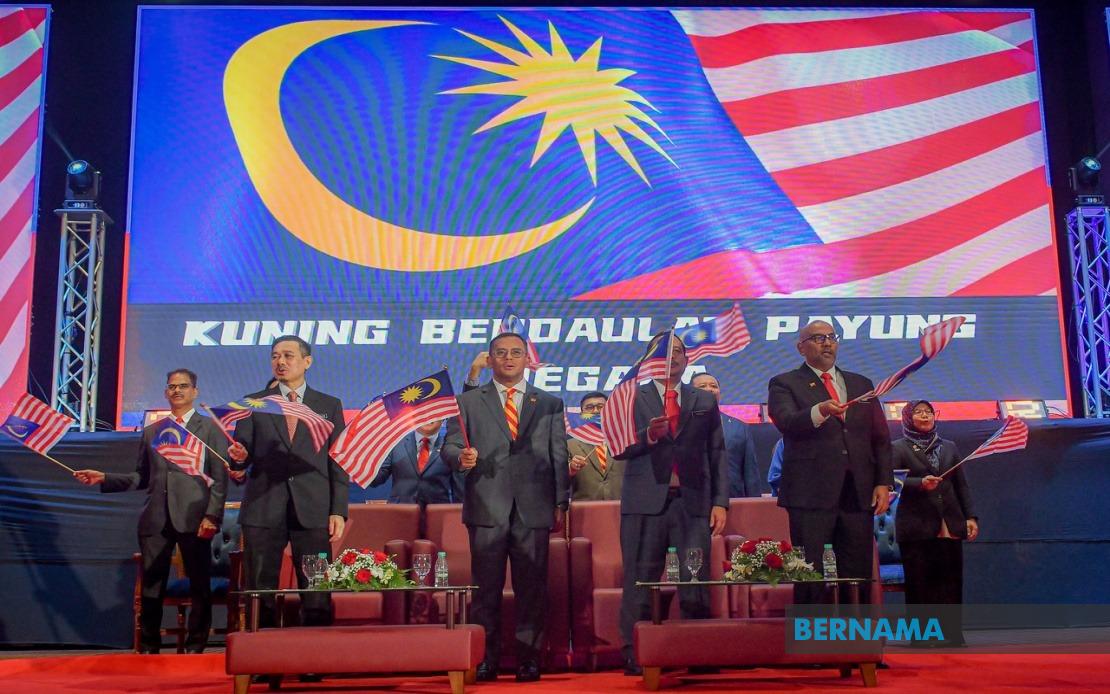
Selangor Menteri Besar Datuk Seri Amirudin Shari has signalled that a pivotal decision affecting the status of a state assembly seat will be resolved imminently, paving the way for the Election Commission to evaluate whether a by-election should be triggered. The announcement came during a press interaction in Shah Alam following the Menteri Besar's Assembly engagement with civil servants and the unveiling of the Fly the Jalur Gemilang campaign, underscoring the administrative focus on resolving constitutional matters whilst simultaneously promoting national symbols.
The resolution process hinges on formal notification from the Selangor State Legislative Assembly Speaker, whose prerogative it remains to determine the seat's status. Prior to this announcement, the state legal adviser has been tasked with preparing a comprehensive legal opinion that will form the foundation for subsequent deliberations. Amirudin confirmed that this legal note is anticipated to be completed during the current week, after which the documentation will be forwarded to pertinent authorities including the Election Commission for their evaluation and determination.
The underlying issue stems from media allegations questioning the eligibility of a Selangor state assemblyman to occupy his seat. Such matters carry constitutional significance in Malaysia's parliamentary system, as they directly affect the composition and legitimacy of state legislative bodies. The implications for Selangor are particularly noteworthy given the state's economic and political prominence within Malaysia. Any vacancy necessitating a by-election would result in campaign activity and public mobilisation, potentially consuming administrative resources and attention during a designated period.
The Menteri Besar articulated an unequivocal commitment to adhering to whatever determination the Election Commission reaches following the Speaker's formal pronouncement. This stance reflects the state government's deference to constitutional processes and independent regulatory oversight, reinforcing the principle that elected officials must respect institutional mechanisms even when outcomes remain uncertain. Amirudin emphasised that the state administration would fully comply with all requisite legal procedures and any resultant directives from the Election Commission, maintaining alignment with applicable statutory provisions governing such situations.
Beyond the assembly seat matter, Amirudin devoted substantial attention to addressing the multifaceted challenge of stray dog populations throughout Selangor. The state government has implemented continuous enforcement measures designed to protect public safety whilst maintaining ethical standards in animal treatment. This balancing act reflects growing societal concern over animal welfare in Malaysia, particularly following viral incidents documented on social media platforms that have galvanised public opinion and prompted official scrutiny.
The Menteri Besar acknowledged that enforcement actions, whilst necessary for public safety, must be executed with measured restraint and compassion rather than excessive force. He articulated a philosophical position that governing bodies bear dual responsibilities: safeguarding citizens from potential harm posed by stray animals whilst simultaneously respecting humane treatment principles. This framework seeks to navigate the tension between pragmatic public health management and evolving societal expectations regarding animal welfare standards.
Amirudin rebutted suggestions that local authorities responded only to media pressure or public outcry concerning animal treatment. He reiterated that public safety considerations relating to stray animal populations have constituted a consistent priority within the state administration and have been previously deliberated in the State Legislative Assembly forum. The matter has been raised by representatives including the Port Klang assemblyman, indicating that the issue transcends singular incidents and reflects systemic concerns requiring sustained governmental attention.
The state government has also registered the concerns articulated by Tengku Permaisuri of Selangor Tengku Permaisuri Norashikin regarding animal welfare practices. The Tengku Permaisuri publicly expressed distress and disappointment over recent incidents involving cruelty toward domestic pets and stray animals, particularly canines and felines that became widely disseminated through digital platforms. Her involvement underscores the elevation of animal welfare from a purely administrative matter to one of royal and societal significance, compelling state authorities to demonstrate responsiveness.
Tengku Permaisuri Norashikin has additionally advocated for federal-level intervention, specifically urging the Federal Government to conduct a comprehensive review of penalties enshrined within the Animal Welfare Act 2015. She contends that existing punitive frameworks require strengthening and more consistent application to deter individuals convicted of animal cruelty offences. This call for legislative enhancement reflects recognition that current statutory mechanisms may prove insufficient to achieve desired deterrent effects or consistent enforcement outcomes across jurisdictions.
The dual matters occupying the Menteri Besar's attention—the assembly seat status and animal welfare enforcement—illustrate the breadth of contemporary governance challenges facing Selangor's administration. Constitutional uncertainties surrounding legislative representation demand decisive resolution through proper channels, while concurrently, public expectations regarding humane governance extend beyond conventional political and economic domains into ethical treatment of vulnerable populations including animals. These concurrent priorities demonstrate that modern state governments must navigate increasingly complex terrain where multiple stakeholder concerns require simultaneous consideration.
For Malaysian readers and observers of Selangor politics, the impending decision carries procedural and substantive implications. Should a by-election be mandated, it would constitute the first competitive poll in the state since the 2022 general elections, providing electoral insights into evolving voter sentiment. The stray animal controversy simultaneously reflects broader societal conversations about development, urbanisation, and the social contract between government and citizens—conversations that resonate across Malaysian states contending with comparable challenges.

