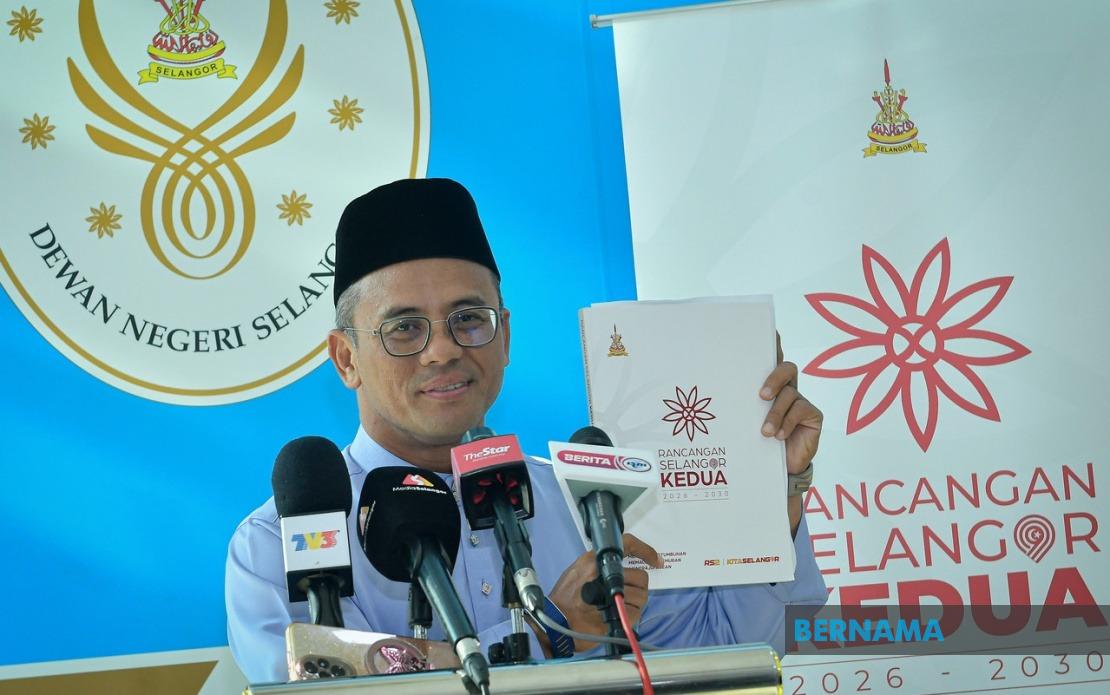
Selangor's government has set an aggressive performance benchmark for the state's local authorities, requiring all 42 municipal and district councils to maintain a 95 per cent rating under the PBT Star Rating System by 2030. Menteri Besar Datuk Seri Amirudin Shari announced the target during the tabling of the Second Selangor Plan (RS-2) at the state legislative assembly, positioning the initiative as a cornerstone of his administration's commitment to equitable public service delivery across the state's diverse communities.
The 95 per cent threshold represents a significant elevation in service standards currently achieved across Selangor's fragmented local government landscape. Rather than permitting pockets of excellence, the target demands that every local authority—from densely populated Shah Alam to sprawling rural districts—delivers consistently high-quality services to residents. This standardisation approach reflects growing recognition that service delivery disparities undermine public confidence in government institutions and create inequality in access to essential facilities and permits.
The strategic framework underpinning these targets extends beyond performance metrics to encompass technological modernisation. Selangor intends to achieve 85 per cent End-to-End Digital Government Service Sharing, fundamentally reshaping how residents interact with municipal bureaucracies. This digitalisation push addresses longstanding frustrations with inefficient counter services, lengthy processing times, and fragmented information systems that plague local authorities across Southeast Asia. By 2030, residents should be able to resolve most municipal matters—building permits, utility connections, tax inquiries—through integrated digital platforms rather than physical office visits.
Amirudin emphasised that service excellence must become the unifying mission of every local authority. His rhetoric pointedly stressed that complaints lodged on social media, community forums, or direct channels deserve systematic attention and resolution. This public acknowledgement signals that Selangor's government recognises how digital connectivity has empowered residents to voice dissatisfaction instantly and publicly, forcing institutions to adopt more responsive complaint management systems. Local authorities that ignore citizen feedback or fail to track resolution outcomes will struggle to achieve the targeted ratings.
Beyond operational performance, the Second Selangor Plan addresses a structural fiscal vulnerability that constrains the state's development ambitions. Land premiums and land rents currently generate approximately 75 per cent of state revenue—a dependency that creates precarious budget uncertainty during property market slowdowns and leaves limited fiscal space for strategic investments in infrastructure, education, and economic diversification. This revenue concentration exposes Selangor to cyclical property market fluctuations, a risk magnified by Malaysia's economic interdependence with regional real estate cycles.
The plan's revenue diversification strategy centres on strengthening government-linked companies and attracting private sector participation through innovative financing mechanisms. Rather than relying on asset sales, Selangor aims to develop commercial revenue streams through GLC engagement in technology-based sectors and service industries aligned with the state's economic positioning. The creation of a fully integrated State Investment Holding company signals intent to consolidate GLC governance, eliminate redundant functions, and improve investment returns through strategic alignment and coherent management.
Coordinating GLC activities prevents the duplication that historically plagued state-owned enterprises, where competing subsidiaries pursued overlapping mandates with fragmented capital bases. A consolidated investment vehicle can pursue larger projects requiring significant capital mobilisation and can better coordinate with private sector partners on infrastructure development and technology innovation. For Selangor, streamlining GLC structures is essential to competing regionally for foreign direct investment and attracting domestic capital seeking scalable, professionally managed investment platforms.
The Second Selangor Plan's emphasis on technology and service-based economic sectors reflects recognition that manufacturing-dependent growth models face headwinds from regional competition and automation trends. Selangor's proximity to Kuala Lumpur and existing concentration of educated talent positions the state advantageously for developing financial services, software development, creative industries, and digital commerce ecosystems. Reorienting state investment toward these sectors rather than traditional manufacturing development addresses Malaysia's need to climb value chains and reduce vulnerability to labour cost competition from Vietnam and Cambodia.
Implementing these ambitious targets will test institutional capacity and political will. Achieving 95 per cent service ratings across 42 local authorities requires sustained investment in technology infrastructure, staff training, and performance management systems. Some smaller district councils may struggle with implementation costs without targeted state support. The digitalisation target similarly demands substantial upfront technology investment and change management efforts to overcome resistance from staff accustomed to traditional service delivery models.
Selangor's performance standards are likely to influence municipal governance throughout Malaysia. As Malaysia's most developed state economically, Selangor's governance innovations often establish benchmarks that other state governments observe or attempt to replicate. If Selangor successfully demonstrates that local authorities can deliver substantially improved service ratings through coordinated digital transformation and performance management, the model could inspire emulation elsewhere, gradually raising public service delivery standards across the country.
The revenue diversification strategy carries implications extending beyond Selangor's borders. As Malaysia's largest economy by state GDP and most urbanised state, Selangor's success in generating non-property revenues through GLC-led investment demonstrates feasibility of models applicable to other states facing similar fiscal constraints. However, success depends on whether state-owned enterprises can compete effectively in technology and service sectors dominated by nimble private companies with different risk tolerances and decision-making cultures.
For Malaysian residents and businesses, the Second Selangor Plan's targets offer tangible prospects for improved government responsiveness and efficiency. Across Southeast Asia, local government often represents the closest interface between citizens and state institutions, yet frequently delivers inadequate services. Selangor's commitment to standardised 95 per cent performance ratings, supported by digital transformation, could meaningfully reduce administrative friction in routine municipal transactions and elevate standards of civic engagement. Success would vindicate strategic governance modernisation as an antidote to bureaucratic dysfunction.

