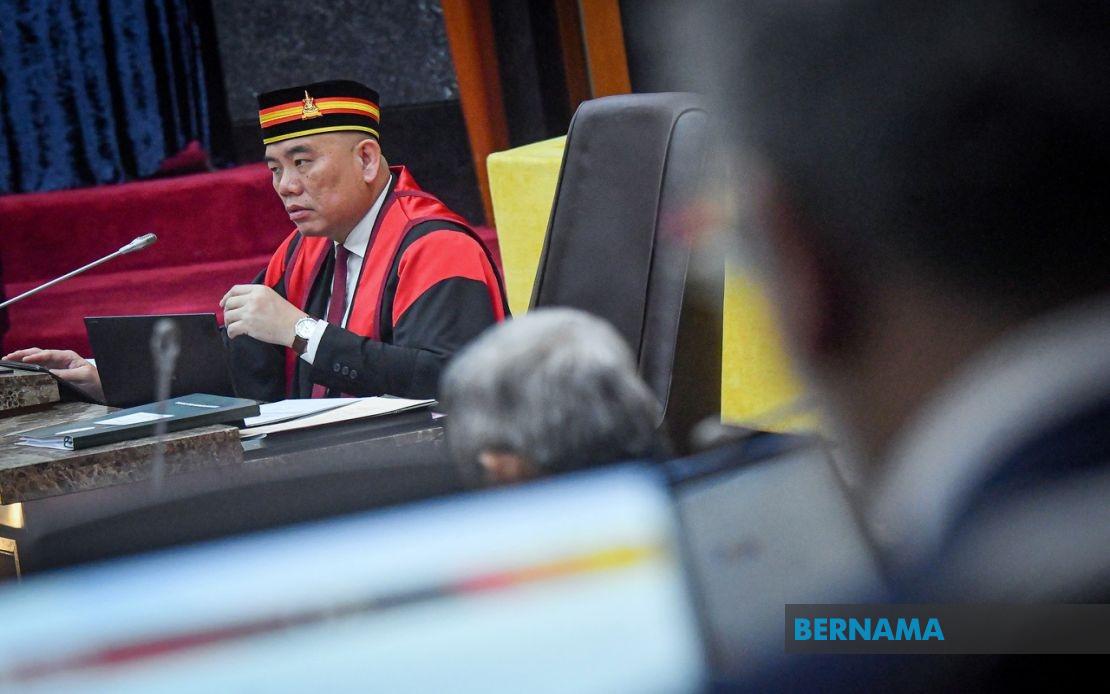
Selangor Speaker Lau Weng San has initiated a detailed examination of every state assemblyman's standing, setting the stage for potential declarations of vacancy in the State Legislative Assembly. The review encompasses representatives from all political parties and is being conducted with careful attention to constitutional requirements and procedural accuracy. Lau made the announcement during a media briefing at Wisma Dewan Negeri Selangor on August 3, underscoring the comprehensive nature of the ongoing investigation.
The Speaker emphasized that the assessment process remains fluid and has not yet reached conclusion. His office is methodically examining circumstances across all constituencies, ensuring that any future determinations rest on verified information and strict adherence to the Selangor State Constitution. This measured approach reflects the legal and political sensitivities surrounding such decisions, which can reshape the composition of the state assembly and affect the balance of power within the legislature.
Lau addressed speculation regarding absences observed during today's assembly sitting, cautioning observers against hasty interpretations. He noted that two members were not present but stressed that missing a single session carries no inherent significance without broader context. Members may face legitimate impediments ranging from health matters to official commitments, and the Speaker indicated that jumping to conclusions before establishing facts would be premature and counterproductive to the review's integrity.
Under the Selangor State Constitution, an assemblyman faces potential seat vacation if he accumulates six consecutive months without attendance unless he has obtained prior permission or provided official notice. This constitutional provision creates a clear standard against which the Speaker measures each member's participation record. However, Lau indicated that assemblymen who have formally notified his office of absences for documented reasons, particularly medical circumstances, would have their individual situations carefully evaluated before any action is taken.
Menteri Besar Datuk Seri Amirudin Shari has publicly indicated that a determination regarding at least one contested seat should materialize within the current week. The state government is positioned as a waiting party, dependent on official communication from the Speaker's office regarding assembly member status. Simultaneously, Selangor's legal adviser is preparing documentation that will be submitted to appropriate authorities once the Speaker's review concludes. This procedural sequencing reflects the institutional choreography required when constitutional provisions governing assembly composition may be invoked.
The implications of this review extend beyond administrative procedure. Vacancy declarations in any state assembly carry significant political weight, potentially altering voting mathematics on crucial legislation and government survival. For Selangor, one of Malaysia's most economically significant states and a political battleground between competing coalitions, changes in assembly composition can influence the trajectory of state governance and policy priorities. The thoroughness Lau is advocating suggests awareness of these broader consequences.
The review's completion timeline remains uncertain, though the Speaker acknowledged that he will communicate progress once preliminary checks are finalized. This measured uncertainty contrasts with Amirudin's more specific timeline, suggesting possible tension between the legislative and executive branches regarding urgency. The Speaker's emphasis on comprehensive examination across every party affiliation may reflect an attempt to demonstrate impartiality, ensuring that the eventual outcome cannot credibly be characterized as politically selective or discriminatory toward any particular faction.
For Malaysian political observers, this situation illustrates recurring tensions within state legislatures regarding member accountability and constitutional enforcement. The six-month attendance threshold reflects a reasonable balance between protecting legislative integrity and acknowledging legitimate circumstances that might temporarily prevent attendance. Yet applying such standards in polarized political environments inevitably invites suggestions of selective enforcement or retaliatory action, regardless of the Speaker's actual intentions.
The involvement of the Election Commission adds another institutional layer to the process. Once the Speaker declares a seat vacant, the EC becomes responsible for determining whether a by-election should proceed, introducing additional procedural steps and timelines. This multi-institutional choreography means that decisions made in the coming days will reverberate through several stages of formal process before the assembly's composition stabilizes.
The broader context includes ongoing discussions about assemblymen's eligibility across Malaysian legislatures, with various state governments periodically examining member status. Selangor's review occurs within this landscape of heightened scrutiny regarding parliamentary attendance and engagement. The state assembly's experience with this process may establish precedents influencing how other legislatures approach similar questions regarding member accountability and constitutional enforcement.
Lau's repeated emphasis on examining every party and every corner reflects an apparent determination to shield the review from accusations of bias or motivated action. In Malaysia's current political environment, where coalition arrangements remain fluid and competition for assembly seats remains intense, any perception of selective or partisan application of constitutional rules can undermine institutional credibility and parliamentary legitimacy. The Speaker's public commitment to comprehensive, non-discriminatory examination attempts to preempt such criticism.

