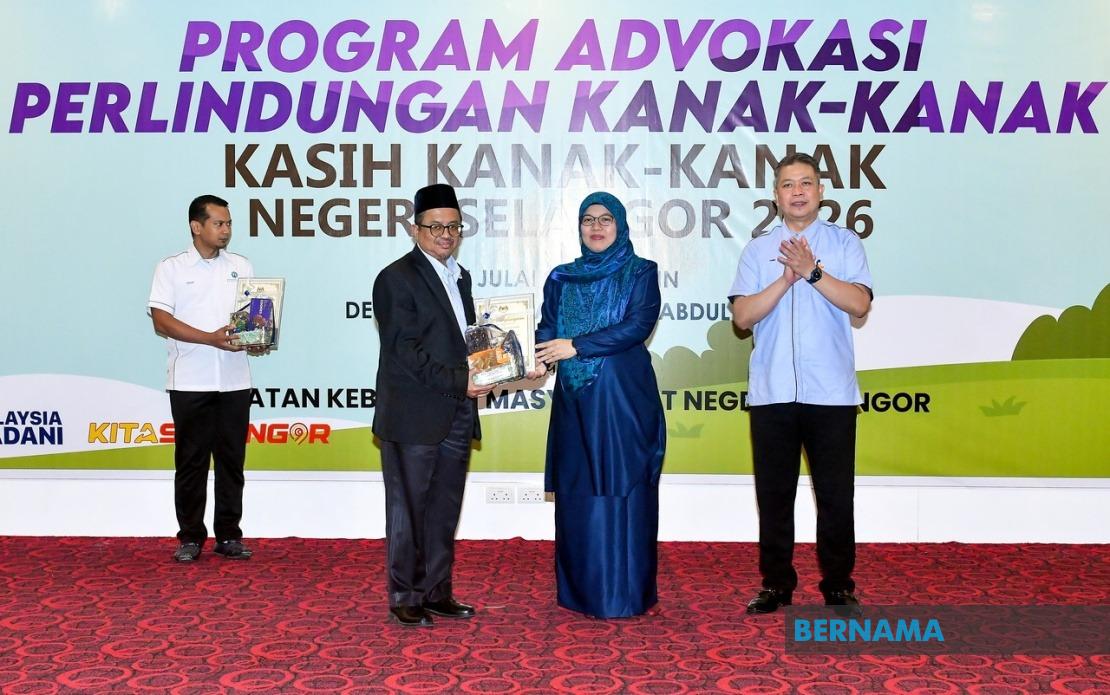
The Selangor state government is ramping up its commitment to child protection through a comprehensive advocacy initiative designed to shield more than 1.8 million young residents from harm and social challenges. The expanded effort reflects growing recognition that vulnerable children in Malaysia's most densely populated state require sustained, multi-agency intervention rather than reactive responses after incidents occur. State officials launched the initiative this week at the Sultan Abdul Aziz Silver Jubilee Hall in Shah Alam, signalling that safeguarding children has become a priority across all levels of state governance and administration.
The scale of child-related issues in Selangor underscores why this proactive stance has become necessary. Between January and June this year, authorities recorded 2,306 cases involving children across the state. While the majority—1,877 cases—centred on care and protection concerns, a troubling 366 cases involved criminal misconduct against minors. An additional 63 cases concerned children deemed beyond parental control, pointing to behavioural and social challenges that often accompany poverty, neglect, or exposure to adverse home environments. These numbers represent only officially documented incidents and likely understate the true prevalence of child welfare issues in communities where reporting mechanisms remain weak or families prefer to handle matters privately.
Selangor Women Development and Social Welfare Committee chairman Anfaal Saari emphasised that the state's high population density and rapid urbanisation create distinctive challenges for child protection. Unlike less densely populated regions, Selangor's sprawling urban and semi-urban landscape means children face compounded risks including trafficking, exploitation, exposure to criminal networks, and digital threats. The sheer number of vulnerable young people—1.8 million across diverse socioeconomic backgrounds—requires systematised, evidence-based interventions rather than ad-hoc charitable efforts. Saari's remarks reflected a shift toward professionalising child welfare provision in Malaysia, moving beyond traditional community-based models toward integrated state systems.
The centrepiece of this expanded effort is the 'Program Advokasi Perlindungan Kanak-Kanak: Kasih Kanak-Kanak Selangor', which brought together 250 participants from 52 schools and tahfiz institutions for training and awareness-building activities. The inclusion of Islamic religious schools and Quranic memorisation centres in the programme acknowledges that child protection frameworks must reach children in all educational settings, including those outside mainstream schooling. This is particularly significant in Malaysia, where thousands of children attend tahfiz institutions that operate with varying levels of regulatory oversight and institutional capacity. By incorporating these centres into coordinated protection networks, Selangor aims to eliminate gaps where safeguarding responsibilities remain ambiguous or poorly enforced.
A distinguishing feature of Selangor's approach is its emphasis on cross-agency collaboration rather than siloed departmental action. The initiative involves the Selangor State Education Department, the Selangor Islamic Religious Department, the Selangor Tahfiz Al-Quran Institutions Association, the Royal Malaysia Police, and the Malaysian Communications and Multimedia Commission. This coordination reflects an understanding that child protection requires simultaneous attention to physical safety, psychological wellbeing, digital security, and spiritual development. Each agency contributes distinct expertise: law enforcement brings investigative capacity, education departments oversee institutional compliance, religious bodies provide community credibility, and communications authorities address online exploitation. Such integrated frameworks remain uncommon in Southeast Asia, where child welfare typically remains fragmented across competing bureaucracies.
The programme's roots extend back to 2004, when the state government partnered with Yayasan Islam Darul Ehsan to develop child advocacy initiatives. Over two decades, this collaboration has reached more than 100,000 students nationwide, suggesting a track record of sustained implementation rather than a one-off campaign. This longevity matters: child protection programmes often falter when funding cycles end or political priorities shift. Selangor's two-decade commitment indicates genuine institutional embedding of child protection values, though the question remains whether consistent resourcing will continue amid competing fiscal demands.
Saari's insistence that the state cannot simply react after crimes occur reflects a philosophically important shift in Malaysian governance. Traditionally, authorities have emphasised punishment and remediation following incidents of abuse or exploitation. The new framing prioritises prevention through sustained education, institutional strengthening, and community awareness-building. This preventive approach aligns with international best practices in child protection, which emphasise early intervention and environmental change over post-facto accountability. For Malaysia, where child abuse cases periodically generate public outrage but rarely produce systemic reform, this reorientation could represent meaningful progress.
The programme targets children across multiple vulnerability categories: those in mainstream schools, religious institutions, and state care facilities including orphanages and shelters. This comprehensive scope recognises that abuse and neglect occur across all socioeconomic and institutional contexts, and that privileged children in private religious schools face distinct risks compared to street children or those in institutional care. By casting a wide net rather than focusing narrowly on urban poor or institutionalised populations, Selangor signals that child protection is a universal responsibility transcending class boundaries.
For Malaysian and Southeast Asian policymakers, Selangor's initiative offers useful lessons about scaling child protection. The state's approach combines top-down institutional coordination with bottom-up community engagement through schools and religious organisations. Rather than creating parallel bureaucracies, it leverages existing infrastructure and trusted institutions to deliver protection messages. This efficiency matters in resource-constrained contexts where governments cannot fund entirely new agencies. The emphasis on advocacy and awareness-building also reflects recognition that legal frameworks protecting children exist across Malaysia, but enforcement remains inconsistent due to limited awareness among educators, religious leaders, and parents about reporting obligations and available support services.
The practical implications for Selangor's 1.8 million children remain to be seen. Advocacy programmes and inter-agency memoranda of understanding do not automatically translate into safer communities or reduced abuse rates. Success depends on whether teachers, tahfiz instructors, and police officers actually receive training that changes their behaviour; whether children develop confidence reporting abuse despite cultural pressures toward silence; and whether state resources follow rhetoric. The coming years will reveal whether this initiative represents genuine institutional transformation or performative gestures that leave vulnerable children insufficiently protected.

