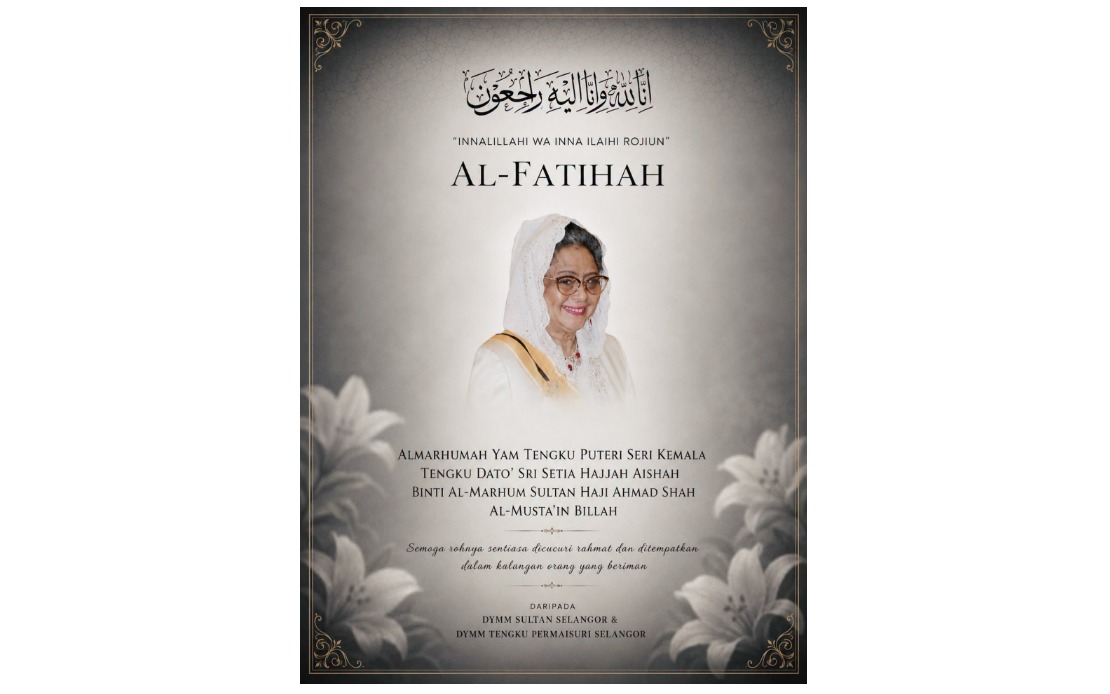
The Sultan of Selangor, Sultan Sharafuddin Idris Shah, and Tengku Permaisuri Selangor, Tengku Permaisuri Norashikin, have offered their sympathies to Pahang's ruler, Al-Sultan Abdullah Ri'ayatuddin Al-Mustafa Billah Shah, following the passing of his elder sister on August 26. The two senior members of Malaysia's royal hierarchy conveyed their condolences through an official statement released by the Selangor Royal Office on August 27, expressing profound sorrow at the loss of Tengku Puteri Seri Kemala Tengku Datuk Seri Aishah Almarhum Sultan Ahmad Shah.
Tengku Puteri Seri Kemala, the sister of the current Sultan of Pahang and daughter of the late Sultan Ahmad Shah, passed away at a Kuala Lumpur hospital at 9:15 pm on August 26. Her death marks the loss of a significant figure in the Pahang royal household, one whose life reflected the dignity and traditions upheld by Malaysia's constitutional monarchy. As the eldest sibling of the reigning sultan, her position within the royal family carried considerable symbolic and ceremonial weight across the sultanate.
In their formal statement, Sultan Sharafuddin and Tengku Permaisuri Norashikin articulated their deep sadness at her departure, underscoring the bonds of respect and familial connection that characterize relations among Malaysia's royal houses. Their words reflected not merely protocol but genuine acknowledgment of a loss felt across the broader royal circle. The statement invoked Islamic tradition by praying that Tengku Puteri Seri Kemala's soul would be enveloped in divine mercy and accepted among the righteous, a sentiment expressed through the recitation of Al-Fatihah.
The royal family's arrangement of funeral proceedings demonstrated the esteem in which Tengku Puteri Seri Kemala was held. Her remains were transported to the Pahang Royal Mausoleum located in Pekan, the state capital, for interment following her passing. The funeral service adhered strictly to established royal protocols and Islamic observances, ensuring that the burial reflected both the dignity of her station and the solemnity befitting a member of the sultanate's senior generation.
Pahang's royal household, one of Malaysia's oldest and most historically significant, has maintained particularly close ceremonial and cultural ties with other state sultanates. The expression of condolences from Selangor's royal couple exemplifies the institutional respect and interconnected nature of Malaysia's constitutional monarchy, where solidarity among rulers serves an important symbolic function in maintaining the unity and continuity of the nation's royal institutions.
The death of Tengku Puteri Seri Kemala occurs against the backdrop of broader transitions within Malaysia's royal system. The current Sultan of Pahang, Al-Sultan Abdullah, ascended to the throne in 2019 and has since navigated numerous constitutional and ceremonial responsibilities. His sister's passing represents a personal loss for him at a time when he continues to bear the weighty responsibilities of overseeing one of Malaysia's most prominent sultanates during a period of national political complexity.
Royal condolences such as those extended by the Selangor palace carry substantial weight within Malaysia's social and cultural fabric. These formal expressions of sympathy serve to reinforce the bonds linking Malaysia's various sultanates and underscore the institutional importance of the monarchy as a stabilizing force within the nation's constitutional framework. For Malaysian citizens, particularly those in Pahang and neighboring Selangor, such gestures affirm the dignity and continuity of a royal system deeply embedded in national identity.
The circumstances of Tengku Puteri Seri Kemala's final days and the swift arrangement of her funeral reflect the efficient coordination characteristic of royal households, even during moments of personal grief. The decision to conduct her funeral with full honours demonstrated the family's commitment to maintaining the ceremonial standards expected of the sultanate, ensuring that her death would be commemorated with the respect her lineage and lifetime of service commanded.
Families of Malaysia's ruling sultans often play understated but significant roles in supporting state governance and maintaining royal protocols. Tengku Puteri Seri Kemala, as a member of the Pahang royal house and sister to the reigning sultan, would have participated in various ceremonial functions and represented the state's interests during official occasions throughout her lifetime. Her passing thus represents not only a personal loss for her immediate family but also the departure of someone who embodied continuity with Pahang's royal heritage.
The formal channels through which condolences were communicated—via the Selangor Royal Office's official announcement—exemplify the structured and dignified manner in which Malaysia's royal institutions conduct matters of state and family. Such transparency, coupled with adherence to Islamic and royal custom, reinforces public confidence in the monarchy's role as a guardian of national values and constitutional principles during both celebratory and sorrowful occasions.

