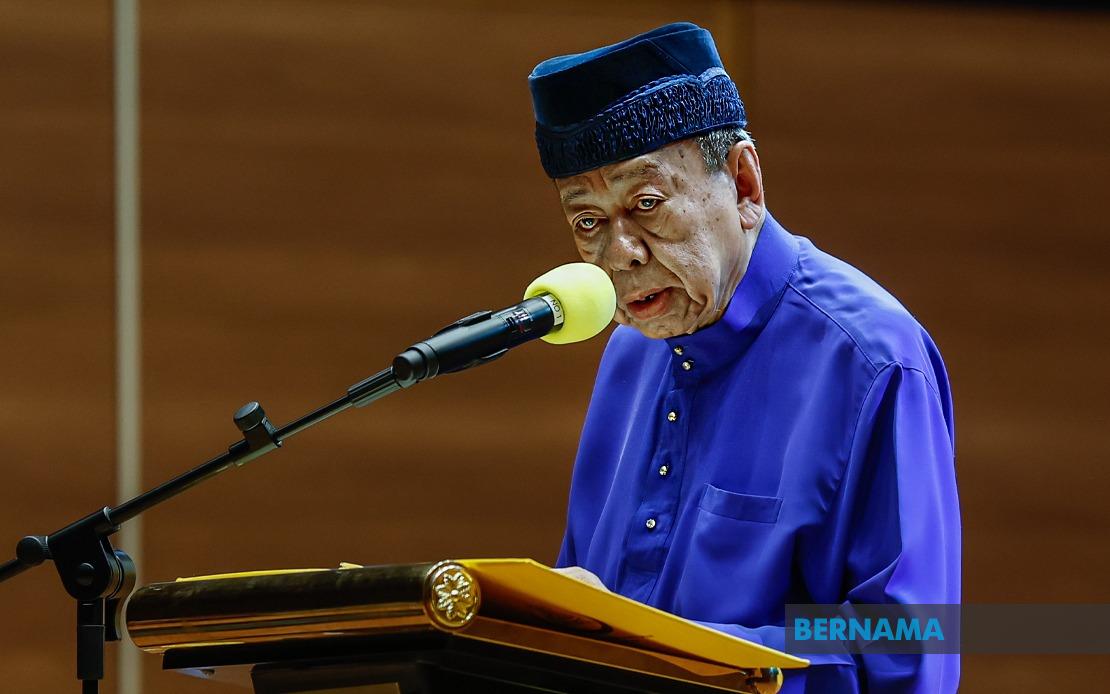
Sultan Sharafuddin Idris Shah has called upon Universiti Teknologi MARA to ensure its academic programmes evolve in step with rapid global transformation, emphasising that the institution's graduates must possess the skills and knowledge needed to excel in an increasingly competitive international marketplace. Speaking at UiTM's Royal Address 2026 in Shah Alam, the Selangor ruler stressed that the nature of educational challenge has fundamentally shifted—whereas previous generations struggled simply to access university places, today's graduates face far stiffer competition to secure meaningful employment and establish themselves as leaders in their chosen fields.
The Sultan identified several critical domains where UiTM must maintain contemporary relevance: digital technology, artificial intelligence, science, engineering, medicine, finance, accounting, law, and the creative industries all represent areas where the university's curricula must reflect cutting-edge global developments. These sectors, he argued, will substantially shape Malaysia's economic trajectory in the decades ahead, making it imperative that UiTM-trained professionals possess expertise that matches or exceeds international standards. The royal address, delivered in the presence of Raja Permaisuri Tengku Permaisuri Norashikin and Higher Education Minister Datuk Seri Dr Zambry Abd Kadir, underscored the institution's responsibility to maintain its position as a premier research and teaching establishment.
Crucially, the Sultan reaffirmed his unwavering commitment to UiTM's original constitutional mandate of advancing Malay and Bumiputera education, while simultaneously cautioning against complacency or the temptation to ignore institutional shortcomings. He acknowledged UiTM's demonstrable success in producing professionals who have risen to positions of significance in corporate Malaysia and on the world stage, yet insisted that past achievements must not become an excuse for stagnation. This balancing act—preserving institutional identity while driving continuous improvement—lies at the heart of contemporary debates surrounding Malaysia's public universities and their role in a rapidly changing economy.
A significant thrust of the Sultan's remarks concerned the need for UiTM to shift its graduate output beyond the conventional professional class towards entrepreneurship and wealth creation. Rather than focusing principally on producing job seekers who enter established firms and organisations, the university should increasingly nurture innovators, business owners, scientists, and industry leaders capable of establishing enterprises and competing at regional and international scales. This reorientation reflects broader concerns among policymakers that Malaysia's higher education system, while successful in credentialling professionals, has been less effective at fostering the entrepreneurial mindset and risk-taking temperament required to build transformative companies.
The Sultan emphasised that strengthening UiTM's partnerships with industry represents a non-negotiable imperative for achieving this shift. Merely conferring degrees upon graduates who lack practical skills, professional confidence, linguistic abilities, and industry-specific competencies amounts to a fundamental failure of institutional purpose. He urged every UiTM student and alumnus to acquire fluency in at least two foreign languages, recognising that linguistic capability functions as a gateway to competitive advantage in an increasingly globalised labour market where English alone no longer suffices. Such recommendations echo broader education policy discussions across Southeast Asia regarding the languages and soft skills employers genuinely demand.
Addressing the constitutional foundations of UiTM's mission, the Sultan articulated a sophisticated legal and historical argument grounded in Malaysia's fundamental law. The Universiti Teknologi MARA Act 1976 and specifically Section 1A of that legislation establish the institution pursuant to Article 153 of the Federal Constitution, which sets out special provisions regarding the position of Malays and indigenous peoples. Article 153(8A) explicitly permits reservation of higher education places for these groups, according such arrangements a constitutionally protected status distinct from ordinary policy measures. This framing matters significantly because it positions UiTM's Bumiputera-focused admissions and orientation not as administrative convenience or temporary affirmative action, but as integral to Malaysia's constitutional bargain.
The Sultan went further in defending UiTM's specialised role by drawing a crucial distinction between preserving institutional identity and excluding other communities from educational opportunity. Malaysia, he noted, maintains a diverse ecosystem of higher education institutions accessible to all citizens regardless of ethnicity. UiTM's founding emerged from a documented historical necessity: at independence and throughout the subsequent decades, educational and socioeconomic disparities between Bumiputera and non-Bumiputera populations remained pronounced. The institution was deliberately established to narrow these gaps through targeted investment in Bumiputera professional development. As long as measurable educational and economic inequalities persist among these groups, the Sultan reasoned, UiTM's foundational mandate retains legitimate purpose.
This principled stance carries implications for ongoing debates in Malaysian higher education and society. Any proposed modification to UiTM's constitutional foundations, institutional identity, or core objectives cannot reasonably be characterised as routine administrative decision-making. Rather, the Sultan insisted such matters must be examined comprehensively within the constitutional framework as a whole, acknowledging the delicate equilibrium upon which Malaysia's social contract rests. The remarks suggest the Selangor throne views threats to UiTM's Bumiputera-centric mission with considerable seriousness, treating proposed changes as matters requiring constitutional rather than merely administrative consideration.
The Sultan's vision ultimately presents UiTM with a sophisticated challenge: enhance academic rigour and global competitiveness without abandoning constitutional commitment to Bumiputera empowerment; produce entrepreneurs and business creators alongside traditional professionals; strengthen industry linkages while maintaining academic independence; and ensure graduates combine theoretical knowledge with practical capabilities demanded by employers. Meeting these objectives simultaneously requires thoughtful curriculum design, investment in faculty development, strategic partnerships with the private sector, and a genuine commitment to excellence uncompromised by either contemporary fashions or resistance to legitimate change. The royal address thus functions as both affirmation and exhortation, celebrating what UiTM has achieved while pressing the institution toward higher ambitions that serve both its historical mission and Malaysia's evolving economic needs.

