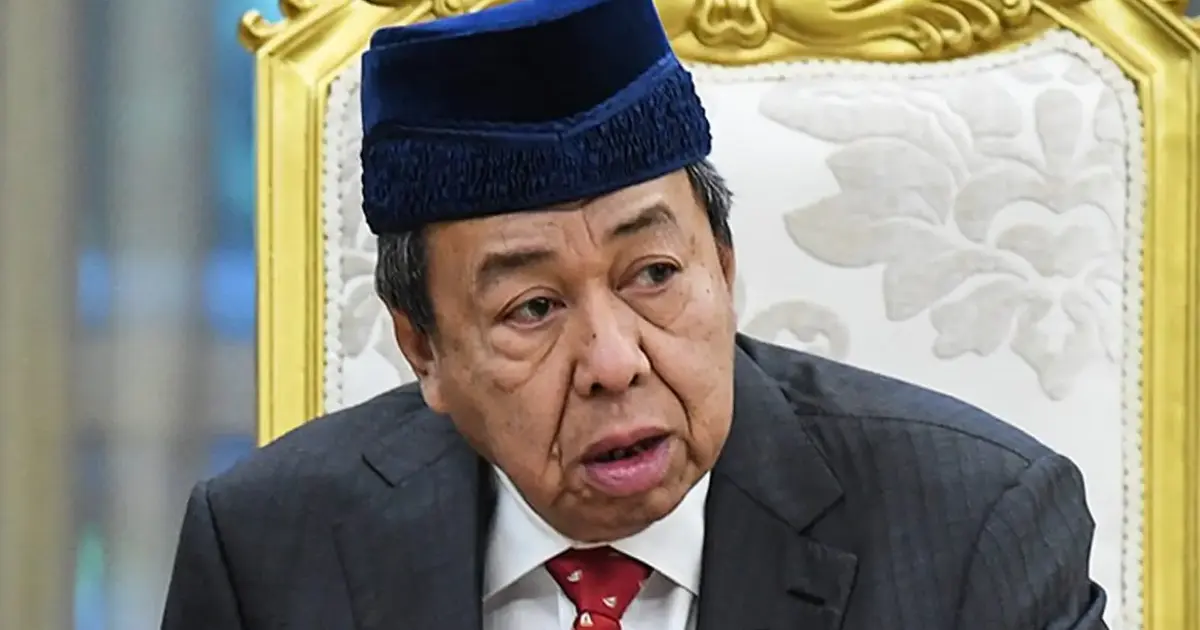
Sultan Sharafuddin of Selangor has credited both former Prime Minister Najib Razak and current Prime Minister Anwar Ibrahim for their roles in advancing the LRT3 light rail transit project, marking a notable statement that spans two distinct political eras and reflects the monarch's pragmatic assessment of infrastructure development priorities affecting his state. The comments arrive at a sensitive juncture in Malaysian politics, where infrastructure legacies have become contested political terrain and where partisan divisions often overshadow technical or developmental achievements. The Selangor ruler's intervention signals that state leadership views the project's progression as transcending party politics, a perspective that carries particular weight given the palace's constitutional role and moral authority in Malaysian governance.
The LRT3 project represents one of Selangor's most ambitious transportation initiatives, designed to enhance connectivity across the Klang Valley region and reduce congestion on major corridors. The line has undergone multiple iterations and funding arrangements across successive administrations, making it a touchstone for evaluating how different governments prioritize infrastructure spending and urban planning in one of Malaysia's most densely populated states. By acknowledging both Najib's historical role in conceptualizing or advancing the project and Anwar's continuation of its implementation, Sultan Sharafuddin has effectively validated the principle that infrastructure development requires sustained commitment across political transitions. This recognition carries implications for how Malaysian stakeholders view government continuity on major public works projects that benefit citizens regardless of which coalition holds power.
However, the Sultan's statement becomes more politically charged through his targeted criticism of DAP's Lim Guan Eng and Tony Pua, two senior figures within the Democratic Action Party whose influence has fluctuated with changing coalitional arrangements. Lim, a prominent DAP leader who previously served as Finance Minister, and Pua, an economist and MP known for infrastructure commentary, have evidently taken positions on the LRT3 project that prompted royal disapproval. The specific grounds for the Sultan's criticism remain significant, as they suggest disagreement about either the project's financing structures, implementation timelines, environmental considerations, or political accountability mechanisms. Such public rebuke from the Selangor ruler carries substantial symbolic weight, as monarchs traditionally reserve direct political criticism for matters they regard as significantly damaging to state interests or governance principles.
The LRT3 project's journey through Malaysian politics has been complicated and sometimes contentious, involving questions about cost overruns, timeline delays, and the appropriate allocation of public resources. Successive administrations have grappled with whether current funding models serve public interest effectively or whether alternative arrangements might produce better outcomes. The involvement of DAP leaders in scrutinizing or critiquing these aspects may have triggered the Sultan's intervention, particularly if their positions were perceived as obstructive to project momentum or dismissive of decisions already made by state authorities. Alternatively, the criticism might stem from disagreements over how the benefits of the completed project should be distributed or how communities along the route should be consulted and compensated.
From a Malaysian governance perspective, this statement illuminates the complex interplay between constitutional monarchies, political parties, and infrastructure governance. The Sultan's ability to credit multiple administrations while criticizing specific figures suggests that palace assessments operate within a framework distinct from partisan competition. This approach can help depoliticize infrastructure discussion and encourage consensus-building around projects affecting public welfare. However, the targeted criticism also demonstrates that Malaysian royalty does not refrain from wading into political disputes when they perceive matters of state importance are at stake. Such interventions, while constrained by constitutional norms, carry considerable political influence and can sway public opinion in ways that require careful interpretation.
For Selangor residents and businesses depending on improved transportation connectivity, the Sultan's comments provide reassurance that the LRT3 remains a priority commanding support across different administrative periods. This continuity is essential for projects requiring multi-year implementation and sustained resource commitment. The public acknowledgment of both Najib and Anwar's contributions also implicitly pressures the current government to maintain momentum and deliver outcomes that justify the sustained political support the project has received. At the same time, the criticism leveled at DAP figures may signal to other opposition politicians that obstruction on infrastructure matters will not pass unchallenged by palace authority, potentially affecting how parliamentary debates on future projects unfold.
The broader implications for Malaysian politics extend beyond the LRT3 itself. The Sultan's willingness to publicly differentiate between leaders he credits and those he rebukes suggests that palace assessments of administrative performance are becoming more explicit and less bound by traditions of impartiality that once prevailed. This shift reflects changing expectations about royal involvement in governance and represents both an opportunity and a risk. When monarchical authority reinforces infrastructure momentum and development priorities, it can accelerate project completion and increase public buy-in. However, if palace criticism becomes seen as politically partisan rather than principled, it risks eroding the constitutional neutrality that makes monarchy an effective unifying institution in diverse plural societies like Malaysia.
The LRT3 project itself remains emblematic of broader transportation challenges facing Selangor and the Klang Valley. Congestion on major routes continues to hamper economic productivity and quality of life, making rapid transit solutions increasingly urgent as the region's population continues growing. The Sultan's public engagement with the project's progress reflects genuine stake in solutions that make his state more liveable and economically competitive. His criticism of specific DAP figures suggests that concerns about the project extend beyond mere partisan politics and involve substantive questions about implementation quality, cost control, and community benefit.
Moving forward, the Sultan's comments may influence how different political factions approach the LRT3 and similar infrastructure initiatives. The acknowledgment of Najib and Anwar's contributions creates space for cross-party discussion about what works in infrastructure governance, potentially reducing unnecessary political blocking and enabling more pragmatic policy debates. Conversely, the criticism of DAP leaders sends a warning that opposition scrutiny, while legitimate in principle, must be constructive rather than merely obstructive if it is to earn palace endorsement. For Malaysian observers, the statement illustrates how infrastructure development intersects with political legitimacy and how monarchical institutions continue shaping governance outcomes in subtle but significant ways.

