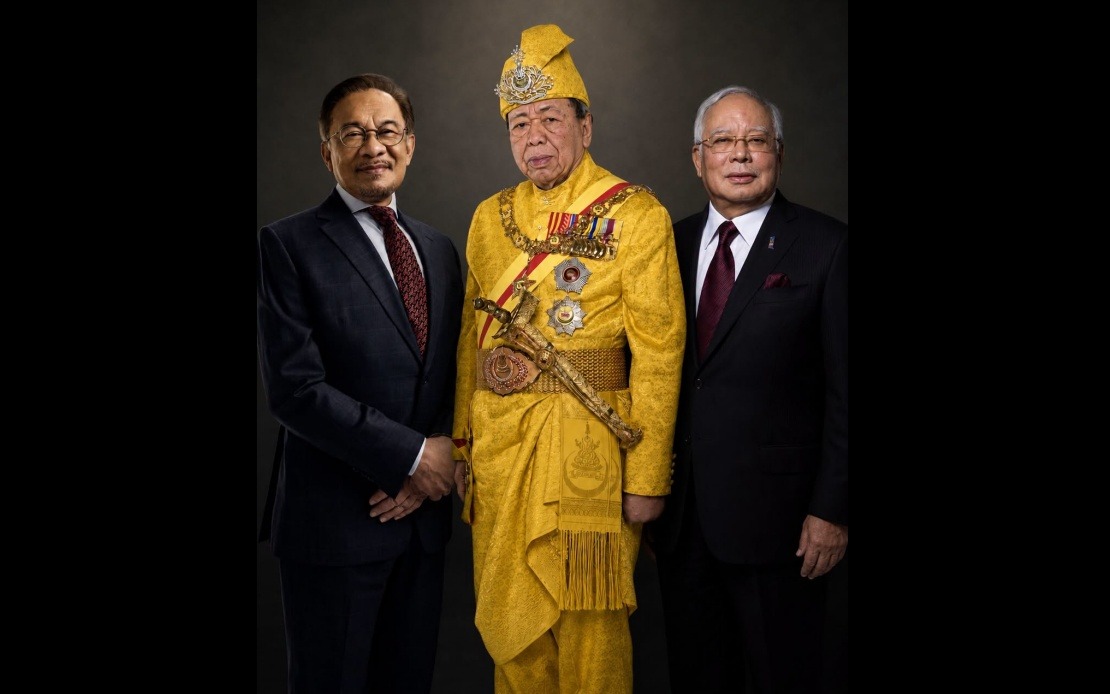
The Sultan of Selangor, Sultan Sharafuddin Idris Shah, has publicly commended Prime Minister Datuk Seri Anwar Ibrahim for ensuring the Shah Alam Line LRT3 project reached completion and began operations this week, marking the resolution of a multi-year infrastructure initiative that has shaped regional transport policy across different administrations. In a formal statement released from Shah Alam, the Sultan acknowledged both the immediate efforts of the current leadership and the broader trajectory that enabled the project's realisation, positioning it as a culmination of sustained commitment rather than a singular achievement.
Since taking office as Prime Minister and Finance Minister in 2022, Anwar's administration has made several critical decisions that directly influenced the project's final form. Most significantly, his government reinstated five stations that had previously been cancelled during earlier phases of planning and development, effectively expanding the network's geographical coverage. Beyond the rail infrastructure itself, the administration has also championed the development of affordable housing in proximity to LRT3 stations, a policy initiative designed to enhance accessibility and create economic opportunities for lower-income residents along the corridor. The Sultan emphasised that he had directed officials to remove any remaining obstacles that might have continued to impede the project's smooth progression.
The genesis of the LRT3 concept emerged from grassroots concerns that the Sultan had received from members of the Selangor public, particularly women in households who witnessed the daily toll of severe traffic congestion on their families. The complaints reflected a fundamental quality-of-life issue—workers, predominantly commuters from Shah Alam, Klang, and surrounding districts, struggled with unpredictable and lengthy journeys to and from Kuala Lumpur, creating strain on family time and workplace productivity. This citizen feedback prompted the Sultan to advocate internally for a rail-based solution that could connect these three critical economic zones and reduce the region's overwhelming reliance on road transport.
Former Prime Minister Datuk Seri Najib Tun Razak responded to this royal initiative by endorsing the project's construction. At that time, Klang faced severe structural limitations that constrained transportation flow—only two bridges spanned the Klang River, creating bottlenecks during peak hours. As an immediate interim measure, the Najib administration abolished the Batu Tiga and Sungai Rasau toll plazas in 2018, offering temporary relief to commuters, though these were acknowledged as stopgap measures rather than permanent solutions. The broader LRT3 initiative represented a longer-term strategic response to the region's transportation deficit.
Despite initial momentum, the project encountered substantial delays following the 2018 change of government, with implementation stalling for over 18 months. Subsequently, the onset of the COVID-19 pandemic introduced an additional 19-month disruption lasting until 2021, compounding the project's timeline challenges. During these extended periods of uncertainty, significant compromises were introduced to reduce overall costs and complexity. Station designs were scaled back, the number of train coaches allocated to the line was decreased, and the aforementioned five stations were removed from the planned alignment, meaning the network temporarily operated at reduced capacity compared to original specifications.
The Sultan was explicit in framing the LRT3 not as a prestige megaproject designed to enhance governmental visibility or competitive standing, but as a utilitarian infrastructure designed primarily for serving the genuine needs of Selangor's residents. This distinction carries particular relevance in Malaysian political discourse, where large capital projects sometimes become associated with political patronage or administration branding. By emphasising the practical rationale—congestion relief, improved commute times, enhanced safety—Sultan Sharafuddin repositioned the narrative away from political achievement and toward collective governance responsibility.
With the line now operational, the Sultan articulated his expectations regarding future management and maintenance standards. He called upon Prasarana Malaysia Bhd, the statutory body responsible for operating the LRT3, to implement rigorous and continuous maintenance protocols to ensure service reliability and passenger safety. This expectation reflects broader concerns within Malaysian public discourse about infrastructure sustainability—the risk that newly completed facilities deteriorate prematurely due to inadequate upkeep or funding constraints. Prasarana's ability to maintain service quality will be closely monitored by both royal oversight and public perception.
Crucially, the Sultan explicitly cautioned against retrospective claims of singular responsibility for the project's completion, stating that he did not wish for any individual or political party to assert exclusive credit for the LRT3's success. Instead, he characterised the outcome as evidence of institutional continuity, sustained commitment, and inter-administration cooperation spanning multiple electoral cycles and shifts in political leadership. This public statement carries implicit guidance to current and future leaders about the importance of protecting long-term infrastructure initiatives from becoming entangled in partisan political competition.
The Sultan articulated his conviction that the operational LRT3 would generate broader economic benefits extending beyond mere congestion reduction. He projected that the rail corridor would catalyse economic development, particularly in Shah Alam, Klang, Petaling Jaya, and Kuala Lumpur, positioning these areas as interconnected nodes within Malaysia's national growth framework. Enhanced connectivity between these key commercial and industrial centres could facilitate business investment, labour market integration, and property development aligned with transit-oriented growth principles increasingly recognised as best practice in Southeast Asian urban planning.
For Malaysian readers, the LRT3's operational status carries implications beyond Selangor's immediate geography. The project demonstrates how infrastructure planning can survive political transitions when conceived as serving public welfare rather than partisan advantage, a principle with relevance for other long-term national development initiatives. The successful reinstatement of cancelled stations under the Anwar administration also illustrates how shifting political priorities can redirect resource allocation toward inclusive development. Furthermore, the emphasis on affordable housing integration suggests a policy evolution toward recognising transit infrastructure as a vehicle for addressing housing affordability—a pressing concern across Malaysia's major metropolitan regions.
The broader regional context shows Southeast Asian governments increasingly confronting similar urban congestion challenges as rapid urbanisation outpaces road infrastructure capacity. The LRT3's trajectory, marked by delays, cost revisions, and scope modifications yet ultimately completed, reflects patterns common across the region's transport megaprojects. Malaysia's experience—particularly the institutional learning required to navigate multiple administrations—offers both cautionary lessons and evidence that cross-political commitment to public welfare can sustain critical infrastructure through complex implementation phases.

