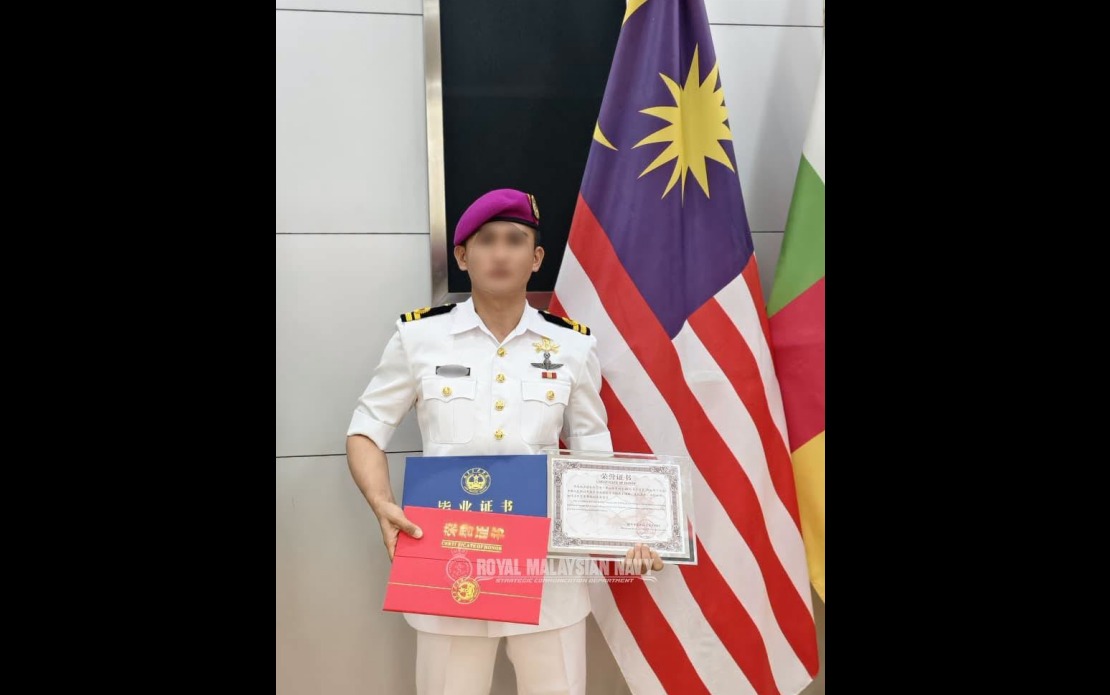
Sultan Sharafuddin Idris Shah, who holds the ceremonial position of Captain-in-Chief of the Royal Malaysian Navy, has publicly recognised the exceptional accomplishment of a PASKAL member who completed advanced sniper training at the PLA Infantry Academy's Shijiazhuang Campus in Hebei Province with distinction. The five-month course, which ran from March through July, saw the officer emerge as the standout performer among a highly competitive international cohort, an achievement the Sultan described as worthy of national pride.
The recognition underscores Malaysia's ongoing military collaboration with China, particularly in specialist training programmes that enhance the operational capabilities of the Royal Malaysian Navy's elite Special Naval Forces. PASKAL, the maritime counterpart to land-based special operations units, benefits significantly from exposure to advanced Chinese military training methodologies, which complement the unit's existing training infrastructure and international partnerships. Such exchanges reflect the deepening defence ties between Kuala Lumpur and Beijing, even as Malaysia maintains its traditional defence relationships with Western allies.
The PASKAL officer's performance was remarkably comprehensive. Beyond the Excellent Student Award that marked his status as course top student, he received the Certificate of Honors—Excellent Cadre recognition and was awarded Silver Badge Medals in recognition of his demonstrated proficiency across multiple assessment criteria. These distinctions are not ceremonial; they reflect rigorous evaluation of technical competence, tactical understanding, and the discipline required to master precision marksmanship under operational conditions.
Competing against 130 counterparts drawn from more than two dozen nations, the Malaysian officer's victory carries symbolic weight. The diversity of the participant pool demonstrates the international appeal and credibility of the PLA Infantry Academy's curriculum, attracting military trainees from allied and partner nations. Malaysia's presence in such programmes, and its ability to produce top-performing students, elevates the country's standing within both regional and global military education networks. Success in such forums translates into enhanced prestige for the participating nation's armed forces.
Sultan Sharafuddin's personal intervention in congratulating the officer reflects the importance placed on military excellence within Malaysia's institutional framework. The Sultan's dual role as constitutional monarch of Selangor and ceremonial head of the navy positions such acknowledements as significant recognition within the military hierarchy. The public nature of the congratulations ensures that the achievement receives broader institutional acknowledgment and serves to motivate other personnel within the ranks of PASKAL and the wider Royal Malaysian Navy.
The sniper specialisation holds particular operational relevance for PASKAL, which operates in maritime environments where precision engagement and extended-range capabilities can prove decisive. Enhanced sniper proficiency among special forces personnel strengthens Malaysia's maritime security posture, particularly as the nation navigates complex regional security challenges in the Strait of Malacca and broader South China Sea. The skill set acquired through such advanced training directly translates into improved operational readiness for one of Southeast Asia's most sophisticated naval special operations units.
The Sultan also extended congratulations to Admiral Tan Sri Dr Zulhelmy Ithnain, the Chief of the Royal Malaysian Navy, and the broader PASKAL and navy personnel contingent. This multilayered recognition acknowledges that individual achievement does not occur in isolation but reflects institutional support systems, effective leadership, and a culture of professional excellence that permeates the entire organisation. Such recognition strengthens institutional morale and reinforces the expectation that personnel will pursue continuous improvement and technical mastery.
For Malaysian defence policy makers, the successful participation of PASKAL personnel in elite international training programmes demonstrates the validity of investing in human capital development and maintaining access to world-class military instruction. The relatively small size of Malaysia's defence budget necessitates strategic choices about where to allocate limited resources; securing spots in premium training courses and ensuring that personnel selected for such opportunities perform at the highest level represents efficient use of defence expenditure.
The broader context of military training exchanges also reflects Malaysia's pragmatic approach to defence relationships. While maintaining strong ties with traditional Western partners—particularly the United States and United Kingdom—Malaysia has demonstrated willingness to deepen military engagement with China where operational benefits exist. This balanced approach allows Malaysian forces to benefit from the most advanced training available globally without creating unnecessary tensions or perceptions of strategic alignment that might complicate regional relationships.
The achievement also carries implications for personnel retention and career progression within PASKAL. Opportunities to train at prestigious international institutions and achieve recognition on the global stage enhance the attractiveness of military service for highly skilled individuals. In an era when competition for talent extends across sectors, the ability to offer career advancement through access to world-class training helps PASKAL maintain its status as a desirable posting within the Royal Malaysian Navy.
Looking forward, this success may encourage Malaysian defence authorities to seek additional slots in competitive international training programmes, whether through the PLA or other military academies. Such placements not only develop individual expertise but also facilitate relationship-building with peer militaries, creating informal networks that can prove valuable for future cooperation on regional security matters. The diplomat dimension of military training often receives less attention than the technical dimension, yet it may prove equally important for building the partnerships that underpin Southeast Asia's security architecture.

