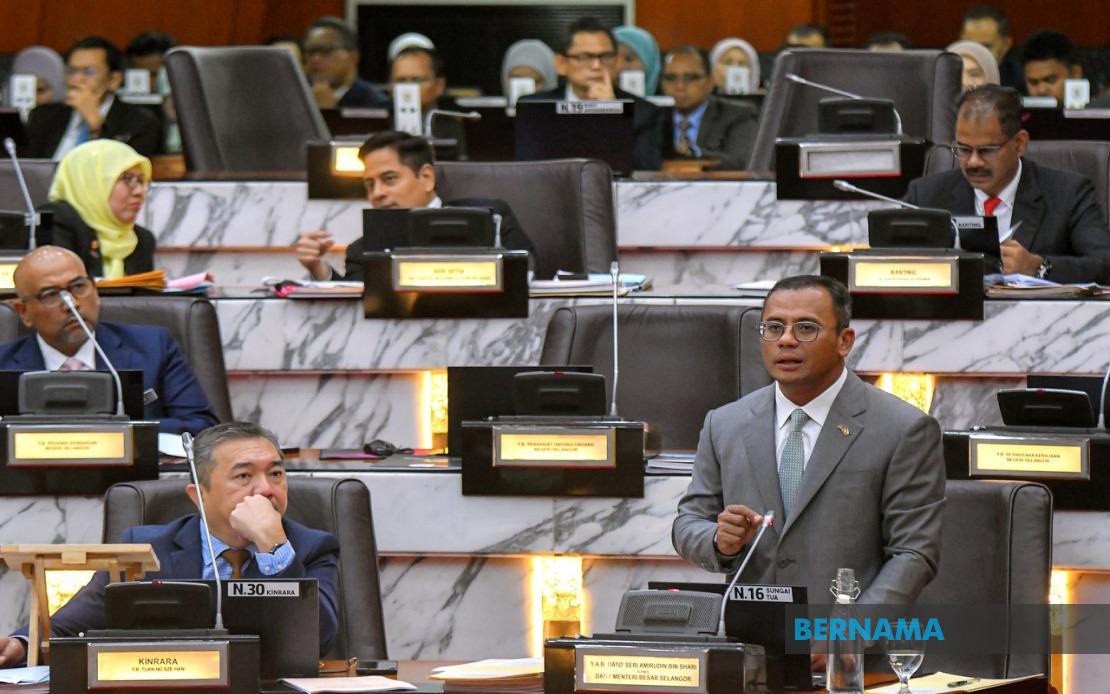
The Selangor state government is moving forward with an ambitious expansion of its tertiary education support programme, committing to increase the number of Higher Education Institution Study Incentive (HPIPT) recipients to 5,000 in the coming fiscal year. Menteri Besar Datuk Seri Amirudin Shari revealed the plan during a state legislative assembly session, responding to constituent concerns about the widening gap between demand and available funding. The proposed increase represents a substantial jump from the current annual allocation of 3,000 recipients, underscoring the government's recognition that existing support mechanisms have fallen short of meeting student needs across the state.
The decision to expand the programme reflects the sustained pressure on Selangor's education assistance infrastructure. The state government has received applications exceeding 5,000 in both the current year and 2025, indicating that demand persistently outpaces available resources. This consistent oversubscription prompted officials to reassess whether the state's fiscal position could accommodate a higher allocation without compromising other priority areas. The menteri besar indicated that the government is evaluating whether it can stretch the budget to support between 5,000 and 6,000 recipients, depending on final revenue assessments and budgetary constraints.
Crucially, Amirudin's statement reveals that Selangor has previously operated the programme at the proposed higher threshold. The government previously extended HPIPT assistance to 5,000 recipients, suggesting that returning to this level represents a restoration rather than an entirely new commitment. The menteri besar's reference to "Insya-Allah" restoring this number in the 2027 Budget next year carries an implicit acknowledgment that fiscal management will determine whether the expansion proceeds as planned. For Malaysian readers familiar with state budget cycles, this language indicates both genuine intent and realistic recognition of budgetary uncertainties.
Beyond simply increasing the recipient count, the Selangor administration is contemplating structural reforms to how the HPIPT operates. Officials are reviewing the application submission period to provide students with adequate time after receiving higher education institution admission confirmations to submit their HPIPT applications. Currently, the timing mismatch between when students learn of their university acceptance and when HPIPT applications close may prevent eligible candidates from applying. This administrative adjustment could increase the effective reach of the programme without necessarily requiring proportional budget increases, as it simply removes barriers preventing qualified applicants from accessing support for which they are eligible.
More innovatively, the state government is considering opening HPIPT applications on a twice-yearly basis rather than maintaining a single annual window. Such a modification would accommodate students who enrol at higher education institutions at different times throughout the academic calendar, particularly those beginning studies in the second or third semester. For Malaysian tertiary education, which increasingly features flexible intake schedules at both public and private institutions, this reform aligns policy with evolving enrolment patterns. The change would theoretically expand the pool of eligible applicants and ensure that admission timing does not arbitrarily exclude students from receiving state support.
The HPIPT itself provides RM1,000 in direct financial assistance to qualifying Selangor students pursuing studies at recognised higher education institutions, whether public or private sector. The programme's scope extends beyond traditional university bachelor degree programmes, encompassing Level 4 Skills Certificates and diploma qualifications. This breadth is significant for Malaysian policymakers considering education financing, as it acknowledges that not all meaningful post-secondary education follows the conventional university pathway. The inclusion of skills-based and vocational credentials reflects evolving understanding that tertiary education encompasses diverse credential types increasingly valued by employers and the economy.
For Southeast Asian readers, Selangor's approach to education financing offers both model and cautionary lesson. As a wealthy Malaysian state, Selangor possesses fiscal capacity that most regional jurisdictions lack, enabling meaningful expansion of education support. Yet even Selangor faces constraints, with demand consistently exceeding available allocations. This suggests that across the region, education financing gaps are structural rather than merely the product of insufficient state capacity. The Selangor government's willingness to revisit and expand commitments when demand evidence emerges provides a counterpoint to narratives of inevitable austerity in education spending.
The policy also reflects broader Malaysian discourse around education equity and social mobility. The HPIPT targets students from Selangor regardless of family income or educational pathway chosen, treating education finance as a public good worthy of state investment. In context of rising tertiary education costs across Malaysia and Southeast Asia, where students and families increasingly shoulder tuition burdens, state-funded incentive schemes represent deliberate redistribution toward access. For Malaysian university hopefuls and their families, the expanded HPIPT allocation represents meaningful additional support, though even at 5,000 recipients it will address only a portion of annual demand.
The implementation timeline warrants attention. The menteri besar specifically referenced the 2027 Budget, suggesting the expanded allocation will feature in next year's fiscal planning. This positioning allows time for government revenue projections and budget allocation discussions to proceed through normal channels. For stakeholders seeking clarity on expansion prospects, the explicit budget cycle reference provides a concrete timeframe rather than indefinite speculation. However, the conditional language about Selangor's revenue position and the range between 5,000 and 6,000 potential recipients leaves room for adjustment should fiscal circumstances change.
For Malaysian state governments beyond Selangor and for policymakers across Southeast Asia, the Selangor case demonstrates how education support policies respond to sustained demand evidence and constituent pressure. The state's willingness to reconsider allocation levels following systematic evidence of oversubscription offers a model for evidence-based policy adjustment. Equally, the structural reforms to application timing and frequency suggest that increasing financial allocations alone may be insufficient; administrative mechanisms must also evolve to ensure that expanded resources translate into genuine accessibility for intended beneficiaries. As higher education costs continue climbing across the region, such interventions assume heightened importance.

