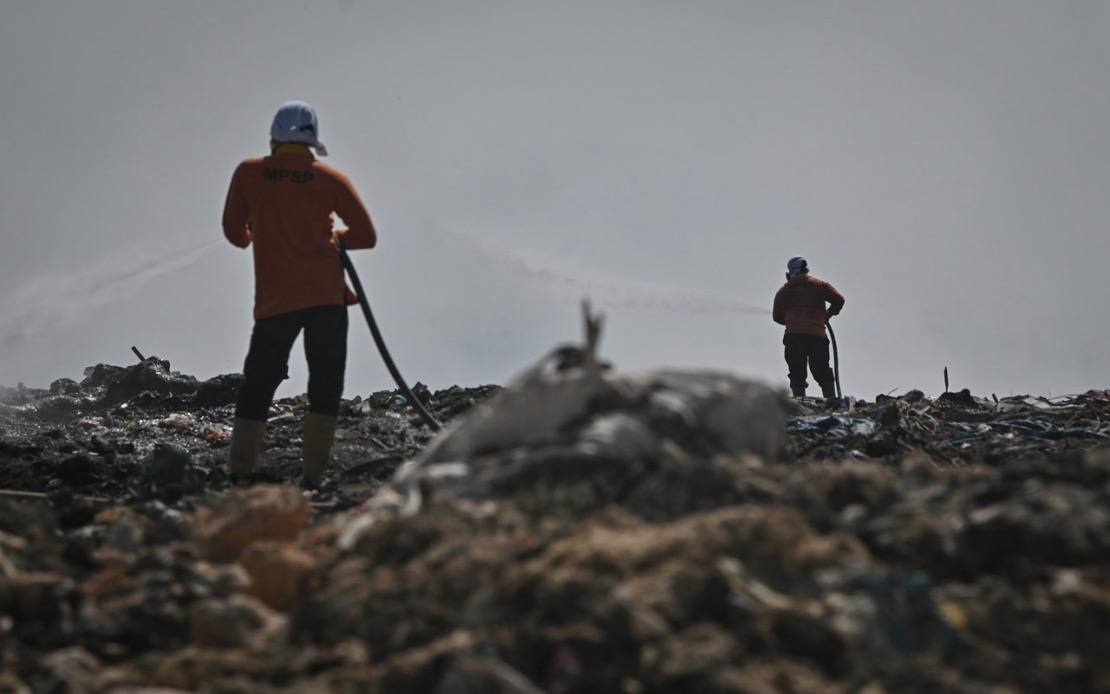
The Selangor state government has unveiled an ambitious plan to breathe new life into the long-dormant Teluk Kapas landfill in Pasir Panjang, Klang, converting the sprawling 80-acre liability into a commercially viable green asset. The initiative, announced by State Infrastructure and Agriculture Committee chairman Datuk Izham Hashim, marks a significant shift in how Malaysia's most developed state approaches the legacy of its waste management infrastructure. Rather than abandoning the site—which has sat dormant since 2007—authorities are embracing innovative recovery techniques that align with contemporary circular economy frameworks and offer a potential template for addressing similar challenges elsewhere in the country.
The partnership formalised through a Memorandum of Understanding between KDEB Waste Management and Landasan Lumayan Sdn Bhd represents a pragmatic approach to a vexing environmental problem. The 32.3-hectare site contains approximately one million tonnes of solid waste compressed to depths reaching 15 metres, creating a compacted mass that conventional extraction methods would require RM200 million to address. This financial barrier has effectively frozen remediation efforts for nearly two decades, allowing environmental degradation to accelerate as leachate from decomposing materials continues polluting surrounding waterways. By partnering private sector expertise with state oversight, Selangor is attempting to unlock sustainable recovery pathways that neither the government nor market actors could achieve independently.
The rehabilitation strategy prioritises environmental restoration alongside resource recovery. Leachate management stands central to this approach, as decades of accumulated waste have created persistent pollution challenges affecting nearby rivers and groundwater quality. Beyond treatment, the project must address physical instability—managing long-term settlement of the massive waste heap and ensuring slope stability to prevent catastrophic failure. These engineering challenges compound the environmental dimension, requiring integrated solutions that simultaneously extract value while preventing environmental catastrophe. The biological, mechanical, and material recovery methods outlined represent a multi-layered assault on problems that have proven intractable through conventional demolition and removal strategies.
The projected recovery rate of 70 to 80 per cent recyclable material represents an ambitious target grounded in feasibility studies. This proposition essentially transforms the landfill from a repository of inert waste into an extraction site for resources that modern economies desperately need. Metals, plastics, and other materials buried decades ago can be recovered and reintegrated into supply chains, reducing pressure on virgin resource extraction. For Malaysia, where waste generation continues accelerating alongside rapid industrialisation and urbanisation, this recovery model offers insights into managing the mounting inventory of historical waste while simultaneously addressing contemporary disposal challenges.
Commerciality provides the crucial underpinning for the project's sustainability. Unlike conventional landfill remediation, which typically represents a drain on public finances with limited offsetting revenues, this rehabilitation model incorporates recovered materials and operational revenues into financial projections. The arrangement allows treatment costs, leachate management, and long-term maintenance to be funded through operational income rather than perpetual public subsidy. This commercial viability is essential for scalability—Datuk Izham explicitly indicated intentions to expand the model across Selangor's other defunct landfills if the Teluk Kapas pilot demonstrates genuine financial and environmental efficacy. Success here could reshape how other states manage their own landfill legacies.
The project's designation as part of the Selangor Maritime Gateway development corridor provides crucial context for land value realisation. Beyond immediate waste recovery revenues, successful rehabilitation positions the site for long-term development potential. Cleaning contaminated land and stabilising environmental conditions creates opportunities for subsequent productive uses—commercial facilities, recreational areas, or light industrial development—that generate sustained economic returns. This layered value creation distinguishes the approach from simple remediation, where environmental restoration remains an end in itself rather than a stepping stone toward broader economic regeneration.
From a national sustainability perspective, the initiative exemplifies Malaysia's shifting orientation toward circular economy principles. As the country grapples with rising waste volumes, depleting landfill capacity, and increasing environmental consciousness among consumers and policymakers, projects demonstrating waste-as-resource approaches become increasingly vital. The Teluk Kapas project illustrates how legacy waste—a byproduct of earlier, less environmentally conscious development phases—can be reprocessed through contemporary recovery technologies and frameworks. This retroactive application of modern circular principles to historical mistakes suggests a pathway for addressing the environmental inheritance that rapid industrialisation created.
The involvement of Datuk Ng Suee Lim, simultaneously KDEB Waste Management chairman and State Local Government and Tourism Committee chairman, underscores the cross-sectoral coordination necessary for success. Waste management intersects with local government administration, environmental protection, economic development, and tourism branding. A single individual holding both positions symbolises institutional alignment, though it also suggests the challenge of compartmentalised governance structures when addressing complex, interconnected problems. Success requires exactly this kind of horizontal integration across traditionally siloed functions.
For Malaysian readers and policymakers, the Teluk Kapas initiative offers several cautionary and encouraging lessons. The cautionary element centres on the massive costs of deferred environmental action—the RM200 million conventional remediation estimate underscores how expensive environmental cleanup becomes when decades of accumulation precedes intervention. The encouraging element demonstrates that even apparently intractable problems can be addressed through innovation partnerships, creative financing mechanisms, and willingness to reconceptualise waste as potential resource. As other Malaysian states and municipalities confront their own landfill legacies, the Selangor model provides a credible alternative to indefinite abandonment or prohibitively expensive conventional solutions. The true measure of this initiative's success will emerge over subsequent years as the pilot project demonstrates whether theoretical recovery rates translate into practical environmental restoration and genuine commercial sustainability.

