Selangor has reinforced its dominance as Malaysia's economic engine, with gross domestic product climbing to RM460.1 billion in 2025—a gain of RM28 billion from the previous year—according to official statistics released by the Department of Statistics Malaysia. The expansion has widened Selangor's contribution to the national economy to 26.5 percent, positioning the state as an unparalleled force in driving Malaysia's overall growth trajectory.
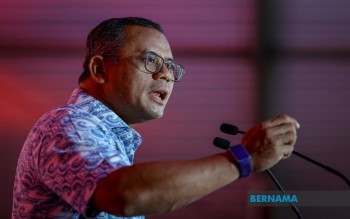
Menteri Besar Datuk Seri Amirudin Shari highlighted that Selangor's economic increment alone exceeded the total growth achieved by any other state in the country, underscoring the state's outsized role in national prosperity. The achievement also surpassed projections made jointly by Universiti Putra Malaysia and the Selangor Research Institute, which had forecast growth to approximately RM455.3 billion, demonstrating stronger-than-expected economic performance across multiple sectors.
Comparative analysis reveals the scale of Selangor's economic dominance within the federation. While Kuala Lumpur posted respectable growth of RM13.2 billion to reach RM265.1 billion, Selangor's economy has expanded to exceed Kuala Lumpur's by more than 1.7 times. The state's economy is now nearly 2.7 times larger than Johor's, Malaysia's second-largest state by land area and population, illustrating concentration of economic activity in the Klang Valley region and surrounding districts.
Selangor's growth rate of 6.3 percent substantially outpaced Malaysia's nationwide expansion of 5.2 percent, suggesting the state is expanding faster than the national average and capturing an increasing share of new economic opportunities. This differential growth has implications for regional development policy, as it raises questions about resource allocation and whether smaller, less developed states require targeted interventions to narrow economic disparities.
Three economic sectors propelled Selangor's expansion, with the services industry providing the largest boost of RM15.9 billion, reflecting the state's evolution as a centre for commerce, finance, and professional services. Manufacturing contributed RM5.3 billion to growth, while the construction sector added RM3.7 billion, demonstrating diversification across labour-intensive and capital-intensive industries that provide employment opportunities across skill levels.
Selangor's sectoral dominance within the national economy is striking. The state accounts for 35.9 percent of all construction activity nationwide, suggesting major infrastructure and property development projects are concentrated here rather than distributed across states seeking economic diversification. Manufacturing output represents 32.8 percent of Malaysia's factory production, while services contribute 27.1 percent to the national total, positioning Selangor as essential to Malaysia's competitive advantage in multiple economic domains.
The state government attributes this performance partly to structured economic planning under the First Selangor Plan (RS-1), a five-year development framework spanning 2021 to 2025. During this period, the state economy expanded by 33.94 percent, an increase of RM116.6 billion from a baseline of RM343.5 billion, demonstrating that strategic planning and coherent policy implementation can generate substantial wealth creation over a medium-term horizon. This trajectory suggests that economic development is neither inevitable nor spontaneous but results from deliberate governance choices.
The magnitude of Selangor's economic output raises important considerations for Malaysian federalism and regional competitiveness. With one state generating more than a quarter of national GDP, Malaysia exhibits significant spatial concentration of economic activity. This creates advantages in terms of efficiency and agglomeration benefits that attract investment and talent, but also raises sustainability questions about whether excessive concentration creates vulnerabilities if major sectors experience disruption or whether it reduces opportunities for less-developed regions to achieve meaningful growth.
Looking ahead, state leadership has articulated an ambitious objective: becoming Malaysia's first state to achieve a RM500 billion economy. Reaching this milestone would require additional growth of approximately RM40 billion, achievable through continued expansion in existing sectors or emergence of new high-value industries. However, this target also reflects confidence in the state's trajectory and a commitment to maintaining momentum in the face of global uncertainties including trade tensions and shifting investment patterns.
Invest Selangor, the official investment promotion agency, framed the 2025 results as exceptional given they represent the second consecutive year surpassing the RM400 billion threshold. This milestone reflects transition from sporadic high growth to sustained economic expansion, suggesting structural changes rather than temporary cyclical improvements. The agency's emphasis on consecutive years of such performance may signal confidence that the state has achieved a new baseline for economic activity rather than experiencing a one-time surge.
For Malaysian policymakers and private sector strategists, Selangor's economic trajectory presents both inspiration and challenge. The state demonstrates that focused planning, sector development, and investment in enabling infrastructure can generate substantial returns, offering a potential model for other regions seeking acceleration. However, the widening gap between Selangor and other states also underscores the risks of economic imbalance, potentially necessitating coordinated national policies to nurture competitive advantages in peripheral regions while maintaining momentum in existing growth centres.
The state government's commitment to improving living standards alongside economic expansion signals recognition that GDP growth alone proves insufficient for sustainable development. Translating RM460.1 billion of economic output into tangible improvements in wages, employment quality, public services, and social mobility remains an ongoing challenge requiring sustained attention and resources. Success in this dimension would demonstrate that Selangor's growth benefits are broadly shared rather than concentrated among capital owners and wealthy segments of society.

