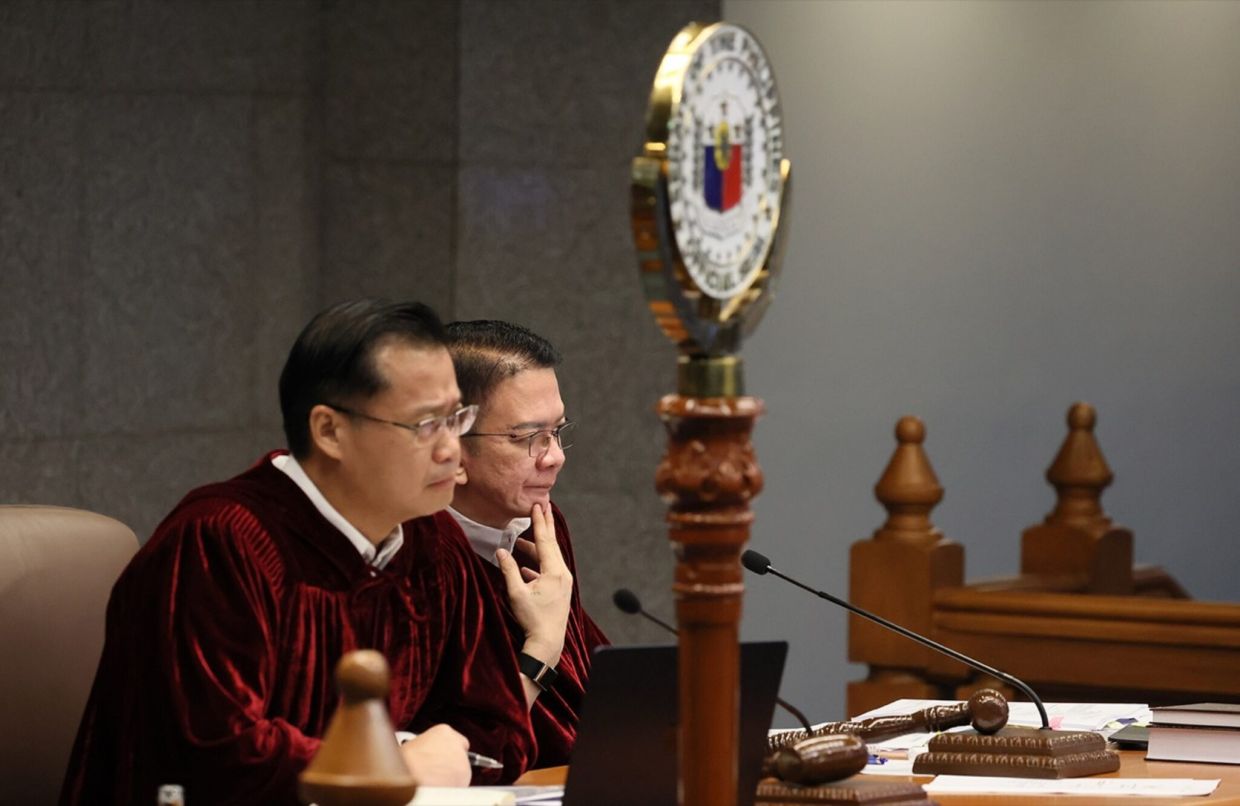
The Philippine Senate's impeachment court faces a critical procedural decision that could reshape Vice President Sara Duterte's trial, with prosecutors seeking access to her financial records including bank accounts, tax filings, and Anti-Money Laundering Council documents. The vote scheduled for Monday afternoon represents one of the most significant rulings yet in the trial, now entering its second week, as prosecutors argue that financial transparency is essential to establishing whether Duterte amassed wealth beyond what her legitimate income would justify and whether she betrayed public trust during her tenure as a state official.
Prosecution spokesperson Benjamin Tolosa Jr. projected confidence that the Senate would grant the subpoena request, framing the decision as straightforward given established legal precedent. He emphasized that the 2012 impeachment trial of former Chief Justice Renato Corona provided direct historical justification, noting that the Senate had previously ordered production of bank records despite constitutional bank secrecy protections. Under Republic Act No. 1405, the bank secrecy law explicitly exempts impeachment proceedings from its confidentiality restrictions, creating a clear legal foundation for disclosure in this context.
The scope of the prosecution's request extends to documents spanning multiple decades of Duterte's public service, encompassing her periods as Davao City vice mayor and mayor before her election as vice president. Prosecutor Chel Diokno presented evidence that Duterte's financial activity exceeded P3 billion between 2007 and 2013 alone, suggesting transactions far exceeding ordinary official compensation. The prosecution contends that such historical records remain relevant because the impeachment allegations address patterns of wealth accumulation across her entire career in public service, not merely her time as vice president.
However, the defense mounted a vigorous counter-argument, with lead counsel Michael Poa characterizing the request as an impermissible fishing expedition designed to manufacture evidence after impeachment charges had already been filed. Poa questioned whether the Senate possesses authority to compel disclosure of confidential information without violating constitutional due process protections and existing privacy legislation. Critically, he argued that including records from Duterte's tenure as Davao vice mayor extends the subpoena beyond legitimate impeachment scope, since only officials occupying impeachable offices at the time of alleged offences should face such scrutiny. A 2025 Supreme Court ruling in Duterte v. House of Representatives established that impeachable conduct must occur while the official holds an impeachable position.
The defense also challenged the inclusion of records belonging to Duterte's husband, lawyer Manases Carpio, arguing that third-party financial documents fall outside the impeachment framework since Carpio himself is not subject to impeachment. Furthermore, Poa contended that while the bank secrecy law recognizes an impeachment exception, this exception does not extend automatically to Anti-Money Laundering Council reports or tax records governed by separate statutes that contain no such explicit exemption. The breadth of the temporal scope—reaching back nearly two decades—represented another point of contention, with the defense characterizing it as an unreasonable burden on the respondent's privacy.
This procedural confrontation reflects deeper tensions in Philippine governance between accountability for public officials and protection of individual financial privacy. The prosecution's insistence on financial disclosure rests on the principle that those wielding state power must submit to heightened scrutiny regarding their personal enrichment. Duterte's legal team counters that even impeachment proceedings must respect constitutional boundaries and cannot become instruments for wholesale invasion of privacy without clear jurisdictional limits.
Civil society organizations have mobilized to support the prosecution's position, drawing historical lessons from the contentious 2001 impeachment trial of former President Joseph Estrada. The August Twenty-One Movement warned against repeating the infamous "second envelope" controversy, when the Senate blocked evidence that ultimately proved crucial to public judgment and Estrada's eventual removal. The group argued that if Duterte possesses nothing to hide, transparency would vindicate her, but withholding evidence would fuel public suspicion regardless of guilt or innocence.
Faith-based coalition Kingdom Keepers articulated a more pointed moral argument, contending that public officials must be held accountable for their financial conduct and cannot shield themselves behind privacy claims when suspected of using state office to accumulate wealth. Led by activist priest Fr. Robert Reyes and social anthropologist Dr. Melba Padilla Maggay, the coalition framed financial disclosure as a fundamental requirement of democratic governance rather than an excessive intrusion into personal affairs.
The impeachment trial itself encompasses four distinct articles accusing Duterte of misusing confidential funds, accumulating unexplained wealth, and making threatening statements directed at President Ferdinand Marcos, first lady Liza Araneta-Marcos, and former Speaker Martin Romualdez. Conviction on any article would result in removal from office and permanent disqualification from holding public position, making the trial's outcome consequential for Philippine political dynamics.
Beyond the immediate subpoena question, the trial's trajectory suggests prosecutors are preparing additional testimony to bolster their case. National Bureau of Investigation Director Melvin Matibag is scheduled to testify regarding the agency's investigation into Duterte's alleged threats, specifically addressing findings that her remarks constituted part of a coordinated plan rather than spontaneous utterances. This testimony could prove particularly damaging if it demonstrates premeditation and intent rather than careless speech.
The Senate's impending decision will establish important precedent regarding the balance between official accountability and individual privacy rights in Philippine impeachment jurisprudence. A vote to grant the subpoena would signal that financial transparency takes precedence in cases of suspected wealth abuse by high officials. Conversely, denying the request would suggest the Senate privileges privacy protections even in impeachment contexts where public trust allegations require financial scrutiny. For the broader region, the outcome carries implications for how Southeast Asian democracies handle executive accountability and the scope of investigative powers available to legislatures examining official misconduct.

