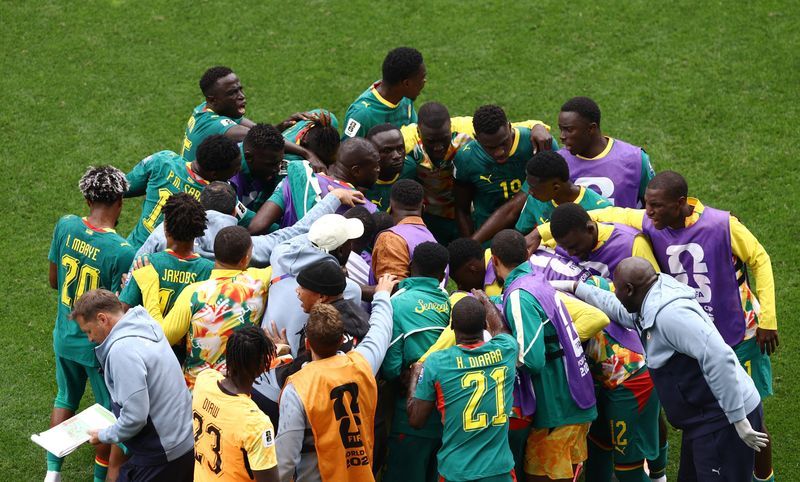
Senegal's football federation has ignited a contentious dispute over medical support provided to the national team during the recent World Cup in North America, with federation president Abdoulaye Fall alleging that the team physician lacked the necessary qualifications for the role. The controversy emerged as officials conducted a post-mortem examination of the country's disappointing tournament performance, adding another layer of institutional dysfunction to an already fraught campaign.
Fall disclosed during a press conference on Monday that the team doctor was "trained as a gynaecologist," suggesting a fundamental mismatch between the medical professional's background and the specialized demands of football at the highest competitive level. The federation chief framed the revelation as a discovery made relatively late in the tournament preparation process, implying that the issue had not been identified and remedied with adequate time to secure proper medical infrastructure before the World Cup commenced.
According to Fall's account, the presence of a physician without sports medicine credentials created palpable anxiety within the squad. Players reportedly expressed insufficient confidence in the available medical support and sought reassurance that their health and injury management would receive expert attention throughout the tournament. This loss of player confidence in the medical team represents a significant undermining of team cohesion and morale during a competition where physical fitness and injury prevention are paramount concerns.
In response to player concerns, the federation moved to bolster medical coverage by recruiting additional medical expertise to supplement the existing team doctor. Fall emphasized that this remedial action was driven by the principle that player welfare and health considerations must take absolute precedence over other considerations, suggesting the federation recognized the gravity of the situation and took corrective steps to address it.
However, the Senegalese Association of Sports Medicine issued a sharp rebuttal late Monday, categorically rejecting the federation's allegations as "unfounded and defamatory." The sports medicine body mounted a robust defense of the team doctor's professional standing and qualifications, challenging the federation president's characterization of his background and expertise.
According to the sports medicine association's statement, the team doctor Abderahmane Fediore holds a specialist diploma in sports medicine and sports biology from Cheikh Anta Diop University's faculty of medicine, credentials that directly contradict the federation's suggestion that he lacked sports medicine training. This qualification from a recognized medical institution provides a foundation of legitimate sports medicine expertise rather than a gynaecological background.
Fediore's professional history further substantiates his sports medicine credentials. He previously held a leadership position managing the physiotherapy department at Fann Hospital, one of Senegal's major medical institutions, demonstrating substantive clinical experience in rehabilitation and sports injury management. His tenure as Senegal's team doctor stretches back to 2017, a tenure spanning three World Cups and five Africa Cup of Nations tournaments, indicating long-standing institutional trust in his capabilities across multiple tournament cycles.
The federation's criticism must therefore be contextualised within the broader institutional failures that characterized Senegal's World Cup campaign. On Saturday, federation officials terminated coach Pape Bouna Thiaw's employment, citing the team's tournament results as necessitating a coaching change. This managerial dismissal indicates that responsibility for poor performance extends beyond medical support into tactical direction and strategic preparation.
Senegal's tournament collapse became particularly striking given the team's elevated expectations entering the competition. Just months earlier in January, the squad had captured the Africa Cup of Nations title by defeating Morocco in the final, positioning the nation as a genuine contender for World Cup success in North America. This recent continental triumph had generated considerable optimism about the team's ability to perform on the global stage.
The actual tournament narrative proved profoundly disappointing. Senegal surrendered both opening group stage matches, falling to France and Norway in successive games and thereby departing the competition at the group stage. Most agonizing was their defeat to Belgium in the knockout round, where Senegal squandered a commanding two-goal advantage with just five minutes remaining in regular time, only to concede a third goal during extra time and lose 3-2. This collapse from a position of near-certain advancement exemplified the team's mental fragility and tactical inadequacy throughout the tournament.
Within this context of comprehensive institutional failure, the federation's sudden criticism of the team doctor's credentials reads as potential scapegoating or deflection of responsibility from senior officials and coaching staff whose strategic decisions and preparation directly influenced outcomes. The federation's elevation of the medical credentials dispute during a post-tournament review process raises questions about whether legitimate concerns about medical support were being addressed during the tournament itself or whether they represent retroactive attempts to explain disappointing results.
The dispute underscores deeper structural problems within Senegalese football governance. The contradiction between the federation president's public allegations and the sports medicine association's documented counter-evidence suggests either a serious communication breakdown between football and medical institutions or a troubling willingness among federation officials to make unsubstantiated claims about professional credentials. Either scenario reflects institutional instability that extends well beyond World Cup performance and raises concerns about governance and accountability within Senegalese football administration.

