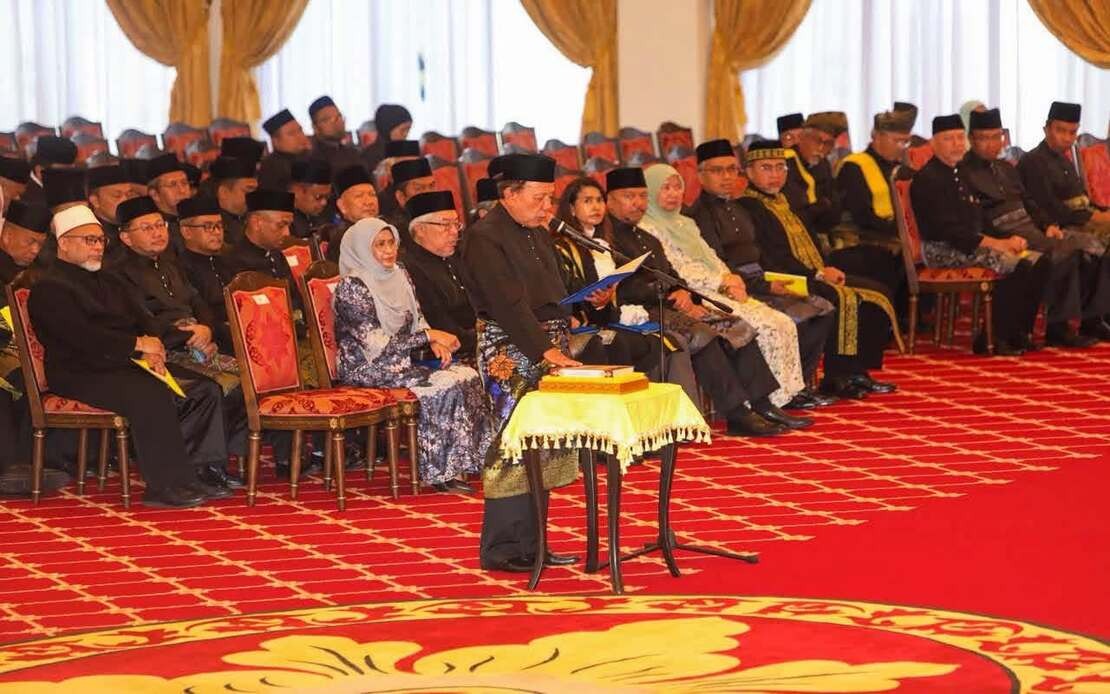
The Malaysian federal government has rallied behind Datuk Ismail Lasim following his formal appointment as Negeri Sembilan's new Menteri Besar on August 2. The 67-year-old Juasseh assemblyman took his oath of office before Tuanku Muhriz Tuanku Munawir, the Yang Dipertuan Besar of Negeri Sembilan, at the Balairong Seri of Istana Besar Seri Menanti, marking a significant leadership transition in the state administration.
Deputy Prime Minister Datuk Seri Dr Ahmad Zahid Hamidi, who serves concurrently as the Rural and Regional Development Minister, extended formal congratulations through a public statement on social media. His message emphasised the gravity of the responsibility attached to the position, framing Lasim's appointment as an opportunity to advance state development. Zahid conveyed confidence that Lasim possessed the capability to execute his duties effectively, while pledging collective support from federal leadership to enhance Negeri Sembilan's standing and prospects.
Defence Minister Datuk Seri Mohamed Khaled Nordin similarly offered his congratulations, viewing the appointment through the lens of institutional continuity and developmental momentum. Mohamed Khaled stressed that assuming leadership of a state represents a weighty mandate from citizens, and he expressed optimism that the incoming administration would sustain the trajectory of stability and equitable progress that Negeri Sembilan has maintained. His remarks underscored the interconnectedness between federal and state governance in ensuring sustained economic and social advancement.
Plantation and Commodities Minister Datuk Seri Dr Noraini Ahmad characterised the leadership change as a pivotal juncture for Negeri Sembilan's institutional renewal. She positioned Lasim's elevation as a watershed moment enabling the state to embark upon a fresh chapter, while offering encouragement for the execution of his expanded mandate. Her statement incorporated religious sentiment, reflecting a common feature of official responses in Malaysian political contexts, and highlighted the aspiration that Lasim's tenure would generate tangible benefits for Negeri Sembilan's residents.
Ismail brings substantial political depth to the role, having accumulated nearly three decades of involvement in Negeri Sembilan's governance landscape. His initial foray into elected politics occurred in 1999 when he secured election as a state assemblyman, beginning a career trajectory that would establish him as a fixture within the state administration. This extended engagement with local constituencies and legislative processes has provided him with granular understanding of Negeri Sembilan's developmental priorities and institutional mechanics.
A critical phase of Lasim's public service spanned from 2004 onwards, when he received appointment to the state executive council. Throughout three consecutive terms in the state administration—extending until 2018—he occupied responsibility for the education portfolio, positioning him as a central architect of the state's human capital development strategies. His tenure overseeing educational policy afforded him influence over curriculum frameworks, institutional capacity-building, and initiatives designed to enhance workforce readiness within Negeri Sembilan.
The formulation and implementation of education policies constitute his most substantive area of documented expertise, representing a domain where he exercised direct administrative authority over resource allocation and strategic direction. His involvement in human capital development initiatives reflects broader efforts within Negeri Sembilan to strengthen institutional foundations for long-term competitiveness and social mobility. This background positions him to integrate educational considerations into broader state developmental agendas.
Lasim's appointment occurs within Malaysia's evolving political configuration following recent electoral outcomes and coalition realignments. His elevation to the Menteri Besar position reflects continued confidence from Barisan Nasional-aligned structures in state governance, and signals continuity with developmental orientations pursued under previous administrations. The coordinated expressions of support from multiple federal ministers suggest institutional alignment between Putrajaya and Seremban on governance priorities and resource-sharing arrangements.
The succession process and accompanying federal endorsements may carry implications for ongoing state-federal relations within Peninsular Malaysia's political economy. Negeri Sembilan occupies a strategically important position as a Klang Valley-proximate state with growing urbanisation pressures and demands for infrastructure modernisation. The incoming administration's capacity to navigate developmental challenges while maintaining fiscal discipline will shape regional investment patterns and demographic dynamics within the broader Selangor-Negeri Sembilan-Federal Territories conurbation.
Lasim's administrative experience, concentrated within education and human development policy domains, may influence his strategic emphasis during his tenure as chief executive. The priorities he articulates regarding industrial development, urban planning, and economic diversification will provide early signals regarding his vision for state transformation. Federal support articulated through congratulatory statements may translate into policy coordination mechanisms and resource allocations that either expedite or constrain his development agenda.
The ceremonial affirmation of Lasim's appointment through formal oaths before the state ruler represents the constitutional culmination of a selection process that involved multiple institutional actors. His swearing-in symbolises the transfer of executive authority and the renewal of the social contract between state government and Negeri Sembilan residents. The federal government's prominent engagement in celebrating this transition reflects recognition that state-level governance effectiveness directly influences national development objectives and citizen satisfaction with democratic institutions.

