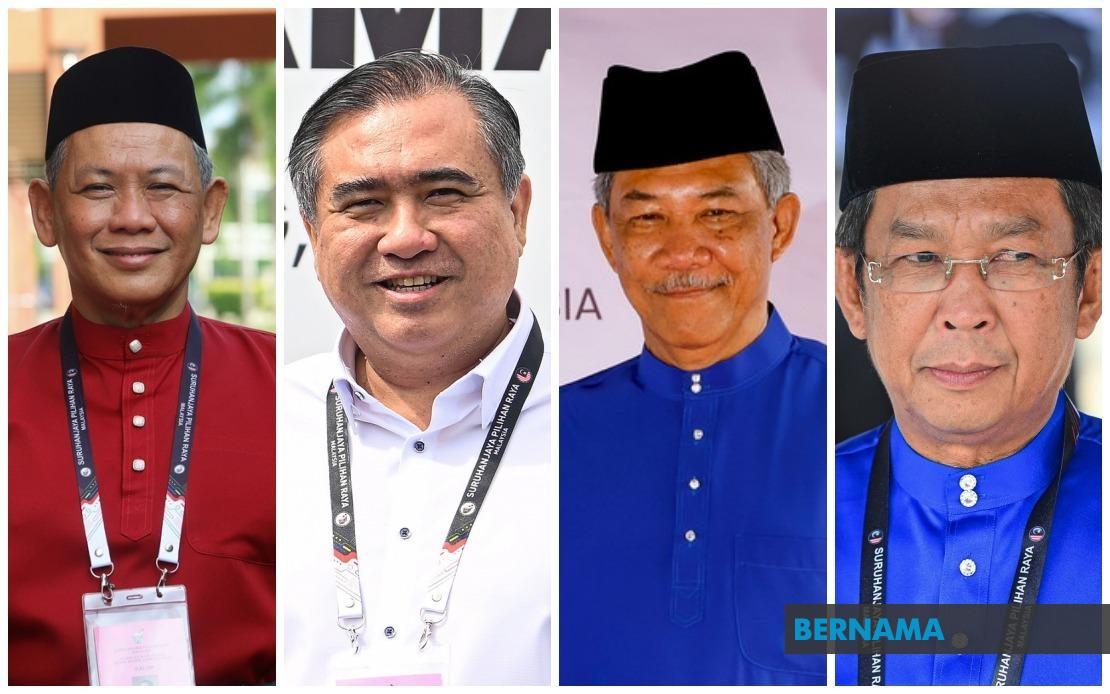
The upcoming 16th Negeri Sembilan state election has emerged as an unusually competitive contest, with prominent party figures discovering that their political standing offers no guarantee of electoral success. Across the state, established incumbents and nationally recognised leaders are being pressed by determined challengers in races that promise to be far more closely contested than their previous electoral victories. The pattern reflects growing political fluidity in Malaysia's regions, where voter preferences have become less predictable and traditional party dominance can no longer be taken for granted.
Pakatan Harapan's grip on Negeri Sembilan leadership faces an immediate test in the Linggi constituency, where caretaker Menteri Besar and PH chairman Datuk Seri Aminuddin Harun must navigate a three-way contest against incumbent Datuk Mohd Faizal Ramli representing Barisan Nasional and Bersatu's Datuk Zamri Md Said. Aminuddin, who also holds the position of PKR vice-president, carries both the advantages and vulnerabilities that come with holding the state's top executive office. His record in government will inevitably shape voter calculations, though the presence of a significant third-party challenger fragments the opposition vote in ways that could work either for or against the PH incumbent.
The Chennah constituency presents another critical battleground for the ruling coalition. DAP secretary-general Anthony Loke, who also serves as Malaysia's Transport Minister, confronts an unexpected challenge in his stronghold that the party has controlled since 2013. His opponent, Negeri Sembilan MCA Youth chief Siow Kong Choon, carries the Barisan Nasional banner into a seat where the opposition coalition has consolidated support. Loke's national profile and cabinet position might ordinarily provide considerable political armour, yet his vulnerability in Chennah signals that even ministerial status cannot insulate politicians from local electoral shifts.
In Rantau, one of the state's most symbolically significant contests has taken shape. Datuk Seri Mohamad Hasan, who serves as Foreign Minister and deputy president of UMNO while also holding the Barisan Nasional deputy chairmanship, faces a formidable challenge from PH candidate Dr Azizul Hakim Mahdi. The generational contrast between Mohamad, at 70 years old, and his considerably younger opponent has become a focal point of analysis surrounding this race. Mohamad, affectionately known locally as Tok Mat, has represented Rantau continuously since 2004, establishing what many observers presumed would be an unshakeable political foundation. His presence in the constituency across two decades has created deep roots, yet this election suggests that tenure alone no longer guarantees safe passage.
The Pertang seat illustrates how three-way contests have become the norm rather than the exception across Negeri Sembilan. Incumbent Datuk Seri Jalaluddin Alias, who has held this Barisan Nasional stronghold since 2013, now faces competition from both PH's Mohd Umry Abdul Khois and Bersatu's Mohd Faizal Fadli Mohd Idrus. Jalaluddin's position as Negeri Sembilan UMNO chief carries organisational weight, yet the emergence of multiple challengers across the political spectrum indicates that traditional party machinery may deliver less decisive advantages than in previous electoral cycles.
Multi-cornered contests have proliferated throughout the state, with Nilai providing perhaps the most fragmented battleground. DAP national deputy chairman J. Arul Kumar, standing as the PH incumbent, must navigate a five-way contest against Barisan Nasional's Datuk Lai Chien Kong, Bersatu's Datuk V. Saravana Kumar, Berjasa's Zamani Ibrahim, and independent candidate Omar Mohd Isa. Such fragmentation creates unpredictable dynamics where even modest vote-splitting can determine outcomes, potentially allowing candidates who finish first in a crowded field to secure seats with only plurality support.
Sri Tanjung similarly presents a five-way competition, with PH incumbent Dr G. Rajassekaran facing challengers from Barisan Nasional's A. Achutan, independent candidates Saravanan Arumugam and Islah Wahyudi Zainudin, and Bersatu's Leevineshwaraan Murugan. Murugan, at just 23 years old, represents the youngest candidate in the entire state election, embodying a fresh political generation entering the Negeri Sembilan contest. The generational diversity visible across these races suggests that voters are being presented with markedly different political options than in previous electoral cycles.
The overall electoral landscape encompasses 103 candidates competing for 36 state seats, a distribution that demonstrates significant party competition. Pakatan Harapan has fielded the maximum complement of 36 candidates, while Barisan Nasional presents 25 contenders, Bersatu offers 24, and Perikatan Nasional contributes 11 candidates. Smaller parties including Berjasa, Parti Orang Asli Malaysia, and Parti Sosialis Malaysia each field single candidates, while four independent candidates round out the competition. This distribution ensures that most constituencies will host multi-cornered contests rather than the two-way battles that traditionally characterised Malaysian state elections.
The proliferation of candidates across multiple parties reflects deeper political fragmentation affecting the peninsula's smaller states. In Negeri Sembilan's case, Bersatu's strong showing with 24 candidates indicates that the Bumiputera-focused party has established sufficient organisational capacity to mount competitive campaigns across the state. The presence of Perikatan Nasional candidates alongside Bersatu entries complicates the political arithmetic, as voter coalitions that appeared settled in national politics may fragment or reconfigure at the state level.
For Malaysian observers and political analysts, the Negeri Sembilan election offers instructive lessons about contemporary electoral volatility. The difficulty faced by senior politicians in securing comfortable victories reflects voter sophistication and reduced tolerance for assumed political inheritance. Constituencies that were once considered safe for particular parties or individuals increasingly host genuine competitive contests where multiple plausible outcomes remain possible until polling day. This pattern holds implications for how major parties calibrate campaign strategies and resource allocation across peninsular states.
The campaign period extends from the nomination conclusion on 18 July through 31 July, with early voting scheduled for 28 July and polling day set for 1 August. This compressed timeframe means that campaigns must build momentum rapidly, with limited opportunity for parties to adjust strategies based on early electoral signals. The competition for voter attention and support will necessarily intensify across these constituencies where establishment figures confront the prospect of electoral defeat or significantly reduced majorities.

