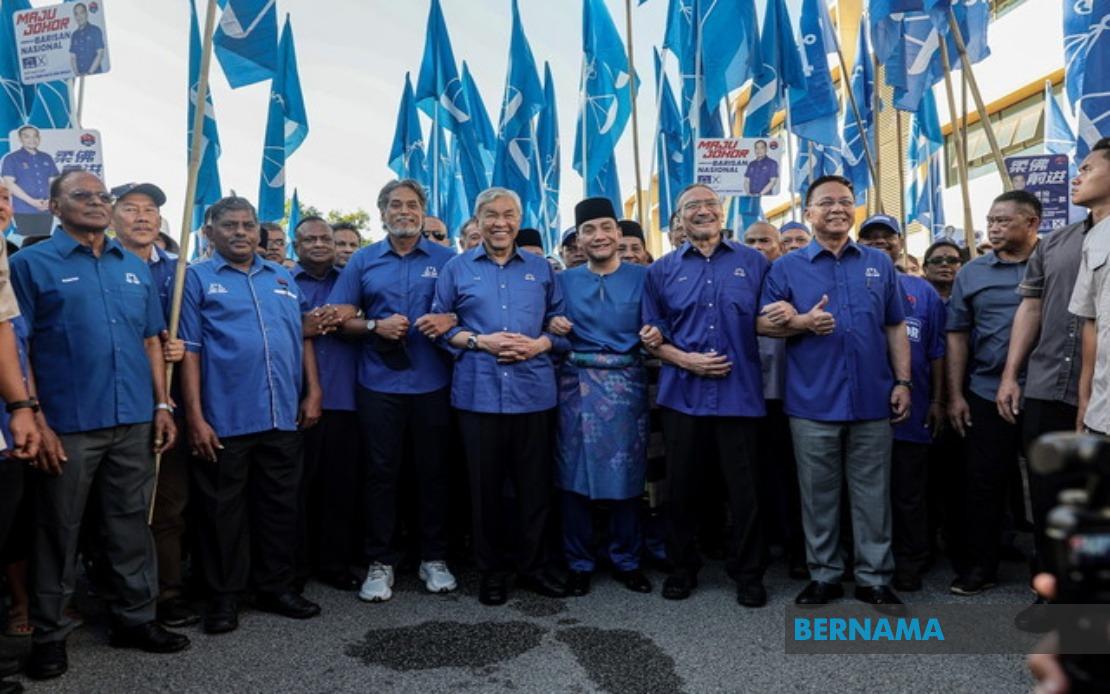
Johor Barisan Nasional chairman Datuk Onn Hafiz Ghazi submitted his nomination documents for the upcoming state election on June 27, arriving at the Muafakat Hall nomination centre in Simpang Renggam District Council at 9.10 am. The filing marked a significant moment in the campaign, with the incumbent Machap assemblyman receiving prominent party endorsement that underscored the coalition's confidence in its slate of candidates.
The show of force from the ruling coalition was unmistakable. UMNO president Datuk Seri Dr Ahmad Zahid Hamidi personally accompanied Onn Hafiz to the nomination centre, a gesture laden with symbolic weight in Malaysian politics. Ahmad Zahid's presence demonstrated direct presidential support for the Johor campaign at a critical juncture, particularly given his role as the nation's deputy prime minister. His attendance signalled that Johor's electoral fortunes matter significantly to UMNO's broader political calculations.
Also in attendance was Sembrong MP Datuk Seri Hishammuddin Tun Hussein, whose involvement highlighted the party's intention to mobilise its parliamentary representation around state-level contests. Hishammuddin's regional influence within Johor political circles has long been influential in party dynamics, and his presence reinforced the sense of coordinated party machinery at work. Khairy Jamaluddin, a former cabinet minister whose political career has navigated multiple UMNO administrations, similarly added weight to the delegation, suggesting a conscious effort to unite different factions within the party around a common electoral purpose.
Former Johor Menteri Besar Datuk Seri Hasni Mohammad rounded out the distinguished contingent offering public support. Hasni's involvement carried particular relevance given his previous stewardship of the state executive, positioning him as an elder statesman capable of lending credibility and continuity messaging to the campaign. His appearance alongside current leadership communicated that Johor's traditional political establishment remained consolidated behind the Barisan Nasional project.
The nomination venue itself became a focal point for grassroots mobilisation. Supporters congregated throughout the surrounding area in visible demonstrations of support, many wearing party colours and brandishing banners and flags. This organic activity, rather than appearing orchestrated, suggested that party machinery had successfully energised local activists and sympathisers to show up physically and visibly. Such street-level presence traditionally carries weight in Malaysian electoral campaigns, where visual demonstrations of party strength influence perceptions of momentum and viability among undecided voters.
The timing of these nominations marked the formal commencement of campaigning for the 16th Johor state election, transitioning from internal party preparations into the public contest phase. For Malaysian and Southeast Asian observers, the prominence of federal-level figures in state nomination proceedings reflects how state elections in Malaysia frequently serve as referendums on federal party leadership. Ahmad Zahid's personal involvement suggested that UMNO central leadership views the Johor contest as consequential for its broader political standing following recent electoral challenges in other states.
Onn Hafiz's position as Johor BN chairman places him at the intersection of coalition management and regional political leadership. As the incumbent Machap representative defending his own seat while orchestrating the broader coalition effort, he carries dual responsibilities that demand balancing regional interests with federal party directives. The assembled dignitaries underscored party commitment to supporting him in both capacities, signalling that UMNO and its partners intended to contest the election competitively rather than defensively.
The Johor state election assumes particular importance within Malaysia's broader political landscape. As one of the largest states and a traditional Barisan Nasional stronghold, electoral performance there carries implications for federal coalition stability and Ahmad Zahid's authority within UMNO. The assembly of senior leadership at a routine nomination filing suggested that the party recognised the campaign's strategic importance and determined that visible unity among top figures constituted an appropriate investment of political capital.
For regional observers monitoring Malaysian politics, the scene at Simpang Renggam illustrated enduring patterns in how Malaysian political parties marshal support around state contests. The presence of a deputy prime minister at nomination proceedings, alongside other federal figures, demonstrates how state elections function as integrated components of national political competition rather than purely local affairs. This dynamic shapes campaign messaging, resource allocation, and strategic prioritisation throughout the region's broader governance structures.

