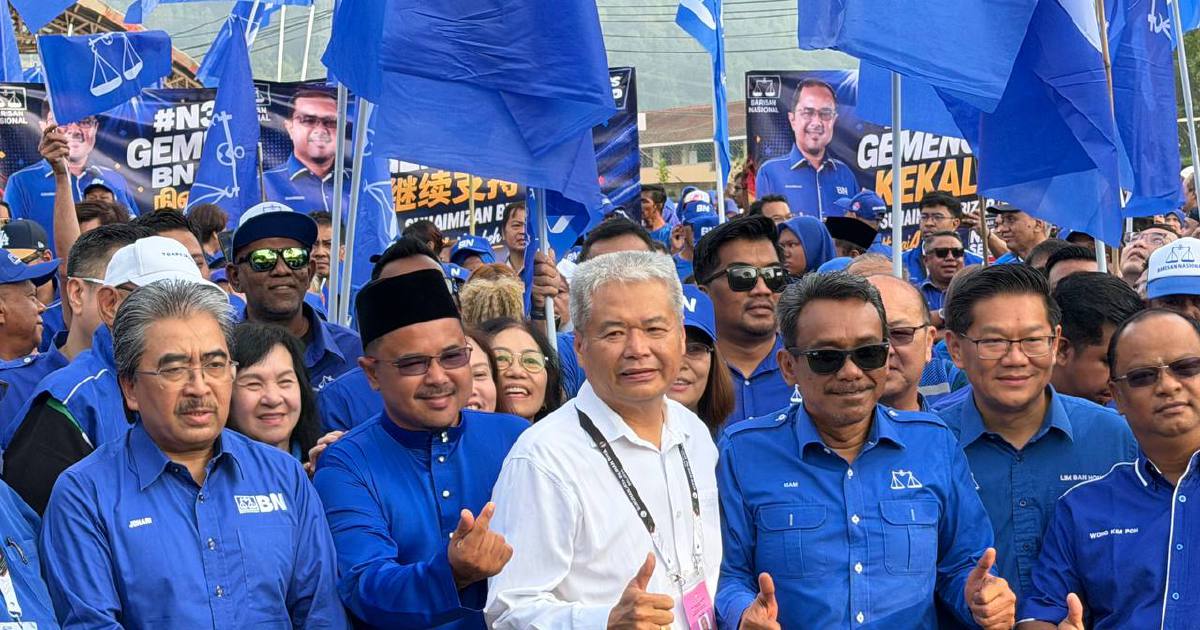
Umno vice-president Datuk Seri Johari Abdul Ghani and party treasurer Datuk Seri Tengku Adnan Tengku Mansor made their presence felt at the Dewan Perdana Tampin this morning, lending their political weight to support Barisan Nasional candidates participating in the Negri Sembilan election. The arrival of the two prominent party figures underscored the coalition's commitment to the campaign in the state and signalled the unified front that Umno intends to project across the electoral battleground.
The deployment of high-ranking party officials to campaign centres has become standard practice during state elections, particularly in strategically significant states like Negri Sembilan. By positioning themselves alongside candidates at the nomination stage, senior leaders reinforce party messaging and demonstrate their direct involvement in the electoral process. The gesture carries symbolic weight for local party members and voters, conveying that the national leadership takes the state contest seriously and is invested in the outcome.
Negri Sembilan holds particular importance within the broader Malaysian political landscape. As a traditionally competitive state where Barisan Nasional has maintained significant representation, the election represents an opportunity for the coalition to consolidate its position and demonstrate resilience following various political shifts across the country. The state's nine state assembly seats make it a meaningful prize in the electoral calculus, with implications extending beyond just state-level politics.
Johari Abdul Ghani's presence as Umno vice-president places him among the party's most senior decision-makers. His involvement in campaign activities reflects the party's strategic approach to engaging voters in key states. The role of vice-president carries substantial organisational responsibilities, and his visible participation in the nomination process sends a signal about party discipline and coordination during election season. This level of engagement from the upper echelons of Umno leadership typically indicates that the party has mobilised its resources comprehensively for the campaign.
Tengku Adnan Tengku Mansor, holding the position of party treasurer, brings a different dimension to the campaign participation. Control of party finances and resources places the treasurer in a crucial position during electoral activity. His attendance at nomination centres reflects the financial backing and logistical support that Umno is channelling into the Negri Sembilan contest. Treasurers in political parties serve not merely administrative functions but also play political roles, particularly during campaign periods when resource allocation becomes increasingly significant.
The Barisan Nasional framework itself represents a continuing coalition arrangement among multiple political parties, with Umno serving as the dominant partner. Supporting candidates through Umno's senior leadership at key moments like nomination demonstrates the coalition's collaborative approach. For smaller coalition partners contesting in Negri Sembilan, the visible support from Umno's top figures provides reassurance about BN's commitment to their electoral prospects and the broader coalition endeavour.
Nomination day represents a crucial juncture in any electoral contest. It formalises the participation of candidates, triggers official campaign periods, and sets the competitive landscape for subsequent weeks of campaigning. The decision to station senior party figures at nomination centres reflects understanding of this significance. Supporters attending nomination events gain motivation from direct contact with leadership, while media coverage of such appearances amplifies the reach of campaign messaging far beyond the physical location of the event.
For Malaysian voters in Negri Sembilan, the composition of campaign leadership visible during nomination provides information about how seriously major coalitions regard the contest. When senior national-level figures make the journey to state-level nomination centres, it indicates that the coalition views the state as significant enough to warrant attention from those holding top party positions. This creates a dynamic where electoral contests at state level gain prominence through the involvement of national political actors.
The Negri Sembilan election continues the pattern of state-level contests that have characterised Malaysian politics in recent years. These elections serve multiple purposes beyond choosing state representatives, functioning as barometers of voter sentiment and opportunities for parties to test campaign messages. The presence of figures like Johari Abdul Ghani and Tengku Adnan Tengku Mansor indicates that Umno and Barisan Nasional are deploying their full machinery to engage voters effectively. Such visible leadership presence typically correlates with comprehensive organisational preparation across ground operations, including candidate selection, volunteer mobilisation, and voter outreach programmes.
The Southeast Asian context adds another layer to understanding state-level electoral contests in Malaysia. As the region experiences varying degrees of political competition and democratic evolution, Malaysia's state elections demonstrate the continued vitality of multi-party competition within federal systems. The active involvement of senior leadership in such contests reflects a maturation of electoral processes and the recognition among major coalitions that state-level contests merit serious strategic attention and resource allocation comparable to federal-level campaigns.
Moving forward, the participation patterns visible during nomination processes often forecast the intensity and nature of campaign activities that will unfold in the weeks ahead. With both Umno's vice-president and treasurer on hand, observers can anticipate coordinated campaign efforts across multiple fronts, combining grassroots activism with strategic communications directed at key voter segments. The mobilisation visible at the Dewan Perdana Tampin establishes the baseline for campaign intensity that voters in Negri Sembilan can expect throughout the contest.

