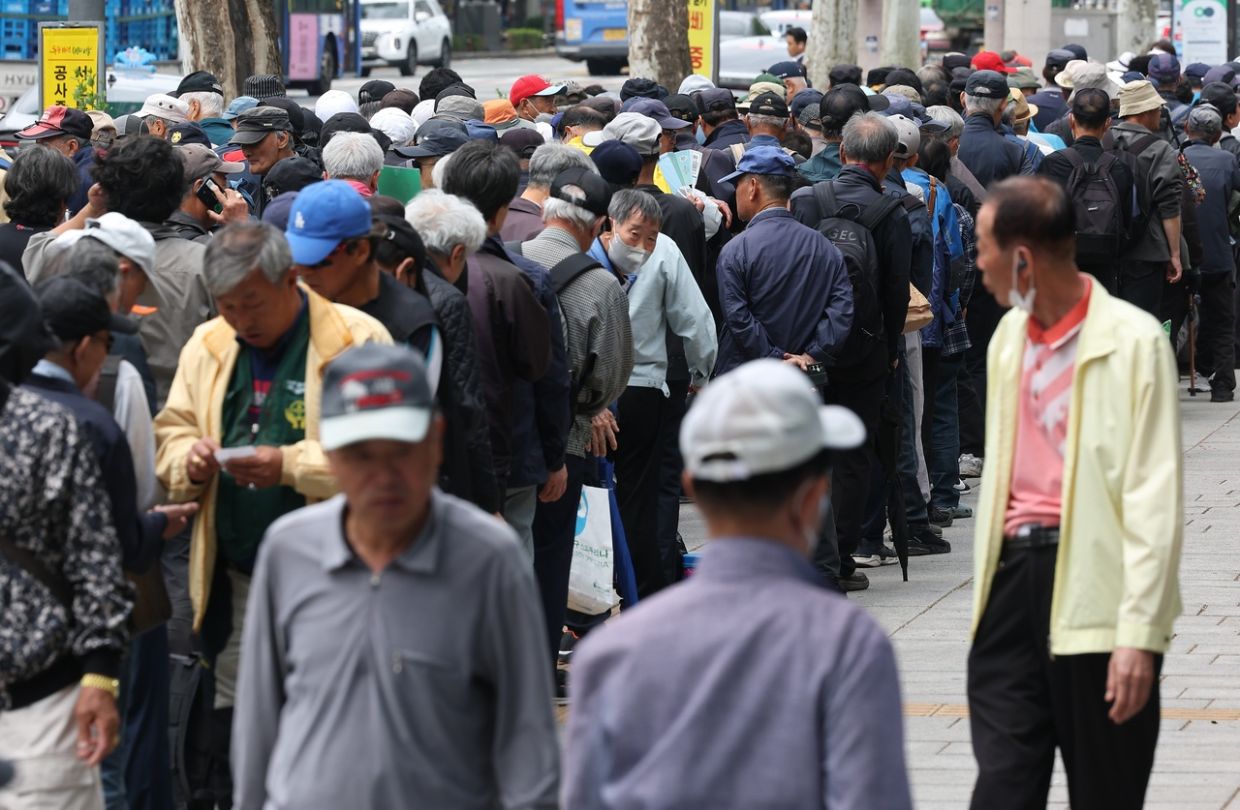
Seoul faces a critical policy decision on whether to extend its transportation benefits to seniors by introducing free or subsidised bus fares for those aged 70 and above. The Seoul Metropolitan Council Transportation Committee approved the proposal in mid-June, setting the stage for a full council vote, though implementation remains contingent on resolving substantial budgetary and administrative questions. The initiative builds on an existing decades-long policy that provides free subway access to residents aged 65 and older, creating what officials acknowledge as an inconsistency in how the city treats different transportation modes for its elderly population.
The proposal originates from a campaign commitment made by Seoul Mayor Oh Se-hoon during the June local elections, reflecting growing political pressure to address perceived inequities in the current system. Transportation Committee Chair Lee Byeong-yoon of the People Power Party introduced the ordinance, which would establish the legal framework for a senior bus-fare support programme. If approved, the measure would apply to city and neighbourhood buses while explicitly excluding express services and intercity routes, narrowing the scope of potential expenditure but still raising significant financial questions for a metropolitan government already managing substantial transport subsidies.
The core argument advanced by supporters highlights a genuine disparity affecting seniors whose daily mobility depends primarily on buses rather than subway networks. Residents aged 65 and older currently enjoy unrestricted free subway travel, yet must pay full fares for bus journeys. This creates a particular hardship for elderly people living in areas with limited subway coverage or those whose mobility constraints make bus travel more convenient than walking to distant stations. Advocates contend that rectifying this inequality represents a straightforward extension of existing policy rather than an unprecedented new expense, since the subsidisation principle already underpins Seoul's transportation system for seniors.
Other metropolitan areas across South Korea have already moved in this direction, establishing precedents that both encourage and complicate Seoul's deliberations. Daegu commenced free bus rides for seniors in 2023 and is gradually lowering its eligibility threshold from 75 to 70 between now and 2028, demonstrating incremental implementation is feasible. Daejeon already provides free bus rides to residents aged 70 and older, while Incheon plans to launch comparable coverage for those aged 75 and above during the current year. These regional programmes suggest a nationwide trend toward expanded senior transportation benefits, potentially creating political expectations that Seoul cannot easily resist without appearing stingy or unprogressively positioned relative to competitor cities.
The financial calculus, however, presents formidable obstacles that explain the hesitation among fiscal conservatives and municipal administrators. Seoul Metropolitan Council projections estimate that universal free bus fares for all residents aged 70 and older would require approximately 104.7 billion won (equivalent to roughly 68 million US dollars) in the programme's inaugural year, assuming a 2027 launch date. More troublingly, as Seoul's population of residents aged 70 and above expands from approximately 1.27 million currently to a projected 1.63 million by 2031, annual programme costs would escalate to 127.5 billion won. Over a five-year period, total expenditure could approach 579 billion won, representing a sustained and growing obligation for a municipality already struggling with transport infrastructure financing.
These projections must be understood against Seoul's existing transportation subsidy landscape, which is already substantial and contested. The municipal government currently compensates private bus operators for operating losses under the semi-public bus system structure, providing more than 450 billion won in annual support to bus companies. This established funding burden, combined with newly anticipated labour cost increases stemming from recent court rulings on ordinary wages in the transportation sector, creates a mounting fiscal squeeze. Municipal administrators face the uncomfortable reality that adding another large transportation benefit programme, regardless of its humanitarian merit, occurs within a context of constrained municipal finances and competing demands for public investment.
The deepest anxiety among fiscal policy experts concerns the essentially irreversible nature of social benefit programmes once enacted. Sohn Jong-pil, a senior researcher at the Fiscal Reform Institute, articulated this concern clearly, warning that cash-type welfare programmes become politically impossible to scale back once they begin operations. Policymakers consequently face pressure to exercise exceptional caution when introducing new benefit categories, particularly when the fiscal trajectory points toward sustained and expanding costs. The concern reflects accumulated experience across democratic societies where entrenched benefits prove remarkably durable even when subsequent fiscal circumstances suggest they became unsustainable.
Additionally, sceptics worry that approving bus fare subsidies could trigger cascading demands to recalibrate age thresholds across other senior benefit categories currently administered by Seoul. If bus subsidies become available at age 70, political logic suggests advocates will question why other senior benefits remain pegged to age 65, creating pressure toward either raising eligibility ages across the board to manage costs, or maintaining inconsistent age thresholds that appear arbitrary and potentially inequitable. This secondary consequence represents a hidden cost of benefit expansion that extends beyond the direct budgetary impact.
The financial strain on Seoul Metro, the municipal subway operator, adds another complicating dimension. The organisation has persistently maintained that free subway rides for seniors, people with disabilities, and national merit recipients drive substantial operational losses, averaging 364.5 billion won annually over the past five years and reaching 448.8 billion won in 2025 alone. Seoul Metro has repeatedly petitioned the central government to assume these costs, arguing that serving national policy objectives should not fall entirely on municipal shoulders. The apparent inconsistency of expanding senior transportation benefits while simultaneously claiming financial distress from existing benefits undermines the city government's credibility in budget discussions and complicates rational policy discourse.
Proponents counter that critics overstate the actual financial burden by misinterpreting the ordinance's implications. The proposal would not mandate unlimited free rides for all seniors aged 70 and older, but rather would authorise Seoul to establish eligibility criteria, benefit levels, and funding mechanisms according to its actual fiscal capacity. This interpretive flexibility could enable incremental implementation beginning with low-income seniors, establishing trip caps, restricting support to specified times, or providing partial rather than complete fare discounts. A Seoul city official emphasised that the ordinance primarily creates institutional and legal foundations for a programme rather than mandating immediate universal provision, potentially allowing the city to pilot limited approaches before scaling up.
This distinction between institutional authorization and programmatic mandates carries significant practical importance. Rather than forcing immediate universal implementation, the ordinance framework would permit Seoul to experiment with targeted approaches that test administrative feasibility, measure actual costs, and assess public response before committing to broader deployment. Structured phasing could allow policymakers to identify whether projected costs materialize as anticipated or whether actual ridership patterns, operational efficiencies, or utilisation levels diverge from council secretariat estimates. Such staged implementation represents a legitimate middle path between rejecting the concept entirely and rushing toward full universal benefits.
The timing of Seoul's decision intersects with broader demographic realities reshaping East Asian societies. Senior citizens comprise 21.2 per cent of Seoul's current population, and this proportion will accelerate as birth rates remain depressed and life expectancy continues improving. Cities across the region face analogous pressure to accommodate ageing populations while managing fiscal sustainability, making Seoul's experience potentially instructive for other metropolitan governments contemplating similar policy choices. Whether Seoul ultimately approves the ordinance and how it implements any resulting programme will offer case study material for examining how developed Asian cities navigate the intersection between demographic change, welfare expectations, and fiscal responsibility.
The broader policy question extends beyond narrow budgetary accounting to encompass fundamental questions about how cities allocate scarce resources and define their social obligations to elderly residents. Seoul must reconcile competing imperatives: the genuine hardship experienced by seniors with limited transportation access, the fiscal mathematics of expanding public benefits, the precedent-setting implications of policy choices, and the opportunity costs represented by resources directed toward transportation rather than healthcare, housing, or other senior priorities. No objectively perfect solution exists, only differing judgements about acceptable levels of subsidy, appropriate targeting mechanisms, and sustainable fiscal trajectories within a context of perpetually competing demands and limited municipal resources.