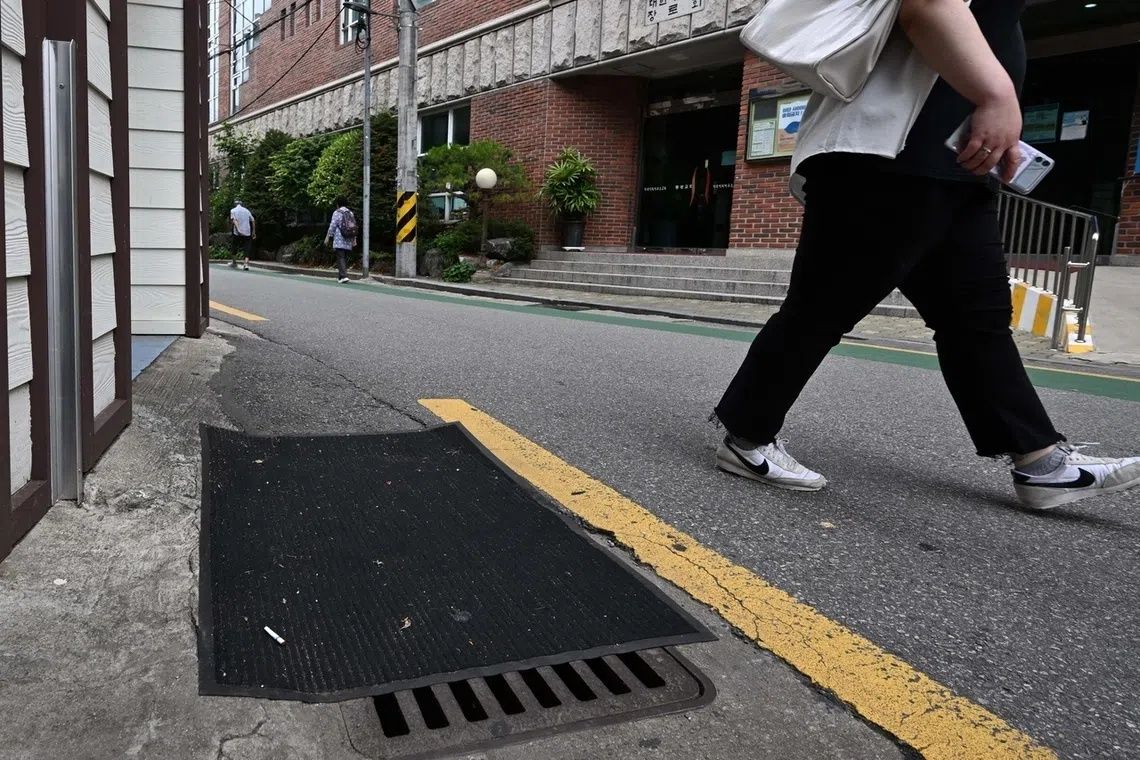
Commuters waiting at Seoul bus stops or walking along the city's busy sidewalks frequently encounter an unmistakable stench that vanishes almost as quickly as it arrives. These fleeting but pungent episodes have become so commonplace that they regularly spark discussion threads across Korean and international online forums, with both residents and visitors documenting their encounters with sudden waves of foul-smelling air. What might seem like a minor urban annoyance to outsiders represents a persistent challenge that has eluded South Korea's capital despite sustained efforts to eradicate it.
According to research released by the Seoul Institute in 2025, approximately half of all civil complaints regarding bad odours in the city trace back to the sewer infrastructure. The problem gained enough visibility that city authorities launched dedicated odour reduction initiatives in 2015, and while those early campaigns succeeded in lowering complaint volumes, the gains have since reversed. Sewer odour complaints dropped from 3,095 in 2015 to 1,660 in 2020 following the implementation of various mitigation strategies, yet resurged to 2,302 complaints by 2024, signalling that the fundamental issue remains unresolved. This yo-yo pattern reveals the limitations of surface-level solutions when confronting deep-rooted infrastructure problems.
The culprit behind Seoul's odour problem is hydrogen sulfide, a gas notorious for its rotten egg smell that emerges when organic matter decays in oxygen-starved environments. The city's sewer network, strained by rapid urbanisation over decades, never quite kept pace with explosive population growth and development. Many buildings therefore installed septic tanks as temporary solutions to handle waste before it enters the underground sewer pipes. While these tanks remove solid waste, they cannot eliminate dissolved organic compounds that persist in the wastewater flowing downstream into the city's sewers, where these materials subsequently decompose and generate hydrogen sulfide gas that escapes through storm drains, maintenance holes, and other openings.
Seasonal weather patterns significantly influence how severely residents experience odour problems. During periods of heavy rainfall, the increased volume of water moving through the system flushes accumulated sewage and reduces concentrations of odour-causing gases. Conversely, during hot and arid stretches with minimal precipitation, hydrogen sulfide accumulates in pipes with reduced water flow, creating conditions ideal for odour release into the urban environment above ground. This seasonal dimension means that Seoul residents face particularly acute problems during summer months and dry seasons—precisely when people spend more time outdoors.
Seoul city officials acknowledge that tackling odours requires sophisticated, case-by-case analysis rather than uniform solutions. The city recognises that drops in wastewater flow velocity and accumulated sediment deposits inside sewer pipes contribute substantially to odour formation, prompting consideration of structural modifications and sediment dredging operations. However, the most significant structural liability remains the city's combined sewer system, where wastewater from buildings and stormwater runoff from streets flow through identical underground pipes. This design, common in older cities worldwide, creates complex conditions where mixing different water sources generates chemical reactions that intensify odour problems.
Since the early 1990s, Seoul has explored separating combined sewers into distinct networks for wastewater and stormwater, a solution that would fundamentally reduce odour formation. Progress toward this goal has frustratingly stalled, hampered by the enormous expense and technical complexity of retrofitting underground infrastructure across an entire metropolitan area. As of 2025, only 20.4 per cent of Seoul's total sewer network had been converted to the separate system, meaning over 79 per cent of the city's pipes still combine both water types. At this conversion pace, completing the infrastructure transformation would require multiple decades and enormous public investment.
The regulatory framework governing odour management in Seoul reinforces reactive rather than proactive approaches. Current legislation primarily targets sewage odours that exceed established safety thresholds, placing responsibility on local governments to respond to problems rather than prevent them. This complaint-driven model means resources concentrate on addressing loud public grievances rather than systematically eliminating underlying causes. Experts argue that a global city of Seoul's stature should implement more ambitious preventive strategies, yet the legal and institutional structures remain oriented toward damage control.
Researchers like Ki Dong-won from the Seoul Institute point to a critical scientific gap: Korea lacks predictive models that map how sewer odours disperse into the air or identify which urban areas face the highest vulnerability to odour complaints. While preliminary efforts to develop sewer odour mapping systems are underway, these remain disconnected from performance metrics or standardised evaluation criteria for odour reduction equipment. Without such analytical frameworks, city planners cannot optimally target interventions or measure the genuine effectiveness of installed systems. This absence of data-driven planning perpetuates inefficient policy responses.
Park Seok-soon, an environmental engineering professor emeritus at Ewha Womans University, proposes that artificial water circulation through sewer pipes could prevent sewage stagnation and decomposition, circumventing the need for complete sewer separation. Introducing water from hydrants or other municipal sources to maintain consistent flow would theoretically replicate the beneficial effects of rainfall during dry periods. This approach acknowledges a reality that experts emphasise: many advanced nations including Japan maintain combined sewer systems successfully, suggesting that management rigour rather than infrastructure type determines outcomes. What separates well-managed cities from perpetually odorous ones is the institutional commitment to consistent maintenance and monitoring.
For Southeast Asian cities facing similar infrastructure challenges, Seoul's experience offers sobering lessons about the limits of partial measures. The city's decade of modest improvements followed by renewed deterioration demonstrates how cosmetic fixes cannot substitute for fundamental systemic overhaul. As rapidly urbanising economies across the region construct and expand sewer networks, decisions made today regarding system design will have consequences stretching decades forward. Seoul's struggle underscores that infrastructure investments made during periods of rapid growth require both adequate initial capital expenditure and sustained long-term political commitment to maintenance—requirements that many developing cities struggle to meet.
Looking forward, Seoul faces a choice between continuing incremental interventions that yield diminishing returns or committing to comprehensive infrastructure transformation that would require years and substantial resources. The persistence of a problem so prominent that it dominates urban discourse suggests the threshold for meaningful public frustration has been crossed. Whether the city can mobilise political will to implement fundamental solutions remains uncertain, but the alternative—managing perpetual odour complaints for another decade—appears increasingly untenable.

