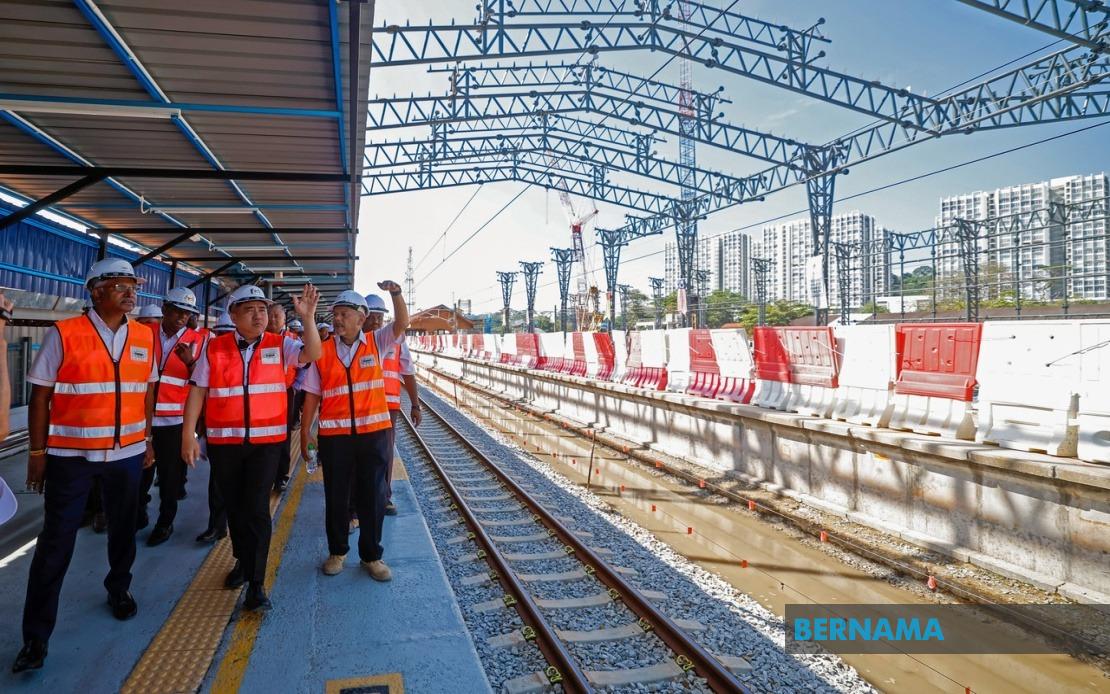
Seremban's long-awaited Sentral railway station project has crossed a significant milestone, with construction now at 35 per cent completion and expectations to open by March 2027. Transport Minister Anthony Loke inspected the RM100 million development and revealed that the most labour-intensive phases—underground piling and utility relocation—have been substantially overcome, positioning the initiative to accelerate through its remaining stages.
The initial slowness that characterised the project's early years reflected the technical complexities inherent in foundation work. Ground preparation demanded precise piling placement whilst simultaneously relocating existing underground cables and services that threaded beneath the site. These foundational requirements consumed considerable time but were essential to ensure structural integrity and prevent damage to existing infrastructure. With these prerequisites now essentially complete, the project enters phases where visible progress will become far more apparent to residents and commuters watching from the city.
Upcoming construction phases will concentrate on structural completion and finishing elements. Roof installation, glazing systems, interior fitouts and architectural detailing now occupy the project timeline. Loke emphasised that these latter stages typically proceed faster than groundwork, suggesting the March 2027 target remains realistic despite the project's acknowledged complexity. The station's ambitious scope—combining heritage conservation with contemporary transport functionality—requires careful coordination between multiple specialist trades and systems.
The development represents a comprehensive reimagining of Seremban's transport landscape. The new facility will integrate the heritage Seremban KTMB Station, which has served the city for over a century, with modern infrastructure designed according to green building principles. Architectural elements draw inspiration from Minangkabau design traditions, creating a structure that respects regional cultural identity whilst meeting contemporary sustainability standards. Commercial spaces throughout the development will generate revenue whilst enhancing the passenger experience.
Capacity planning reveals ambitions extending well beyond immediate opening requirements. The station will initially accommodate 30,000 daily passengers, but its design permits expansion to 120,000 daily users as demand materialises. The development incorporates six platforms, with only three constructed initially, allowing future expansion without major redesign. This forward-looking approach acknowledges that Seremban's growth patterns over the next three to five decades remain uncertain, and infrastructure flexibility provides valuable optionality for urban planners and transport authorities.
The heritage KTMB Station renovation completed last month addressed both preservation imperatives and functional modernisation. Electrical systems received comprehensive upgrades to contemporary standards whilst maintaining the building's historical character. A critical addition involves new sewerage infrastructure designed to address chronic flash-flooding that previously disrupted operations during heavy rainfall. The new drainage system diverts rainwater directly to Sungai Temiang, bypassing the station area entirely and protecting platforms and tracks from inundation.
Two separate entrance facilities and drop-off zones will manage passenger flows and vehicular traffic more efficiently than existing arrangements. One entrance operates from Jalan Tunku Antah's front whilst the secondary facility serves the station's rear, distributing arriving and departing passengers across multiple points and theoretically reducing congestion around the city centre. This dual-access approach reflects lessons learned from other major transport interchanges and demonstrates sophisticated urban planning thinking.
Service frequency enhancements form a critical component of the station's projected impact. Once the Klang Valley Double Track project's current phase concludes, Komuter and ETS services will operate at increased frequency, making rail travel more competitive against private vehicles. This strategic investment aims to encourage residential relocation to Seremban by improving connectivity to Klang Valley employment and commercial centres. Enhanced frequency transforms the station from a mere facility into a transformative urban planning tool, fundamentally reshaping settlement patterns and commuting behaviour across the region.
The Klang Valley Double Track Phase 2 upgrade currently progresses at 55.8 per cent completion. Temporary reductions in Komuter frequency during afternoon hours reflect deliberate scheduling to accelerate construction work following single-track operations after one line closure. This temporary inconvenience trades short-term service disruption for faster advancement toward completed infrastructure that will permanently enhance regional connectivity and capacity.
Seremban Sentral transcends conventional station development by functioning as an integrated transport hub anchoring broader urban transformation. Transit-oriented development projects positioned behind the station will leverage improved connectivity to drive commercial and residential investment. This model—common in successful Asian cities—concentrates density around transport nodes, reducing sprawl and creating walkable urban environments. For Seremban, the Sentral project establishes the foundational infrastructure upon which contemporary urban development patterns increasingly depend.
The project's significance extends beyond local benefits to represent broader transport policy objectives. Enhanced rail connectivity between secondary cities and the Klang Valley supports decentralisation of economic activity, potentially relieving pressure on Kuala Lumpur whilst distributing growth opportunities across the peninsula. Seremban's improved accessibility makes it a viable alternative location for businesses and residents seeking better quality of life without sacrificing employment prospects, addressing longstanding urban planning challenges across Malaysia's most economically developed regions.

