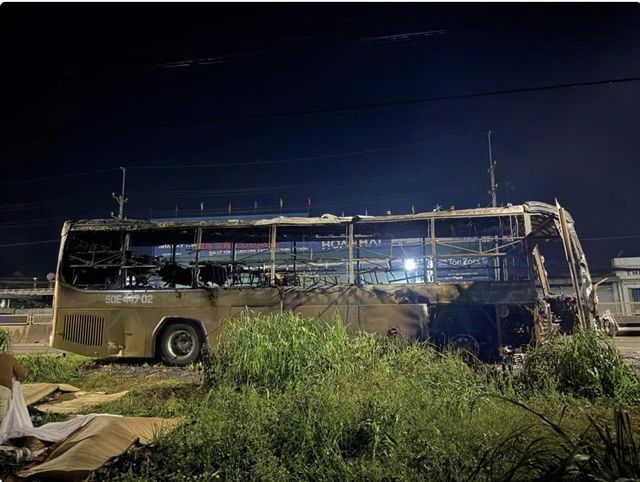
A sleeper bus travelling from Dong Nai to Ho Chi Minh City burst into flames early yesterday morning on National Highway 1 in southern Vietnam, killing seven people and leaving several others injured. The vehicle, driven by 41-year-old Tran Thanh Hai from Khanh Hoa Province, struck a roadside embankment in Hung Thinh Commune at approximately 2:30am before the fire broke out at the front of the bus and spread rapidly through the passenger compartment. Of the 33 people on board, some managed to escape the burning wreckage while others found themselves trapped as the flames consumed the vehicle.
Local residents emerged quickly from their homes to respond to the emergency, attempting to extinguish the blaze with fire extinguishers and whatever equipment they could find. Their efforts, however, proved insufficient against the speed of the fire's spread. By the time professional firefighters and rescue crews arrived following an emergency call, the bus had sustained severe structural damage, with flames having engulfed nearly the entire vehicle. Emergency personnel worked to suppress the fire, conduct rescue operations, and manage traffic disruption in the area, though the damage was already extensive.
Authorities from Hung Thinh Commune People's Committee confirmed that preliminary investigations had established seven fatalities resulting from the incident. The injured passengers were transported to Thong Nhat General Hospital for treatment, with medical staff reporting that one individual suffered only minor injuries and has already been discharged. Forensic examination teams cordoned off the scene to conduct thorough investigations and gather evidence regarding what caused the fire to ignite and spread so rapidly through the bus.
The circumstances surrounding the collision remain under investigation, with authorities working to determine why the bus struck the roadside embankment. According to initial reports, the vehicle struck one embankment before the driver managed to bring it to a stop, but this action failed to prevent the subsequent fire that claimed seven lives. Investigators are also working to identify all victims and verify the exact sequence of events leading to the catastrophic incident.
This tragedy represents the second major sleeper bus accident in Vietnam within a seven-day period, raising serious concerns about vehicle safety standards and driver fatigue on the country's long-distance transport routes. Just a week earlier, on July 17, another sleeper bus returning passengers from Thien Cam beach in Ha Tinh Province to Thai Nguyen in northern Vietnam veered off an expressway near Ha Noi and overturned. That incident killed five people and injured dozens, highlighting a troubling pattern of serious accidents involving overnight coach services.
Sleeper buses form a critical component of Vietnam's transportation infrastructure, connecting cities across the country and providing affordable travel options for millions of passengers annually. However, the concentration of two major accidents within days has intensified scrutiny on safety practices within the industry. Issues frequently cited include driver fatigue from extended shifts, inadequate vehicle maintenance, excessive speed, and insufficient rest periods between journeys.
For Malaysian readers and regional transportation authorities, these incidents underscore universal challenges facing the Southeast Asian coach industry. Many Malaysian bus operators run similar long-distance sleeper services on trunk routes connecting Peninsular Malaysia, Sabah, and Sarawak. The Vietnamese accidents provide cautionary lessons about the need for rigorous maintenance protocols, mandatory driver rest periods, and comprehensive safety inspections before long journeys commence.
The rapid succession of these incidents also raises questions about regulatory oversight and enforcement mechanisms in Vietnam's transport sector. Authorities will likely face pressure to implement stricter licensing requirements, enhance vehicle inspection regimes, and establish clearer guidelines for maximum driving hours. Such measures could serve as models for other Southeast Asian nations seeking to improve safety outcomes on their own highway networks.
These tragedies place particular pressure on the Vietnamese government to investigate not only the immediate causes of each accident but also systemic weaknesses in transportation safety. Family members of victims will demand accountability, while the broader travelling public may develop increased hesitation about using overnight coach services. The transport industry itself faces potential regulatory changes that could impact operational costs and scheduling practices.
The incidents also highlight disparities in emergency response capabilities between urban and rural areas. While the Hung Thinh Commune scene benefited from quick firefighter mobilisation, the involvement of local residents in initial response efforts suggests that emergency services in remote locations may face resource constraints. Strengthening regional emergency infrastructure remains essential for improving outcomes in future incidents.

