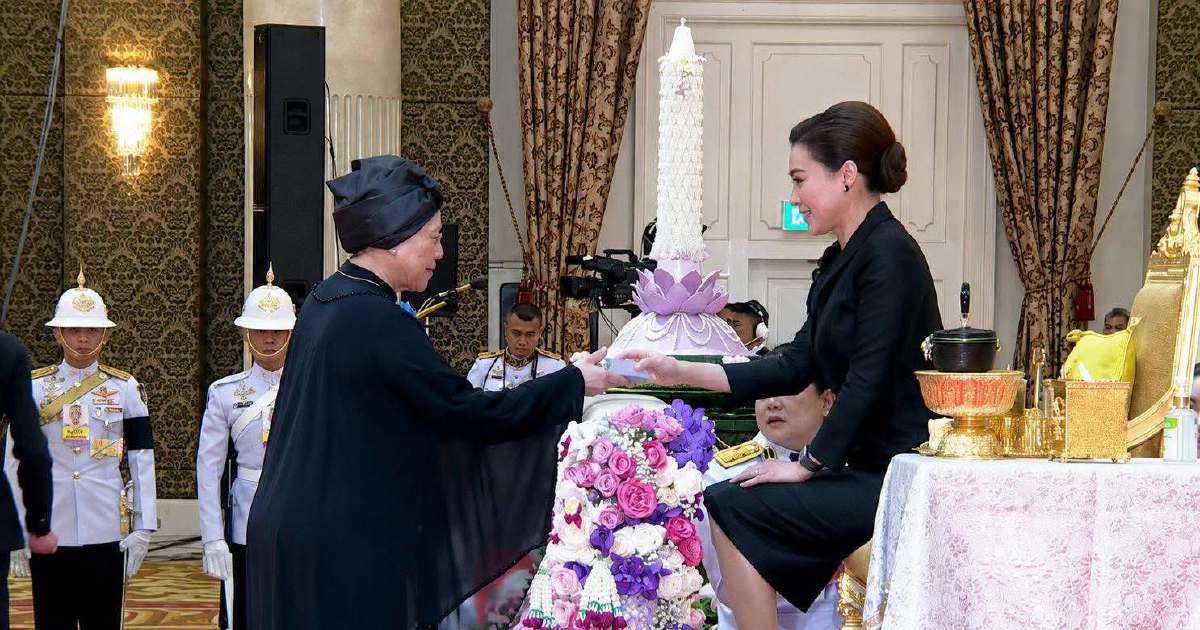
Prime Minister Datuk Seri Anwar Ibrahim and his wife, Datuk Seri Dr Wan Azizah Wan Ismail, have recognised Prof Emerita Tan Sri Datuk Seri Dr Sharifah Hapsah Syed Hasan Shahabudin's receipt of the Outstanding Woman Award for Social Development, positioning the accolade as a reflection of the far-reaching influence Malaysian women exercise across development initiatives nationwide.
The honour bestowed on Prof Emerita Sharifah Hapsah underscores a pivotal shift in how national leadership acknowledges women's participation in driving socioeconomic progress. Rather than viewing such recognitions as symbolic gestures, the Prime Minister's endorsement suggests a deliberate institutional commitment to validating the concrete contributions women make to Malaysia's social fabric. This perspective carries particular weight coming from the nation's highest office, signalling that women's advancement is integral to the government's broader vision for inclusive development.
Prof Emerita Sharifah Hapsah's career trajectory exemplifies the pathways through which educated, accomplished Malaysian women have influenced policy, scholarship, and community engagement. Her trajectory across academia and development work positions her as representative of a generation of female professionals who have transcended traditional boundaries and established themselves as thought leaders and practitioners in their respective fields. The award validates not merely individual achievement but the systemic importance of female perspectives in addressing social challenges.
The presence of Datuk Seri Dr Wan Azizah Wan Ismail at the acknowledgement carries additional significance, given her own profile as a medical doctor and prominent political figure. Her participation underscores a continuity of female leadership visibility at the highest governance levels, reinforcing the message that women's involvement in national decision-making is normalized rather than exceptional. This dual endorsement from the Prime Minister and his wife sends a coherent signal about the administration's commitment to gender inclusivity.
Malaysian society has witnessed expanding female participation across historically male-dominated sectors—from corporate leadership to engineering, law, and public administration. Awards frameworks that explicitly recognise women's contributions to social development serve as both acknowledgement of past achievements and catalysts for future engagement. By elevating Prof Emerita Sharifah Hapsah's work, national leadership simultaneously validates the ambitions of younger women entering professional and development-focused careers.
The Outstanding Woman Award for Social Development operates within a broader regional context where Southeast Asian nations are reassessing their approaches to gender equity and women's participation. Malaysia's recognition of Prof Emerita Sharifah Hapsah positions the country within a progressive trajectory, though comparative analysis with peer economies suggests continued work remains necessary to translate symbolic recognition into systemic institutional change. The award therefore represents both genuine progress and an implicit acknowledgement of distance yet to travel.
From a developmental perspective, women's involvement in social programmes carries documented benefits. Research consistently demonstrates that female-led or female-inclusive initiatives demonstrate enhanced sustainability, community trust, and adaptive capacity. Prof Emerita Sharifah Hapsah's work likely embodies these principles, explaining why her contributions warrant explicit national recognition. The award thus reflects both past performance and confidence in women's continued capacity to advance social objectives.
For Malaysian women navigating professional and civic spaces, such recognition carries psychological and practical importance. Visibility of accomplished female peers in positions of influence and receiving national honours establishes tangible role models and demonstrates that institutional pathways exist for women to achieve prominence and influence policy. This symbolic dimension, while distinct from material change, nonetheless shapes aspirations and institutional cultures in measurable ways.
The Prime Minister's statement also implicitly addresses ongoing debates about women's representation in decision-making structures. By framing Prof Emerita Sharifah Hapsah's award as indicative of women's broader significance, government messaging aligns individual achievement with systemic arguments for greater female participation. This rhetorical move bridges personal recognition with larger claims about demographic necessity and development efficacy.
Looking forward, how Malaysia leverages such recognitions—whether they translate into enhanced appointment rates for women in senior positions, increased funding for women-led initiatives, or policy reforms addressing gendered barriers—will determine whether acknowledgement catalyses substantive change. The award presents an opportunity for the administration to demonstrate commitment beyond ceremonial endorsement, potentially through targeted programming or institutional reforms.
For Southeast Asian observers, Malaysia's approach to female recognition offers instructive examples of how governments can articulate inclusive development narratives through formal honour systems. The challenge remains ensuring that award ceremonies precede rather than substitute for structural transformation. Prof Emerita Sharifah Hapsah's recognition thus stands as both celebration of achievement and potential watershed moment—depending on what institutional actions follow in its wake.

