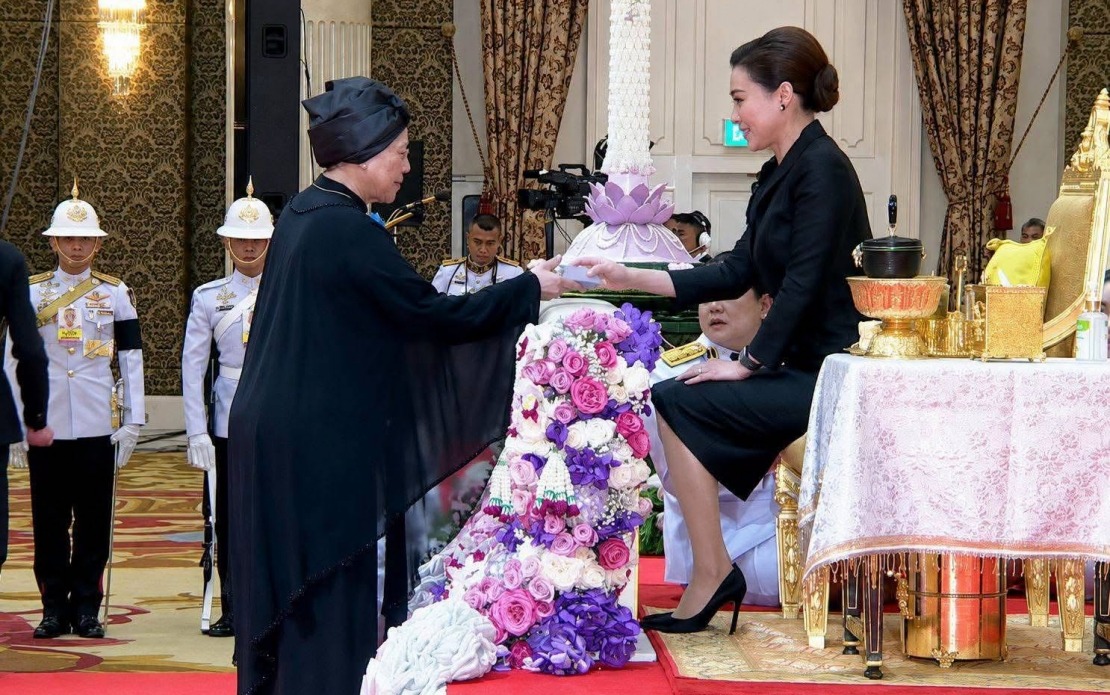
Prime Minister Datuk Seri Anwar Ibrahim and his wife Datuk Seri Dr Wan Azizah Wan Ismail have extended congratulations to Prof Emerita Tan Sri Datuk Seri Dr Sharifah Hapsah Syed Hasan Shahabudin following her conferment of the 'Outstanding Woman Award for Social Development' by Queen Suthida Bajrasudhabimalalakshana of Thailand. The honour, bestowed in early August, represents a significant milestone for Malaysian representation in international recognition of women's achievements across the social development sphere.
Anwar characterised the accolade as extending beyond personal accomplishment, positioning it instead as validation of the broader competence and influence wielded by Malaysian women on the international platform. His comments underscored a deliberate narrative linking individual achievement to national standing, suggesting that recognition awarded to prominent Malaysian women carries implications for how the country itself is perceived globally. The Prime Minister's emphasis on this connection reflects the government's investment in positioning women's advancement as a cornerstone of Malaysia's international image.
In his statement distributed through social media, Anwar highlighted how such international endorsements demonstrate the calibre and substantive contributions that Malaysian women continue to generate within their respective fields. The phrasing suggests that these recognitions are not isolated incidents but rather part of an emerging pattern of Malaysian women gaining traction in competitive international forums. This framing carries particular relevance for Southeast Asia, where women's leadership and professional prominence remain subjects of considerable policy discussion across the region.
The Prime Minister used the occasion to articulate his vision for leveraging such achievements as catalysts for broader social change. He appealed for Sharifah Hapsah's recognition to serve as inspiration encouraging additional women to channel their capabilities into community development, institutional leadership, and values-driven endeavours. This aspirational dimension suggests that government strategy involves not merely celebrating existing female achievers but actively cultivating the next generation of women leaders prepared to assume prominent roles.
Central to Anwar's remarks was the connection drawn between women's empowerment and the Malaysia MADANI agenda, the government's overarching development framework introduced in 2023. By explicitly linking women's contributions to this policy platform, the administration positions gender inclusion as integral rather than peripheral to national development objectives. The Malaysia MADANI framework itself emphasises prosperity through unity, compassion, and sustainability—domains where women's participation and leadership are presented as essential to achieving stated goals.
The government's stated commitment involves tangible measures extending beyond rhetorical endorsement. Anwar articulated intentions to preserve institutional recognition of women's roles within governance and development processes, to create expanded pathways for female participation across economic, social, and political sectors, and to ensure that women's capabilities remain mobilised as key components of national advancement strategies. These formulations suggest a deliberate policy orientation rather than passive acknowledgement of women's contributions.
Sharifah Hapsah's background in social development provides context for understanding why her particular recognition resonates within Malaysian policy circles. Her professional trajectory represents the kind of career advancement in substantive policy domains that the government seeks to encourage and highlight. Awards recognising such work in regional contexts like Thailand carry amplified significance, as they demonstrate that Malaysian women command respect and achieve prominence not merely domestically but within competitive Southeast Asian contexts.
The timing and mode of the Prime Minister's response—utilising digital platforms to broadcast congratulations—reflects contemporary approaches to political communication and nation-branding. By elevating this recognition through direct prime ministerial commentary, the administration ensures broader domestic visibility for achievements that might otherwise receive limited local attention. This approach serves dual purposes: it acknowledges individual accomplishment while simultaneously constructing a national narrative of female achievement and international standing.
For Malaysian women working in professional and policy sectors, such high-profile endorsement of international recognition carries practical implications beyond symbolic value. Government messaging that prioritises and celebrates female achievement at the international level potentially influences institutional practices, resource allocation, and career pathway design across both public and private sectors. When senior leadership explicitly frames women's advancement as essential to national development, it creates political capital supporting related policy initiatives and budgetary commitments.
The international dimension of this recognition—specifically that it originated from Thailand and was presented by Thai royal leadership—also carries regional significance. It demonstrates that Malaysian women's contributions merit recognition from peer nations within Southeast Asia, reinforcing interconnections between women leaders across the region. Such cross-border acknowledgement can facilitate professional networks and cooperative arrangements that strengthen women's collective influence within ASEAN contexts.
Looking forward, the government's framing suggests that individual achievements like Sharifah Hapsah's award serve larger strategic objectives related to Malaysia's international positioning and internal development priorities. By championing women's accomplishments, particularly those gaining recognition in neighbouring countries, the administration constructs a coherent narrative linking gender inclusion to national progress. This narrative positioning proves especially relevant in Southeast Asia, where women's participation in development remains variable across the region despite documented evidence of their substantial contributions to economic and social advancement.
The broader implications of such high-level governmental endorsement extend to institutional culture and resource flows. When prime ministerial attention focuses on women's achievements and explicitly connects them to development frameworks like Malaysia MADANI, it sends signals throughout government and private sectors regarding investment priorities and career advancement opportunities. Sharifah Hapsah's recognition thus becomes more than a personal honour—it functions as a policy statement about the government's commitment to female leadership and participation across multiple sectors essential to achieving Malaysia's stated development objectives.

