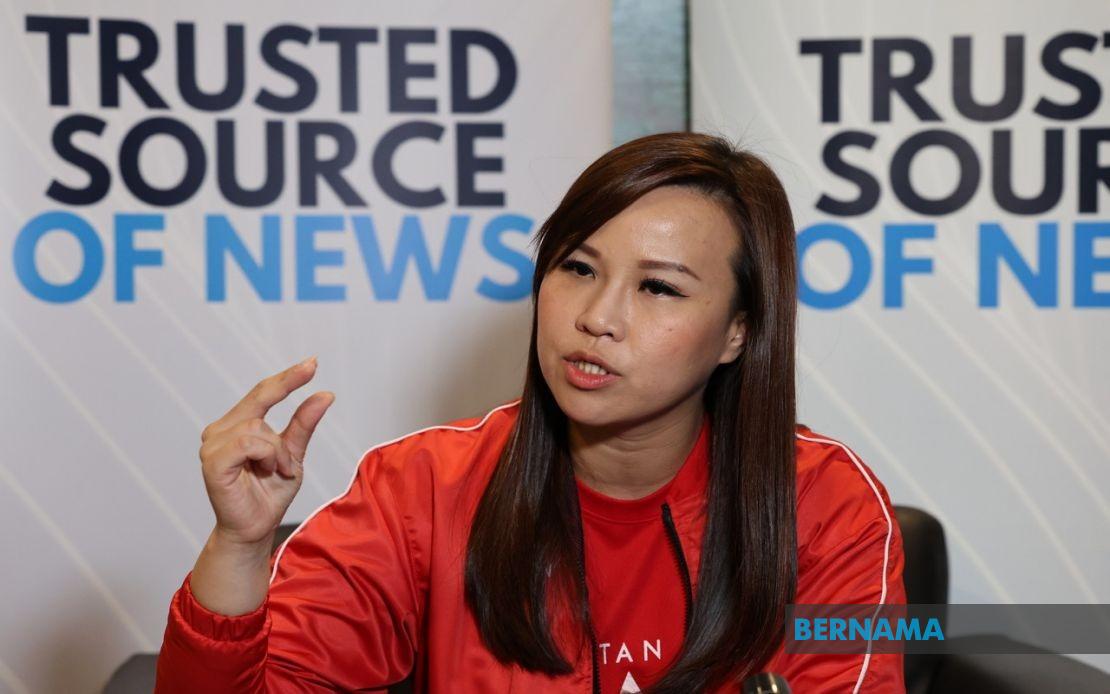
Sharon Teo Siew Hui is running for the Permas state seat in the Johor election as the Pakatan Harapan candidate, drawing substantially on her formative experience as a special officer to the late Datuk Seri Salahuddin Ayub. The 36-year-old has positioned her campaign around the principles she absorbed from her mentor—particularly the notion that elected representatives must remain accessible to voters and track constituent complaints through to resolution, rather than simply acknowledging grievances and moving on.
Teo's political awakening occurred incrementally. Beginning as a volunteer supporter of Salahuddin, she deepened her commitment after observing his hands-on leadership style, eventually joining Parti Amanah Negara in 2018. Her trajectory within the party has been steady: she progressed from ordinary membership to Assistant Secretary of Amanah Johor, then to leading the party's youth women's division. This progression reflects a pattern of internal party development rather than the sudden elevation that critics of "parachute candidates" typically object to—a distinction Teo has explicitly addressed as she prepares for polling day.
Salahuddin, who held the ministerial portfolio for Domestic Trade and Cost of Living and earned the epithet "Bapa Rahmah Malaysia" for his cost-of-living initiatives, modelled an approach to governance that emphasised humility and cross-communal service. Teo recounts observing him monitoring constituent problems late into the evening, sending WhatsApp messages past midnight to verify whether issues had been rectified. This granular attention to follow-through represents the cornerstone of her intended governance model for Permas—a philosophy that transcends the conventional complaint-handling bureaucracy to which residents have grown accustomed.
Permas itself is not unfamiliar terrain for Teo. Her repeated accompaniment of Salahuddin during campaign cycles and community visits across the constituency has given her foundational knowledge of local dynamics and key stakeholder networks. During the initial five days of her current campaign, she reports receiving an encouraging reception from voters across different demographic and ethnic backgrounds, which she interprets as validation that her outsider status is outweighed by her demonstrated commitment to the area.
The issues occupying voters' minds in Permas cluster around basic infrastructure—potholes, deteriorating access lanes behind commercial establishments, traffic management, and the general condition of public amenities. These concerns reflect a frustration with deferred maintenance rather than calls for transformative development, suggesting that Permas residents prioritise basic accountability and responsiveness from their representative. Teo has absorbed this feedback and woven it into her platform, indicating that infrastructure audits will be among her first initiatives.
Teo is positioning herself strategically toward younger constituencies, recognising that first-time voters and school leavers represent an expanding demographic with distinct communication preferences. She intends to reach these groups through social media channels and esports engagements rather than relying exclusively on traditional town halls and doorstep canvassing. This approach acknowledges the reality that political mobilisation in 2024 demands multi-channel outreach, particularly among voters aged under 30 who may have minimal institutional attachment to established parties.
Her promised first 100 days outline a methodical governance framework: establishing PermasKu as a unified complaint-management centre with transparent tracking mechanisms, executing a comprehensive infrastructure survey to rank repair and upgrade priorities, and conducting direct consultations across all neighbourhoods to ground policymaking in observable community needs rather than bureaucratic assumptions. This sequencing reflects an understanding that legitimacy for any new representative depends initially on demonstrating mastery of constituent service before pursuing broader policy ambitions.
The Permas contest is a four-way race that includes incumbent Baharudin Mohamed Taib of Barisan Nasional, who secured a 7,926-vote majority in 2022. Perikatan Nasional's T. Vela and Parti Bersama Malaysia's Dr Zamil Najwah round out the field. For Teo, overturning the BN incumbency requires not merely mobilising the PH base but persuading swing voters that her service-oriented approach offers tangible improvements over existing representation. The margin Baharudin achieved suggests the seat is competitive rather than firmly held, particularly if opposition parties can consolidate support and articulate a clear rationale for change.
The significance of Teo's candidacy extends beyond individual electoral competition. In Johor, where Barisan Nasional has historically dominated state politics, insurgent candidacies from reform-oriented coalitions test whether voters regard the traditional power structures as sufficient or desire alternatives grounded in different governing philosophies. Teo's emphasis on personal accountability and constituent tracking directly challenges the assumption that voter grievances are inherent to governance rather than symptoms of insufficient representative diligence.
For the broader Malaysian electorate observing the Johor campaign, Teo's framing of politics around service delivery touches on a persistent debate about whether elected representatives function as brokers of state resources or custodians of constituent wellbeing. Her invocation of Salahuddin's legacy—particularly his reputation for both accessibility and integrity—attempts to position Pakatan Harapan as custodians of a specific vision of political responsibility that transcends factional positioning. Whether this appeals sufficiently to Permas voters will become clear as the campaign intensifies and voters weigh competing claims about representation and accountability in their state assembly race.

