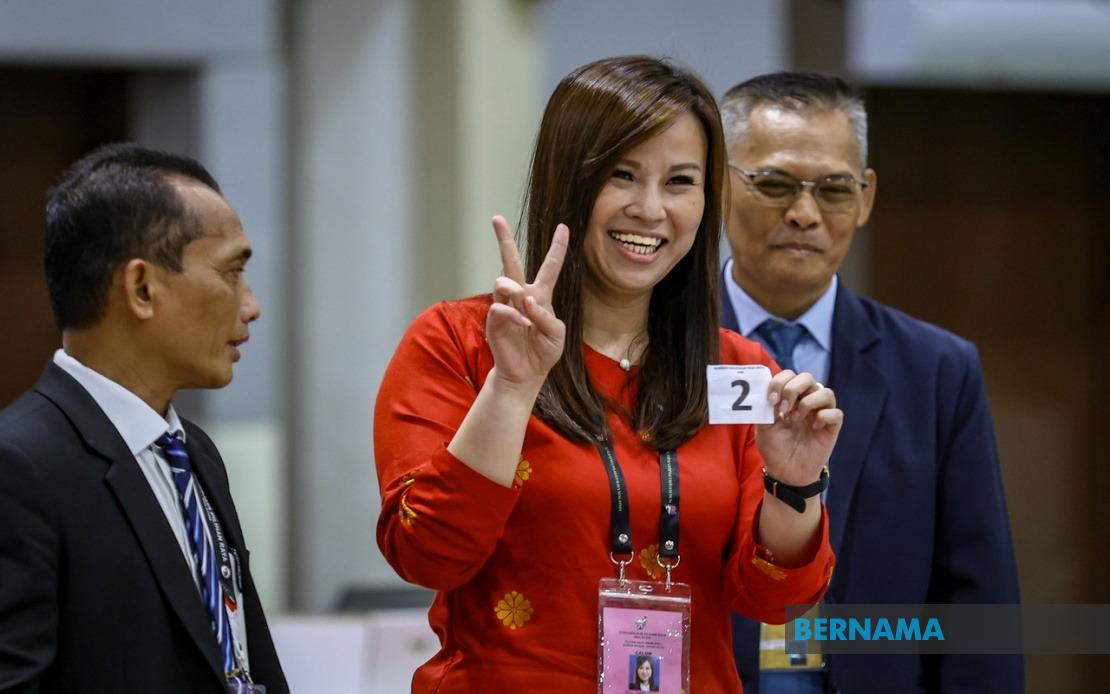
Johor's Permas state constituency is shaping up as a closely contested battleground in the 16th Johor state election, with Pakatan Harapan candidate Sharon Teo positioning herself as an advocate for practical improvements to residents' daily lives. Teo, who chairs the Johor Amanah Women's Youth (Warda) wing, has centred her campaign on two core issues that she says consistently dominate conversations during grassroots engagement: the deteriorating condition of local roads and the adequacy of social welfare provisions. Her decision to anchor her campaign in these tangible concerns reflects a strategic pivot away from broader political rhetoric towards the bread-and-butter issues that voters in urban-fringe constituencies like Permas typically prioritise.
The Permas constituency, nestled within the Pasir Gudang parliamentary zone, comprises 113,963 eligible voters and has emerged as a microcosm of Malaysia's evolving political dynamics. Located in the southeastern reaches of Johor Bahru, the area encompasses both established residential enclaves and newer suburban developments, creating a diverse electorate with mixed expectations of their representatives. Teo's background as an aide in the Pulai parliamentary office under the late Amanah deputy president Salahuddin Ayub provides her with some legislative experience, though her direct electoral track record remains nascent. This experience, she argues, gives her insight into how government machinery functions and how constituent concerns can be channelled into policy action.
Road safety has emerged as Teo's primary distinguishing platform. During the nomination process held at Dewan Muafakat in Taman Mawar, she emphasised that the quality of thoroughfares throughout Permas directly impacts public safety and economic mobility within the constituency. This focus carries particular weight in a suburban setting where residents depend heavily on personal vehicles for commuting and where poorly maintained roads translate into longer travel times, higher accident risks, and accelerated vehicle wear. By positioning road infrastructure as a public safety matter rather than merely an amenity, Teo is reframing a routine governance issue into one with existential implications for household finances and family welfare.
Comprehensive details of Teo's manifesto remain under wraps, with party officials confirming that a full policy platform outlining her specific vision and mission for Permas constituents will be released in due course. This measured approach to disclosure suggests that Pakatan Harapan is still fine-tuning its messaging and may be gauging grassroots sentiment before committing to detailed commitments. The strategy carries both advantages and risks: it allows flexibility and responsiveness to emerging voter concerns, but it also provides less concrete material for undecided voters to evaluate relative to opponents who may offer more specific pledges.
The incumbent Baharudin Mohamed Taib, representing Barisan Nasional, successfully defended the Permas seat during the 2022 Johor election and now faces the unenviable task of retaining it amid a fractured opposition vote. In his campaign messaging, Baharudin has adopted a notably cautious posture, acknowledging the competitive threat posed by multiple challengers without underestimating any single opponent. His decision to eschew a personal manifesto in favour of adhering to the broader Barisan Nasional platform suggests a strategy of emphasising continuity and the resources of the coalition rather than individual distinction. This approach, while projecting stability and institutional backing, may paradoxically limit his ability to address locally specific grievances that voters perceive as neglected under previous administration.
The Permas contest is unfolding as a four-cornered battle rather than the typical two-candidate or three-candidate affair that has dominated Malaysian state elections historically. Alongside Teo and Baharudin, T. Vela represents Perikatan Nasional and Dr Zamil Najwah carries the colours of Parti Bersama Malaysia, the newly registered political vehicle led by former prime minister Mahathir Mohamad. The presence of Bersama, in particular, introduces an unpredictable variable into what might otherwise be a straightforward contest between establishment and opposition forces. Whether Bersama's candidacy functions as a spoiler for either major bloc or whether it attracts a meaningful base of independent-minded voters remains an open question.
Perikatan Nasional's continued presence in Johor elections reflects the coalition's determination to maintain relevance in a state where it has historically lacked the institutional depth of either Barisan Nasional or, increasingly, Pakatan Harapan. Vela's campaign platform and policy offerings have received minimal media attention to date, suggesting either limited grassroots mobilisation or a tactical decision to maintain a low profile until the final campaign phase. For voters genuinely undecided between the major contenders, PN's participation adds complexity to an already crowded field and may suppress overall turnout if third-tier candidates fail to generate excitement.
The Johor state election is scheduled for July 11, with early voting sessions to be held on July 7, providing a compressed timeline for campaigning and voter persuasion. This condensed schedule means that candidates have only approximately two weeks to consolidate their messaging, reach wavering voters, and mobilise their respective support bases. For a newcomer like Teo, this timeline is both constraint and opportunity: the time pressure makes it difficult to build broad name recognition, but it also means that a disciplined, focused campaign addressing specific voter concerns may prove more effective than protracted, diffuse efforts.
The implications of the Permas result extend beyond the immediate question of seat composition in the Johor state assembly. Permas has consistently served as a bellwether for suburban Johor sentiment, and the outcome will offer insights into whether Pakatan Harapan can translate grassroots engagement into electoral gains in constituencies where public services and infrastructure remain contentious. For Barisan Nasional, retaining Permas would signal resilience in suburban areas despite broader national shifts towards opposition politics. For Perikatan Nasional and Bersama, any substantial vote share would vindicate their decision to contest and would provide momentum for future electoral engagements in the state.
The focus on pragmatic issues like road conditions and welfare provision suggests that Permas voters, like much of Malaysia's suburban electorate, have moved beyond purely ideological considerations. Parties that can credibly demonstrate competence in delivering basic services and addressing routine grievances appear likely to command electoral support regardless of their broader political complexion. Teo's emphasis on these issues positions Pakatan Harapan as responsive to constituent priorities, though whether this rhetorical positioning translates into actual policy delivery if she wins remains contingent on her ability to influence resource allocation within a broader state government. The election will ultimately reflect the extent to which Malaysian voters prioritise transformative political change versus incremental improvements to their immediate living conditions.

