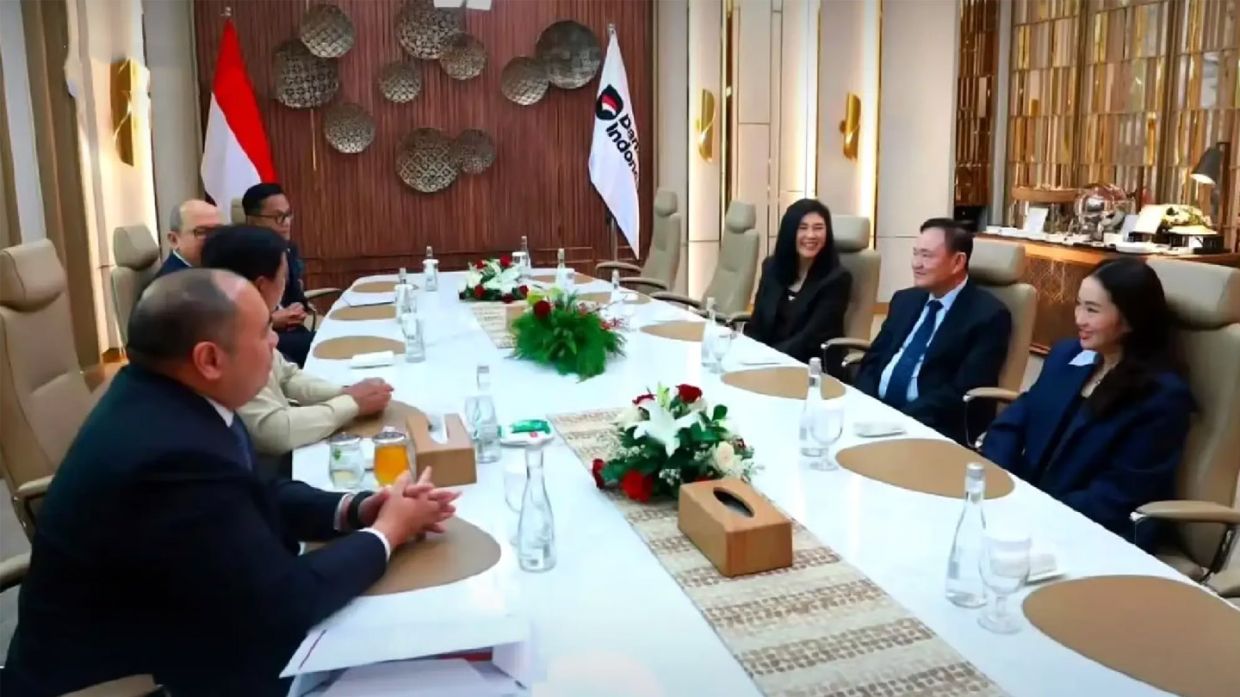
Three members of Thailand's influential Shinawatra political dynasty met with Indonesian President Prabowo Subianto in Jakarta on July 9 to discuss cross-border investment opportunities and strategic economic development. The gathering brought together former prime ministers Thaksin Shinawatra, Yingluck Shinawatra, and Paetongtarn Shinawatra alongside senior executives from Danantara, Indonesia's state investment management institution, signalling renewed engagement between influential Thai business and political figures and Jakarta's leadership.
The substantive discussions at Danantara's headquarters centred on identifying viable investment channels, asset management frameworks, and developmental strategies designed to foster sustainable economic expansion across the region. According to Indonesian Cabinet Secretary Teddy Indra Wijaya, the encounter was characterised by warmth and informality, reflecting the established rapport among participants who represent significant influence in Southeast Asian business and political spheres. The Shinawatra family's enduring prominence in Thai affairs, combined with their substantial business interests across the region, positions such engagement as strategically significant for Indonesia's international economic positioning.
Thaksin's presence carried particular weight in these discussions, as his appointment to Danantara's advisory board provides him with direct involvement in shaping Indonesia's investment strategy. His tenure as Thailand's prime minister from 2001 to 2006 established him as a transformative figure in Thai governance, though his subsequent years have been marked by exile and complex legal circumstances in his home country. Despite these challenges, his influence remains considerable within regional business circles and international investment communities, making his counsel on economic matters distinctly valuable to Indonesian decision-makers.
Yingluck and Paetongtarn brought additional perspectives rooted in their own executive experience. Yingluck served as Thailand's prime minister from 2011 to 2014, implementing populist economic policies that resonated widely before political upheaval altered her circumstances. Paetongtarn's assumption of the Thai premiership in 2024, continuing until 2025, demonstrated the family's ongoing relevance in Thai governance structures. Her participation in the Jakarta meeting underscored Thailand's institutional interest in deepening economic ties with Indonesia, suggesting that engagement extended beyond individual business interests to reflect government-level cooperation between the two nations.
Danantara's leadership assembled for the discussions included figures instrumental in Indonesia's strategic investment architecture. Rosan Roeslani, serving as group chief executive officer, oversaw the institution's overall direction. Dony Oskaria, the chief operating officer, managed operational implementation of investment strategies, while Pandu Sjahrir, chief investment officer, shaped the specific selection and structuring of capital deployment. This senior-level attendance reflected the significance Jakarta placed upon the meeting, treating it not as a courtesy encounter but as substantive engagement on matters central to Indonesia's economic transformation agenda.
The institution's mandate reflects Jakarta's recognition that managing and optimizing strategic national assets requires sophisticated guidance and international expertise. Danantara functions as the vehicle through which Indonesia identifies, develops, and monetizes its considerable resource and infrastructure assets to fund long-term developmental objectives. By incorporating Thaksin into its advisory mechanisms, Indonesia accessed insights from someone with established track records in financial and economic policymaking, even as his controversial history ensures his counsel remains subject to scrutiny in Thai political circles.
Beyond the formal meeting at Danantara's offices, the engagement extended to more personal dimensions when Prabowo hosted Thaksin and family members at his private Jakarta residence. This dual-layer engagement, encompassing both institutional and private dimensions, illustrated the multifaceted nature of the relationship being cultivated. The Cabinet Secretariat's characterization of both interactions as warm and cordial suggested genuine rapport rather than transactional formality, potentially indicating foundations for extended cooperation on future initiatives.
For Malaysia and other Southeast Asian economies, such meetings carry broader implications regarding the region's evolving investment patterns and strategic partnerships. The engagement demonstrates how major regional actors continue cultivating networks that span national boundaries, seeking competitive advantages through access to influential figures and institutional knowledge. Indonesia's willingness to position Thaksin as an advisory figure, despite Thai domestic political complications surrounding his status, reflects Jakarta's pragmatic approach to leveraging expertise regardless of the source's domestic political standing.
The timing and scope of these discussions also merit consideration within the context of changing global economic conditions that Jakarta explicitly referenced. With international investment flows responding to shifting geopolitical dynamics, emerging market uncertainties, and technological disruptions, institutions like Danantara must continually reassess their positioning and strategy. Engagement with seasoned figures like the Shinawatra family members potentially offers frameworks for navigating these complexities while identifying opportunities that less connected entities might overlook.
These conversations reflect the reality that Southeast Asian economic development increasingly depends upon networks extending beyond official government channels. Family-based business empires like the Shinawatras maintain influence through shareholdings, advisory positions, and personal relationships cultivated over decades. Indonesia's strategic inclusion of such figures in advisory capacities suggests a recognition that effective economic management requires accessing perspectives and networks that transcend traditional state institutions.
Looking forward, the meeting may presage deeper economic integration between Thai and Indonesian business interests, potentially affecting everything from infrastructure development to resource extraction to financial services. For Malaysian observers, such regional realignments merit attention, particularly as they influence investment flows, trade patterns, and competitive positioning across Southeast Asia. The Shinawatra family's demonstrated ability to maintain relevance and access across regional capitals despite domestic Thai political turbulence illustrates the enduring power of established business networks in shaping Southeast Asian economic outcomes.

