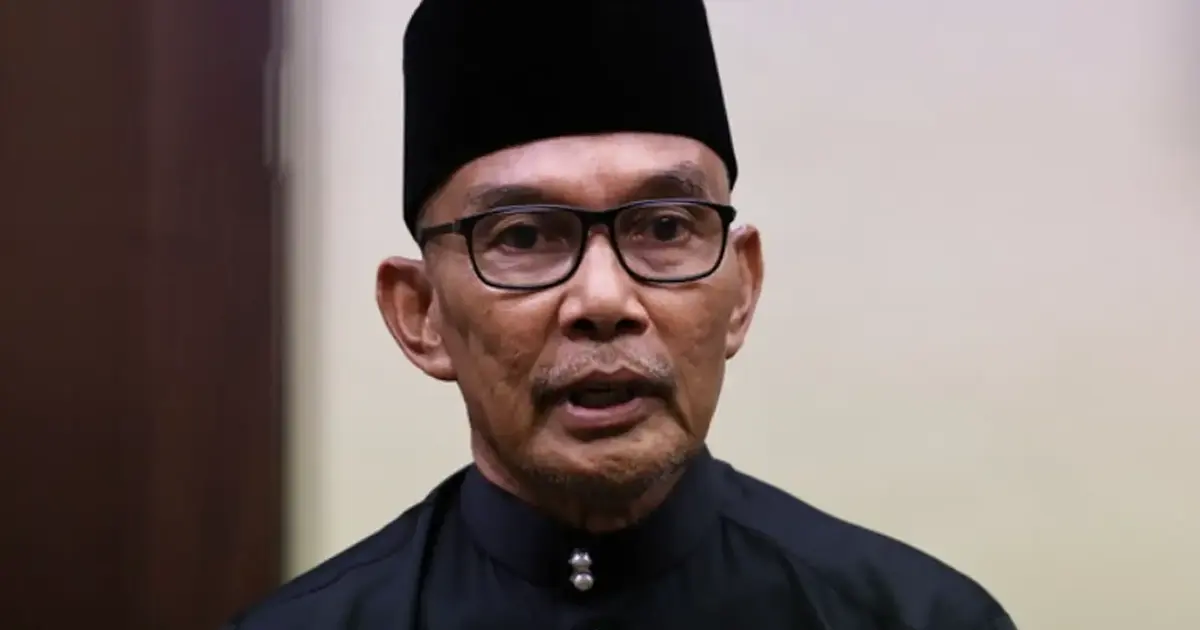
Former Perlis menteri besar Shukri Ramli has firmly denied accusations that he encouraged party members to boycott PAS programmes or undermine the organization's operational capacity, even as he acknowledged persistent hurt feelings following his unexpected removal from office. The statement marks his most direct response yet to mounting speculation within party circles about his possible involvement in efforts to destabilize PAS structures in the northern state, where the Islamic party has long held significant political influence.
Shukri's defence comes at a sensitive moment for PAS, which has been grappling with internal divisions and competing power bases across its Malaysian operations. The party's leadership, particularly in Perlis, has faced questions about cohesion following the former menteri besar's departure. While Shukri stopped short of elaborating extensively on the circumstances surrounding his exit from the top state position, his comments suggest deeper frustrations within the party machinery that extend beyond a simple succession dispute.
The denial itself carries particular weight in Malaysian politics, where former office-holders wielding substantial grassroots networks can potentially influence party dynamics through informal channels. Shukri's continued visibility and his connections to traditional PAS support structures in Perlis make any impression of his involvement in organizational resistance significant. By explicitly rejecting claims that he has worked against the party, he appears to be attempting to insulate himself from further criticism while simultaneously signalling his ongoing grievance over how his leadership tenure ended.
PAS, as a long-established Islamic political force in Malaysia, has navigated numerous internal transitions and leadership changes over its history. However, the management of such transitions has not always been seamless, with former leaders occasionally maintaining parallel bases of support that can complicate party unity efforts. Perlis, as one of Malaysia's smaller and historically less industrialized states, has traditionally represented a more cohesive PAS stronghold compared to larger, more diverse states, making any suggestion of organizational fracturing particularly noteworthy to party strategists.
Shukri's acknowledgement that he remains hurt by his removal reveals the emotional dimension underlying what might otherwise appear to be a purely administrative dispute. In Malaysian politics, personal relationships and questions of respect carry considerable weight, particularly within faith-based organizations where questions of dignity and proper treatment intersect with religious and moral frameworks. His willingness to admit ongoing pain while denying destructive action attempts to position him as someone wounded but principled—a potentially important distinction for his standing within PAS.
The timing of these comments also reflects broader patterns in Malaysian state politics, where transitions in leadership frequently generate speculation about the motivations and subsequent actions of displaced officials. The public scrutiny surrounding Shukri's position stands in contrast to the often opaque nature of internal party decisions, where state menteri besar appointments frequently reflect complex negotiations among party factions, federal-level considerations, and regional power dynamics that rarely reach public discussion in their full complexity.
For PAS observers and analysts, Shukri's denial is likely to provoke further internal debate about the proper mechanisms for managing leadership transitions. The party faces an ongoing challenge in maintaining organizational discipline while accommodating the legitimate grievances of senior figures who have invested decades in building its structures. How PAS resolves these questions could influence its performance in upcoming electoral cycles, given that leadership stability remains a consistent concern for Malaysian voters across all political formations.
Shukri's comments also carry implications for Perlis politics more broadly. The state has experienced relative political stability in recent years, but continued rumours of internal PAS division could potentially create openings for opposition parties seeking to expand their presence in the northern state. Opposition movements in Perlis have historically struggled to gain significant traction, yet any visible weakening of PAS cohesion could alter that calculation. The state's relatively small population and tight-knit political culture mean that internal party disputes tend to become public knowledge relatively quickly.
The distinction Shukri has drawn between his emotional response to his removal and his actual conduct is a carefully calibrated political statement. It acknowledges legitimate human feelings while attempting to close off accusations of inappropriate behaviour, a balance that reflects sophisticated understanding of how narratives develop within Malaysian political communities. Whether this framing will satisfy party skeptics or resolve underlying questions about his role in any organizational resistance remains uncertain.
Moving forward, the resolution of these tensions will likely depend on whether PAS leadership moves to formally address grievances in Perlis or whether party officials prefer to allow the matter to fade from public attention. The handling of senior figures like Shukri often sets precedents for how future leadership transitions occur within the party, making this episode potentially significant beyond its immediate context. For Malaysian politics more broadly, the episode underscores how deeply personal and institutional concerns become intertwined in state-level politics, where relationships developed over decades suddenly shift with individual leadership changes.

