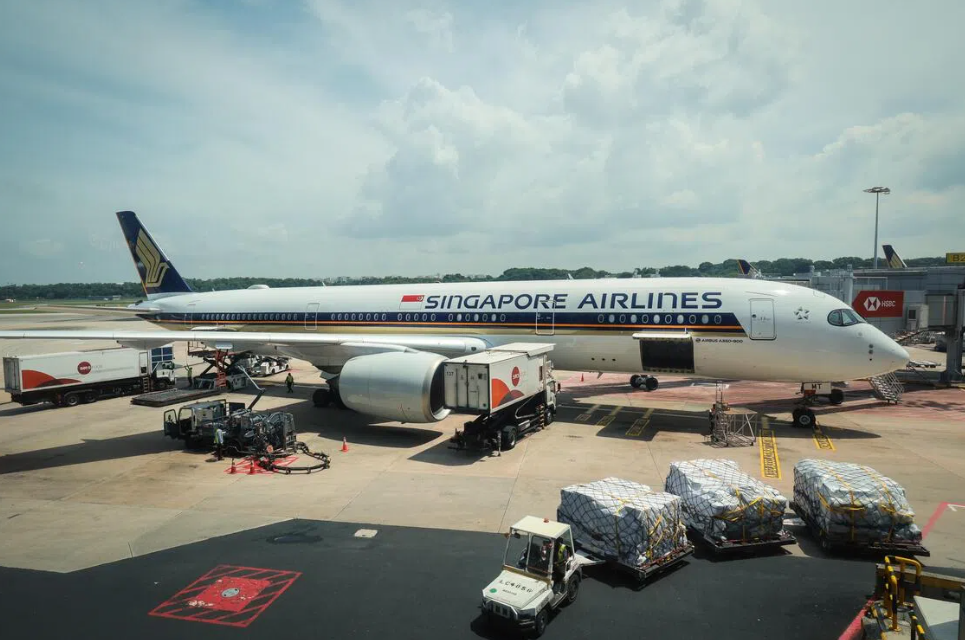
Singapore Airlines encountered an operational disruption on one of its flagship ultra-long-range services when flight SQ22, destined for Newark in New York, was forced to reverse course and return to Changi Airport in the predawn hours of August 13. The aircraft, which had lifted off the previous evening at its scheduled departure time of 11:35pm on August 12, completed its return journey at 3:06am the following morning after establishing that a technical problem required immediate attention.
The Airbus A350-900, a state-of-the-art wide-body jet engineered for extended transoceanic operations, represents the pinnacle of Singapore Airlines' long-haul fleet capability. The SQ22 service itself stands among the world's most demanding commercial aviation routes, spanning approximately 16,700 kilometres across more than 18 hours of continuous flight time. This particular service is among the longest direct commercial flights currently operated globally, making the aircraft's reliability and maintenance standards absolutely critical to operational success.
While Singapore Airlines confirmed the nature of the incident, the airline's spokesperson declined to disclose specific details regarding the precise technical malfunction that necessitated the return. This reticence to elaborate is not uncommon in aviation, where airlines often restrict technical information pending full investigation and regulatory review. However, the fact that the aircraft required towing to a remote parking bay at Changi rather than returning under its own power to a gate suggests the problem was substantive enough to compromise normal taxiway operations, indicating either systems-related or structural concerns.
Managing the human dimension of the disruption required swift logistical coordination. All 133 passengers and 17 crew members were safely deplaned and transported via shuttle buses to the airport terminal, where they commenced an extended wait for alternative arrangements. The airline provided food vouchers to sustain passengers through the delay, a standard practice designed to maintain customer goodwill during unexpected operational disruptions. Beyond immediate provisions, affected travellers were furnished with continuous updates and personalised assistance, with the airline rebooking those requiring connections onto alternative flights to minimise downstream journey complications.
The crew situation presented its own regulatory complexity. The original flight crew, having already consumed a significant portion of their allowable flight time during the initial attempted departure and return sequence, would have exceeded strict regulatory limits governing pilot duty hours. These internationally harmonised standards exist specifically to ensure crew fatigue does not compromise aviation safety during extended operations. Consequently, Singapore Airlines deployed a fresh crew complement for the replacement service, necessitating a complete personnel changeover despite the underlying aircraft issue now being resolved.
The replacement aircraft departed Changi at 5:41am on August 13, successfully completing the transatlantic crossing and arriving in Newark at 12:15pm local time that same day. While passengers ultimately reached their destination, the incident created a substantial delay measured in hours rather than the minutes that might result from standard turnaround procedures. The replacement flight's success in reaching its destination without incident suggests that the technical issue affecting the initial aircraft was isolated and did not reflect broader fleet-wide concerns.
Passenger sentiment regarding the airline's handling of the crisis proved largely positive, despite underlying frustrations. One traveller who shared their experience on social media platform Reddit commended Singapore Airlines for responding to the emergency in a manner they characterised as exceptionally competent. Nevertheless, this same passenger expressed disappointment about the absence of transparent communication regarding the root cause of the problem. The traveller specifically noted frustration about why the aircraft required towing and why passengers could not retrieve their baggage, observations that hint at the customer desire for greater transparency during operational incidents.
This incident underscores a persistent tension in modern aviation between operational safety protocols and passenger communication expectations. Airlines worldwide maintain strict information policies following technical incidents, partly to avoid speculation, partly pending regulatory investigation, and partly to manage liability considerations. Yet passengers increasingly expect detailed explanations for disruptions affecting their journeys, particularly on premium long-haul services where ticket prices reach thousands of dollars. Singapore Airlines' approach of prioritising safety confirmation and logistical resolution while withholding technical specifics reflects standard industry practice, though the Reddit user's feedback suggests this may frustrate customers seeking fuller understanding.
For Singapore Airlines, the incident carries implications beyond the immediate operational and customer service dimensions. The carrier has invested substantially in its A350-900 fleet as a cornerstone of its long-haul expansion strategy, particularly for prestige routes like Singapore-Newark that represent significant commercial and symbolic importance. While isolated technical issues are inherent to aircraft operations, the need to deploy replacement aircraft on such strategically important services highlights the operational margins within which long-haul carriers must maintain their fleets. The incident also demonstrates the airline's capacity to mobilise replacement assets and manage complex crew and passenger logistics under time pressure, capabilities that ultimately determine customer satisfaction during inevitable disruptions.
The SQ22 service carries particular significance for Southeast Asian passengers and business travellers seeking direct access to the eastern United States. Any recurring issues affecting this route could prompt competitive implications as rival carriers operating similar transcontinental services—including those from Malaysia, Thailand, and other regional hubs—position themselves as more reliable alternatives. For now, however, the single incident, while disruptive, appears to have been isolated, and the successful completion of the replacement flight suggests normal operations have resumed. Nonetheless, aviation authorities and the airline will likely conduct thorough investigations to ensure the underlying technical issue does not resurface.

