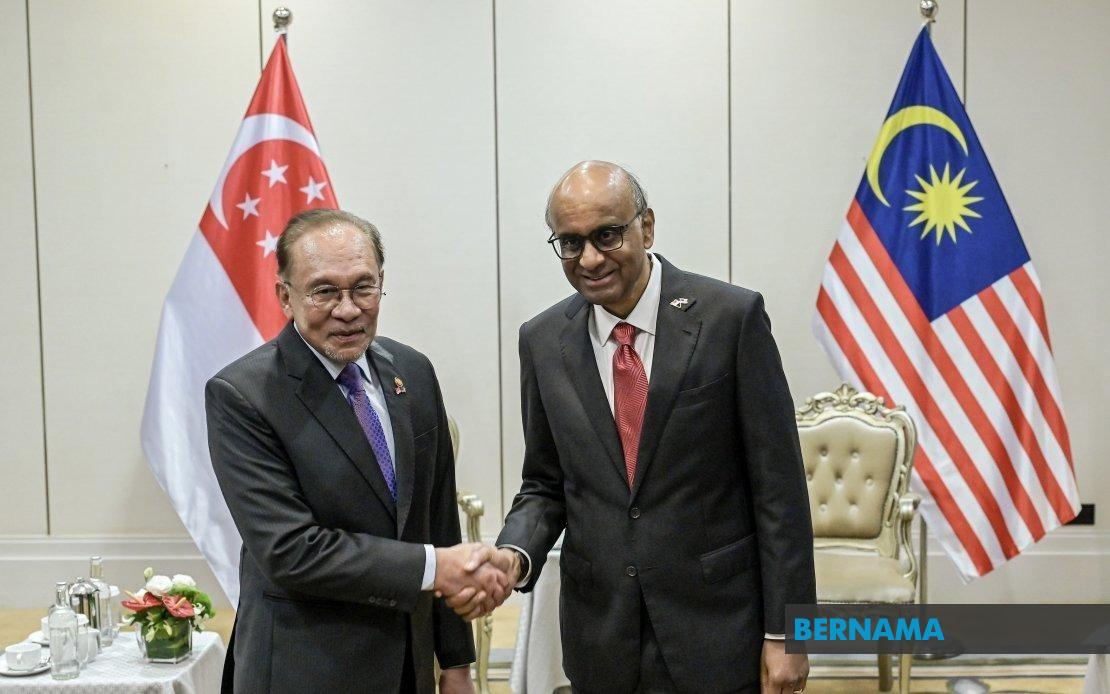
Singapore and Malaysia have committed to broadening their partnership across critical sectors including food security and energy security, marking a significant step in bilateral relations during President Tharman Shanmugaratnam's historic inaugural state visit to Malaysia this week. The undertaking signals a deepening of ties between two of Southeast Asia's most economically advanced nations, reflecting shared concerns about regional resilience in an increasingly uncertain geopolitical environment.
The commitment emerged during a courtesy call by Prime Minister Datuk Seri Anwar Ibrahim on President Tharman at Istana Negara on Monday, according to Singapore's Ministry of Foreign Affairs. During their discussions, both leaders underscored the necessity of expanding bilateral engagement in domains where their national interests align, with food and energy emerging as priority areas. For Malaysia, this cooperation carries particular weight given the nation's growing demand for reliable energy supplies and its strategic position in Southeast Asian food systems, while Singapore's vulnerability as a densely populated island dependent on imports makes these partnerships fundamental to its survival strategy.
President Tharman, accompanied by his wife Jane Ittogi Shanmugaratnam, received a full state welcome ceremony at Istana Negara, where he was formally received by His Majesty Sultan Ibrahim, King of Malaysia, and Her Majesty Raja Zarith Sofiah, Queen of Malaysia. The ceremonial treatment afforded to the visiting president underscores Malaysia's commitment to elevating the bilateral relationship, with the state visit—Tharman's first since assuming office—representing a deliberate diplomatic signal of renewed engagement between Kuala Lumpur and Singapore. This gesture carries symbolic weight beyond protocol, suggesting both nations view deeper integration as mutually beneficial.
Beyond energy and food security, the two leaders engaged in substantive discussions about the broader geopolitical landscape, particularly developments unfolding in West Asia. Both Singapore and Malaysia maintain significant economic and strategic interests in that region, with Malaysia's substantial Muslim population and Singapore's role as a global financial hub creating distinct but complementary perspectives on Middle Eastern stability. Their exchange of views on these matters indicates a desire to coordinate positions on international developments that could reverberate across the Indo-Pacific region and affect maritime commerce in which both nations have substantial stakes.
A critical dimension of their discussions centred on upholding international maritime law, with both President Tharman and Prime Minister Anwar reaffirming commitment to the United Nations Convention on the Law of the Sea and protecting freedom of navigation. This emphasis carries profound implications for the region, where disputes over territorial claims and maritime boundaries remain sources of tension. For Malaysia and Singapore, which depend heavily on sea lanes for commerce and possess overlapping maritime interests, such mutual reaffirmation of rules-based approaches provides reassurance against unilateral actions by larger powers and reinforces the importance of multilateral frameworks in resolving disputes.
Further diplomatic engagement took place on Tuesday when President Tharman met with the Sultan of Selangor, Sultan Sharafuddin Idris Shah, and held discussions with Selangor Menteri Besar Datuk Seri Amirudin Shari. These meetings reflected an intentional strategy to deepen engagement beyond federal-level discussions, extending bilateral cooperation to Malaysia's state level. The Selangor meetings highlighted specific areas of potential collaboration including technical and vocational education, climate adaptation and flood mitigation, and support for technology start-ups. Such initiatives demonstrate that the partnership is not confined to traditional defence and diplomatic channels but encompasses practical, ground-level cooperation addressing contemporary challenges.
Technical and vocational education represents a particularly promising avenue for collaboration, as both Singapore and Malaysia face skills gaps in emerging sectors. A coordinated approach to vocational training could facilitate labour mobility and knowledge transfer across the Causeway, benefiting employers in both jurisdictions while addressing demographic challenges. Similarly, climate adaptation and flood mitigation initiatives hold urgency given Southeast Asia's vulnerability to climate change impacts, with Malaysia's experience managing monsoon flooding and Singapore's engineering expertise in water management combining to create a complementary partnership.
The emphasis on start-up growth reflects recognition by both nations that innovation-driven economies offer pathways to sustained prosperity. Singapore, with its established position as a regional hub for venture capital and technology entrepreneurship, can offer mentorship and market access to Malaysian start-ups, while Malaysia's larger talent pool and lower cost base provide expansion opportunities for Singapore-based ventures. President Tharman's welcome of increased exchanges between Singapore and Selangor suggests openness to establishing formal mechanisms facilitating such entrepreneurial cooperation.
The timing of this visit carries broader significance for Southeast Asian regional architecture. As great power competition intensifies and questions persist regarding regional stability, the explicit reaffirmation by Singapore and Malaysia of commitment to international law and rules-based order sends a stabilising signal. Both nations, despite occasional disputes, share fundamental interests in maintaining an open regional order that prevents domination by any single power and preserves space for smaller nations to manoeuvre and prosper.
Looking forward, the pledges made during President Tharman's visit provide a framework for concrete deliverables in coming months. Establishing working groups on food security and energy, developing bilateral vocational education partnerships, and coordinating climate adaptation strategies represent logical next steps. For Malaysian observers, this deepened engagement offers opportunities to access Singapore's capital and technological expertise, while Singapore gains reassurance from stronger partnerships with its largest neighbour, reducing strategic uncertainty on its doorstep.

