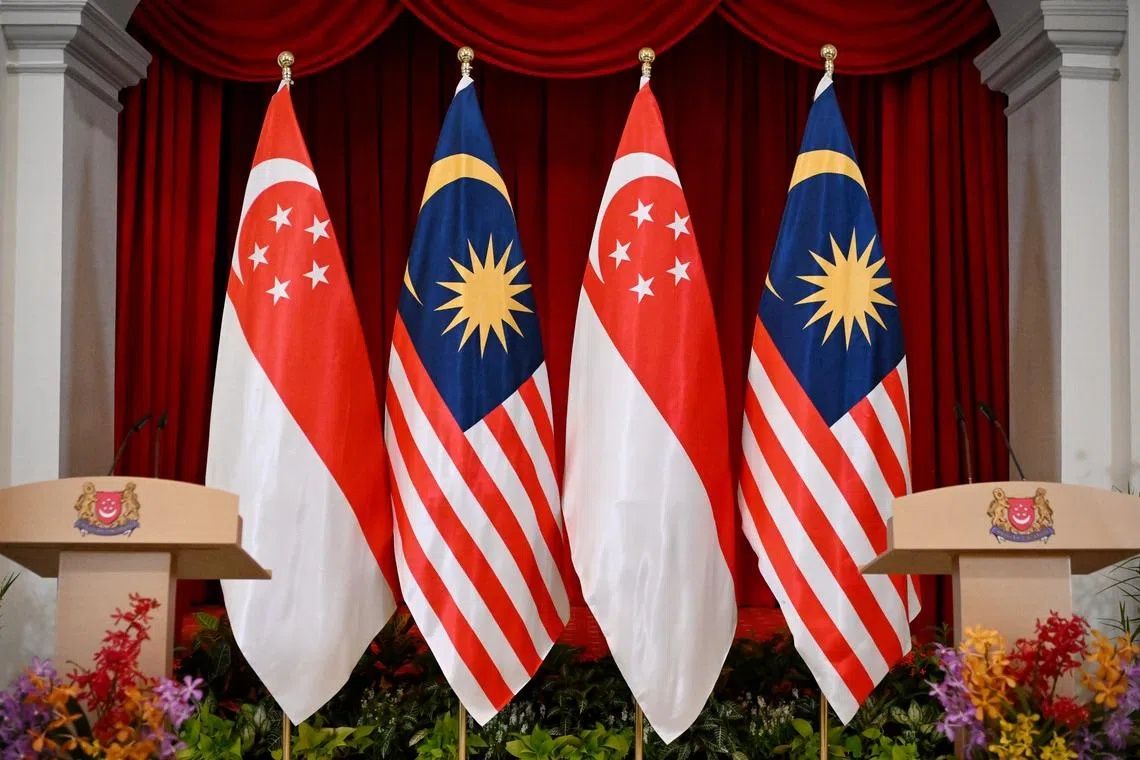
Singapore and Malaysia will inevitably encounter disagreements on particular matters, but these disputes should not undermine the comprehensive partnership binding the two nations together, President Tharman Shanmugaratnam stated as he prepared for a four-day official visit to Malaysia. In remarks published by Bernama ahead of his trip, the President stressed that both governments have deliberately chosen to confront differences directly rather than sweep them aside, while consistently working to reinforce their wider relationship, which has accumulated considerable reserves of trust and goodwill across six decades.
The foundation of this enduring partnership rests on more than shared cultural and historical heritage, President Tharman emphasised. Instead, the relationship has been sustained by genuine respect for each nation's distinct interests and priorities, creating bonds that operate far beyond mere commercial or strategic convenience. The President's visit, undertaken at the invitation of Malaysian King Sultan Ibrahim Sultan Iskandar, continues a cherished tradition of high-level engagement that underscores how both capitals view the relationship as fundamental to their national interests and regional standing.
Sultan Ibrahim himself visited Singapore in May 2024, making that journey his maiden overseas state visit following his accession to the throne in January that same year. This reciprocal pattern of engagement demonstrates the institutional commitment both countries maintain toward keeping dialogue channels open and relationships refreshed at the highest levels. President Tharman characterised the bilateral connection as one driven fundamentally by mutual acknowledgment of shared concerns, rather than the narrow calculation of immediate gains that often characterises relations between states.
The President acknowledged frankly that neighbouring countries sharing a complex history inevitably accumulate contentious and intricate bilateral matters requiring resolution. This reality, he suggested, comes with the territory of maintaining borders with a neighbour with whom one shares deep cultural roots and interwoven institutions. Yet what distinguishes the Singapore-Malaysia relationship from many regional partnerships is the consistent resolve of successive administrations to avoid becoming paralysed by these complications. Instead, both nations have pursued methodical solutions grounded in reciprocal regard and fidelity to international legal principles.
The high degree of personal familiarity and institutional confidence that has accumulated between leadership circles, government personnel, and ordinary citizens across the border creates crucial space for managing disagreements through constructive conversation rather than confrontation. President Tharman argued that regional peace ultimately depends not on the elimination of disputes—an unrealistic aspiration—but on demonstrating the restraint and maturity to handle them responsibly through established mechanisms and mutual commitment to principle. The Singapore-Malaysia example, he suggested, carries implications extending well beyond the two nations themselves, offering Asean and the broader Indo-Pacific a template for how developed democracies can manage tensions while maintaining strategic partnership.
To sustain this partnership into future decades, President Tharman stressed the necessity of deliberate, ongoing engagement spanning governmental hierarchies, business communities, and grassroots populations. Earlier generations experienced such interaction organically as part of daily regional life, but contemporary circumstances demand more intentional effort to cultivate these connections. Bilateral exchange schemes, emerging leader forums, and community initiatives across the border all serve essential functions in maintaining the human connections that ultimately anchor formal diplomatic relationships.
Beyond sentiment and historical continuity, the two countries possess substantial concrete opportunities for deepened cooperation. President Tharman highlighted how the accumulated mutual trust built over 60 years can serve as the bedrock for expanding collaboration across economic integration, renewable energy development, and human capital advancement. In an era characterised by erosion of multilateral trade frameworks and intensifying competition among major powers, Singapore and Malaysia should accelerate their pursuit of tighter regional integration while strengthening mutual resilience.
The President outlined several tangible cooperation pathways. Joint market integration could facilitate commercial activity and investment flows beneficial to both economies. Energy collaboration and supply chain coordination would protect both nations against external shocks and disruptions. Cooperative initiatives addressing climate challenges through renewable energy development and carbon credit mechanisms represent forward-looking investments in shared environmental stability. Existing projects including the Johor-Singapore Special Economic Zone and the RTS Link demonstrate how neighbouring states combining distinct competitive advantages can generate outcomes advantageous to all parties involved.
President Tharman connected bilateral partnership to broader regional architecture and stability. Both Singapore and Malaysia possess strong interests in maintaining an open, rules-based international order and accelerating Asean integration efforts. Malaysia's successful 2025 Asean chairmanship, which culminated in welcoming Timor-Leste as the grouping's 11th member, created momentum that Singapore and Malaysia should collectively sustain. Looking ahead to Singapore's scheduled chairmanship in 2027, the two countries can coordinate to ensure Asean preserves its central positioning as a coherent, reliable and trustworthy regional actor capable of promoting stability and prosperity.
President Tharman invoked a Malay proverb—"jiran sepakat membawa berkat", meaning "neighbours in agreement bring blessings"—to encapsulate the philosophical foundation animating bilateral ties. Over six decades of cooperation, Singapore and Malaysia have derived reciprocal advantages and development benefits precisely because they have chosen to function as reliable partners rather than competitors or strategic rivals. The President urged both nations to keep this fundamental understanding in their collective consciousness: each performs better through collaboration, through maintaining respect for each other's concerns, and through genuine affection transcending narrow self-interest.

