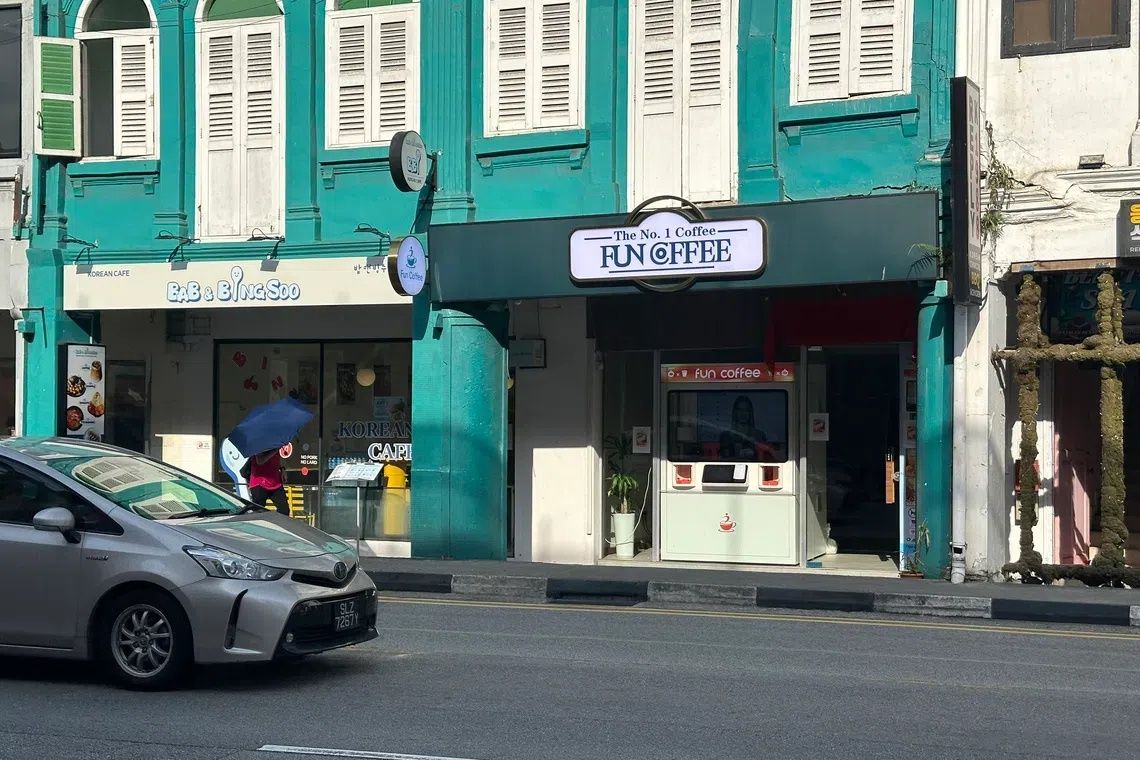
Singapore authorities have arrested a 49-year-old woman suspected of actively recruiting participants into Fun Coffee, an investment scheme operating across Southeast Asia that has defrauded hundreds of people out of millions of dollars. The woman was taken into custody on August 6 following a police investigation that has broadened to include multiple jurisdictions in the region, with law enforcement in Hong Kong and Macau separately apprehending eight individuals connected to the same operation over the preceding week.
Fun Coffee operates as what police describe as a classic multi-level marketing scheme wrapped in the language of legitimate commerce and financial innovation. The platform requires users to download a mobile application and transfer Tether, a stablecoin cryptocurrency pegged to the US dollar, into designated wallet addresses accessed through the app interface. What distinguishes this scheme from conventional investment frauds is its deliberate exploitation of the cryptocurrency ecosystem's relative opacity and the difficulty victims face in recovering funds once transferred across blockchain networks.
The investment structure deliberately targets ordinary people with promises that defy realistic financial returns, while simultaneously incentivising participants to recruit family members, friends, and colleagues by offering commissions on their investments. This dual mechanism—combining improbable profit promises with commission-based recruitment—marks the operation as a pyramid scheme rather than a legitimate investment vehicle. Participants in Singapore discovered they could not retrieve their funds through the Fun Coffee application, effectively trapping their capital within the platform's infrastructure.
The woman faces charges under Singapore's Multi-Level Marketing and Pyramid Selling (Prohibition) Act, legislation that carries substantial penalties reflecting the serious harm these schemes inflict on individuals and families. If convicted, she could face imprisonment for up to five years alongside a fine reaching $200,000, or both sanctions combined. The severity of potential punishment underscores how regional governments now treat cryptocurrency-enabled fraud as a priority enforcement matter.
Fun Coffee markets itself as a "lifestyle brand combining coffee, wellness and digital innovation into a community experience," a positioning designed to lend legitimacy to what is fundamentally a financial scam. The company claims headquarters in Phu Quoc, Vietnam, and asserts assets exceeding US$1 billion with an operational team surpassing 5,000 people. These claims remain unverified and appear designed primarily to inspire confidence in potential recruits. The platform entered the Singapore market sometime in 2025, targeting a city with high financial sophistication but also significant wealth that makes it attractive to international fraud operations.
Physical infrastructure added another layer of credibility to the scheme. Police discovered a coffee vending machine positioned at Fun Coffee's registered address on Jalan Besar, complete with handwritten instructions directing customers to scan QR codes for payments. This tangible presence—however superficial—served to anchor the operation in the physical world, potentially convincing sceptical investors that genuine commercial activity supported the investment claims. Yet the vending machine functioned primarily as window dressing, masking a fundamentally digital fraud mechanism.
The financial toll across the region has been substantial. In Hong Kong and Macau alone, approximately 200 people reported losses totalling nearly HK$100 million, equivalent to roughly S$16.3 million. One Singapore victim recounted transferring approximately S$400,000 into the scheme, with zero recovery of principal or returns. These figures likely represent only a fraction of total losses, as many victims in developing economies remain unreported and unreported losses in other Southeast Asian countries continue accumulating.
The cryptocurrency element presents particular challenges for law enforcement and victims. Unlike conventional banking systems where fund transfers leave digital trails and can be reversed, cryptocurrency transactions are essentially irreversible once executed. Tether transfers move across blockchain networks beyond the jurisdiction of any single regulator, and wallet addresses frequently involve multiple layers of obfuscation. Recovery of stolen funds becomes technically complex and often impossible once the scammers consolidate gains across decentralised exchanges.
Authorities have urged the public to cease any financial engagement with Fun Coffee, regardless of recruitment pressure from acquaintances or application-based solicitations. Police specifically highlighted red flags associated with payment requests conducted through private PayNow QR codes, personal mobile telephone numbers, or overseas banking accounts—all mechanisms that bypass institutional safeguards and create distance between perpetrators and legitimate financial infrastructure. These warning signs identify the difference between legitimate commerce and coordinated fraud.
The Fun Coffee case reflects broader vulnerability patterns across Southeast Asia regarding cryptocurrency-enabled schemes. The region's rapid fintech adoption, limited regulatory harmonisation across borders, and populations with varying financial literacy create conditions that fraudsters exploit systematically. Singapore's enforcement response demonstrates commitment to dismantling these operations, yet the international nature of the scheme means success requires coordinated action across multiple jurisdictions.
The case also illustrates how modern fraud exploits psychological triggers beyond simple greed. By framing itself as a lifestyle brand and community experience rather than pure investment, Fun Coffee appealed to desires for belonging and social status alongside profit motives. Recruitment mechanisms similarly leveraged social trust, with early participants often introducing close associates, inadvertently becoming accomplices in victimising their networks.
For Malaysian investors and regulators, the Fun Coffee case provides crucial lessons about emerging fraud methodologies. As cryptocurrency adoption accelerates across Southeast Asia, scams adopting increasingly sophisticated legitimacy markers will proliferate. Regulatory bodies should strengthen coordination mechanisms, enhance public education regarding multi-level marketing indicators, and develop better protocols for cross-border cryptocurrency transaction monitoring and recovery.

