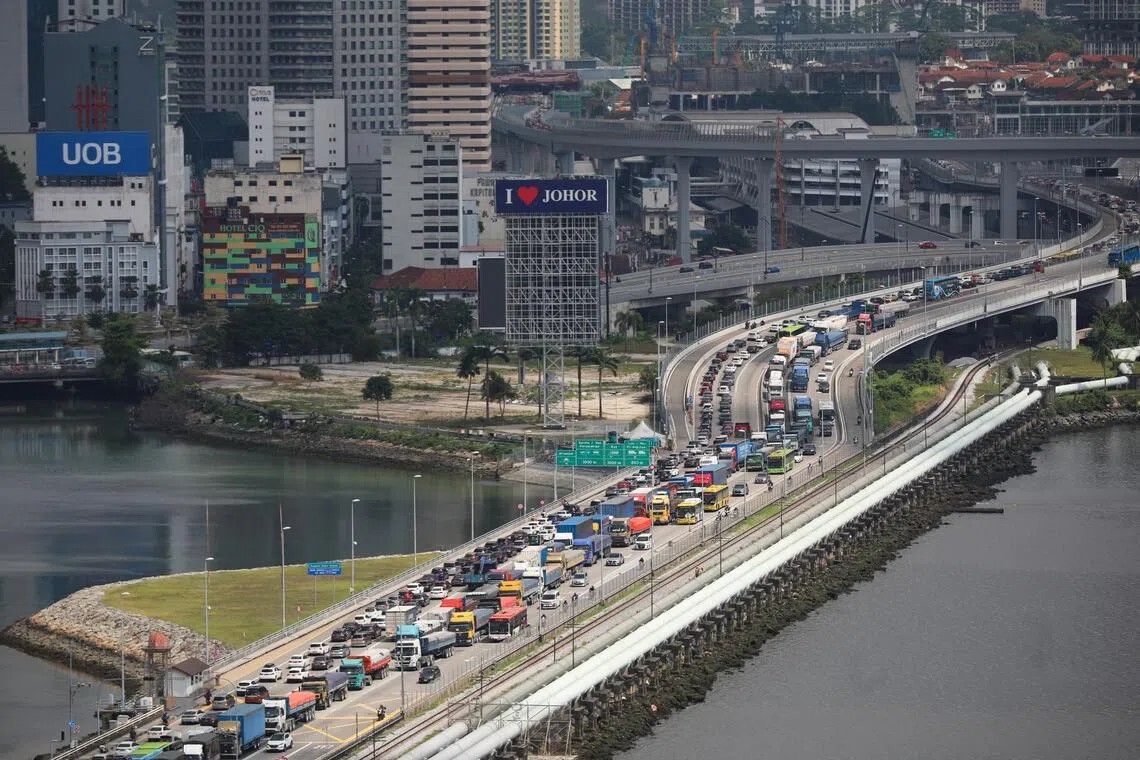
The Immigration and Checkpoints Authority (ICA) of Singapore has issued a significant warning for cross-border travellers, anticipating extraordinarily congested conditions at both the Woodlands and Tuas land checkpoints spanning the National Day long weekend from August 7 to 10. The authority's alert, released on August 3, reflects concerns based on previous holiday periods when volumes have surged dramatically, straining border infrastructure and creating multi-hour delays for motorists attempting to transit between Malaysia and Singapore.
The ICA's advisory emphasises the importance of proactive journey planning, particularly recommending that travellers shift their border crossings to off-peak windows such as early morning hours before dawn or late evening periods when traffic flows more freely. This counterintuitive guidance stems from operational data showing that concentrating movements during conventional daytime hours exacerbates bottlenecks, whereas dispersed crossing patterns allow checkpoint facilities to process travellers more efficiently and reduce cumulative waiting periods across the day.
Recent travel data underscores why such warnings carry urgency. Between May 26 and June 28, encompassing the Hari Raya Haji observance, Vesak Day weekend, and June school holiday period, more than 18 million individual travellers transited through the two land checkpoints, demonstrating the extraordinary mobility that characterises the Malaysia-Singapore travel corridor. On a single day during this window—June 19—the Woodlands and Tuas checkpoints processed a record 598,000 people, exceeding the previous daily peak of 589,000 recorded in December 2025, illustrating how quickly new capacity thresholds are being breached.
The human cost of these movements becomes apparent when examining wait times during congested periods. The ICA documented instances where private vehicle operators faced immigration clearance delays extending to three hours or longer, largely attributable to traffic tailbacks originating from the Malaysian side that created cascading delays within Singapore's processing zones. Such extended detention times impose tangible costs on travellers—through fuel consumption, lost productivity, and foregone economic activity—and affect families, workers, and business travellers navigating both nations' economies.
Security considerations have added another layer of complexity to checkpoint operations. Since February 28, the ICA has intensified security screening across all border facilities in response to escalating global security tensions, particularly developments emanating from the Middle East region. These heightened protocols necessarily extend per-traveller processing duration, compounding delays during periods of elevated volume and making the difference between off-peak and peak crossing windows even more pronounced from an operational standpoint.
To alleviate pressure on conventional processing channels, the authority has promoted digital alternatives that substantially accelerate clearance. The MyICA mobile application enables travellers to generate QR codes prior to arrival, permitting substantially faster immigration verification compared with manual documentation processing. Additionally, motorcycle riders and pillion passengers benefit from a newer facial recognition-based system termed the New Clearance Concept, which has delivered measurable efficiency improvements of over 35 percent—translating to an additional 7,600 travellers per hour during peak departure periods relative to pre-pandemic 2019 baseline figures. These technological enhancements represent substantive capacity augmentation without physical infrastructure expansion.
However, technological solutions depend critically upon traveller compliance and orderly conduct at physical checkpoints. The ICA has identified queue discipline breaches as a recurrent problem degrading overall throughput. Queue-cutting—whereby motorists or passengers bypass established waiting lines—cascades disruption through the system, ultimately delaying all travellers rather than advancing individual queue-cutters. Enforcement responses have proven necessary, with officers redirecting offenders to rejoin queues at their terminus, effectively nullifying any time gained through transgression whilst simultaneously penalising other users through extended wait times.
During the preceding holiday window incorporating Hari Raya Haji, Vesak Day, and June school holidays, enforcement personnel apprehended 52 motorists committing traffic-related infractions and dangerous road conduct. Consequences have included referral to Singapore's Traffic Police for formal investigation and prosecution, directed U-turns requiring queue rejoining, and in some instances, exclusion from Singapore entry entirely. These escalating penalties signal the ICA's determination to maintain orderly processes despite volume pressures, reflecting recognition that systematic breakdown benefits nobody.
The August 7-10 National Day weekend presents a test case for cross-border infrastructure resilience during a period when both Malaysian and Singaporean residents exhibit peak leisure travel propensity. The long weekend traditionally triggers discretionary movement—family visits, holiday excursions, and shopping expeditions—distinct from routine commuter or business flows. This discretionary character renders the travelling public particularly responsive to advisory messaging about optimal crossing windows, suggesting that effective communication campaigns can materially reduce peak-period volumes.
For Malaysian readers particularly, the implications merit consideration. Many Malaysians commute to Singapore for employment or visit for recreational and commercial purposes, rendering checkpoint efficiency integral to economic participation and quality of life. Extended border crossing durations effectively impose a time tax on Malaysia-Singapore mobility, elevating the cost of cross-border employment, commerce, and social connectivity. The authority's emphasis on digital solutions and off-peak travelling aligns with broader Southeast Asian trends toward border modernisation and technological integration.
The checkpoint experience ultimately reflects broader regional dynamics regarding freedom of movement, infrastructure capacity, and security requirements. As Malaysia-Singapore cross-border volumes continue climbing—evidenced by successive record-breaking daily peaks—pressure intensifies on both governments to expand physical and procedural capacity whilst maintaining security screening. The current bottleneck conditions, even with technological optimisation, suggest that capacity constraints may require medium-term infrastructure development beyond operational efficiency measures alone.

