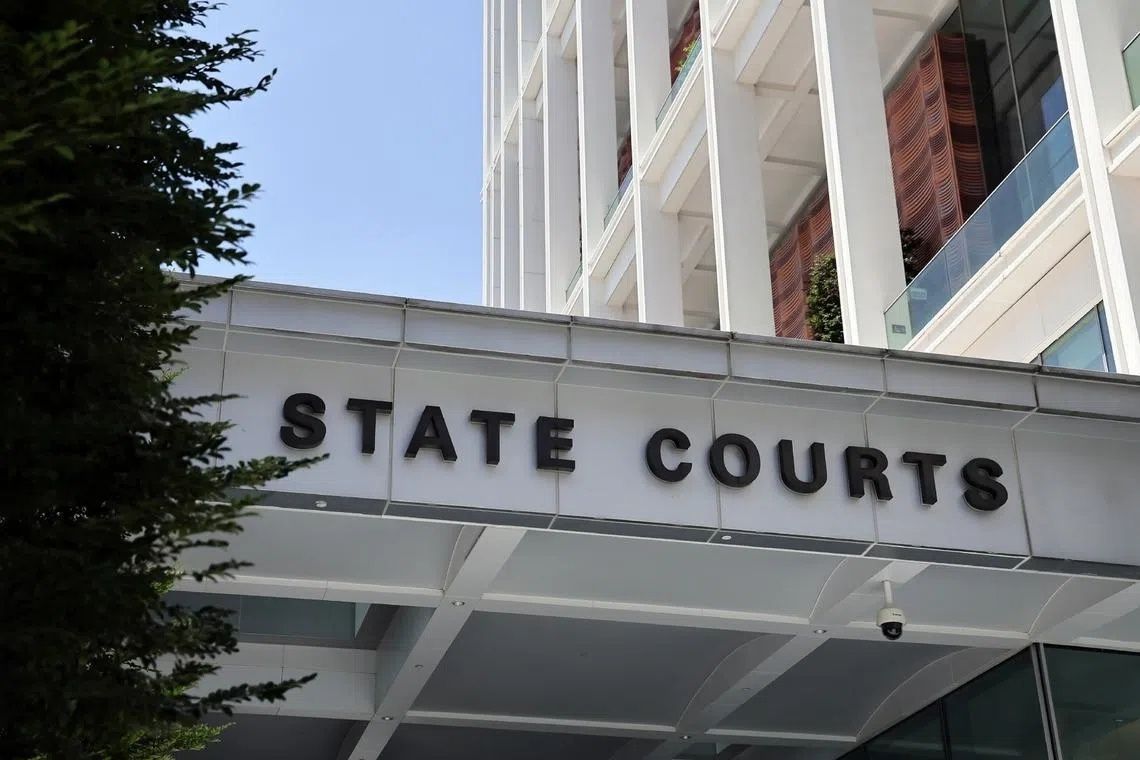
Singapore's courts processed a staggering 41 drink driving charges in a single day this week, underscoring the persistent problem of alcohol-impaired driving on the island's roads. The coordinated enforcement action brought three particularly dangerous cases to the fore: drivers who allegedly dozed off at the wheel while substantially intoxicated, leaving disabled vehicles in hazardous positions that endangered other motorists. The scale of the one-day charging operation reflects ongoing efforts by authorities to combat impaired driving through rapid prosecution and stern penalties.
Tho Yu Wei Ronald, aged 34, appeared in district court on June 25 alongside Zhong Pengzhi, 38, and Dharuman Killivalavan, 29, each facing charges for drink driving and abandoning a vehicle in a manner that caused undue inconvenience. The incidents occurred over a six-week period spanning late April through mid-June. What distinguished these three cases was not merely the presence of alcohol in their bloodstream, but the apparent loss of consciousness that led them to abandon their vehicles in traffic lanes and carpark entrances, creating hazards for subsequent drivers who encountered these obstructions.
Tho's case involved his sedan left at the entrance to a multi-storey carpark at Block 176 Hougang Street 13 shortly after 11pm on April 30. Breath analysis revealed alcohol concentrations of at least 51 micrograms per 100 millilitres, substantially exceeding Singapore's legal limit of 35 micrograms. Zhong's incident occurred in the early morning hours of May 9, when his vehicle ended up parked in the second lane of a two-lane stretch along Clementi Avenue 5 after 1:40am. His breath readings showed 48 micrograms of alcohol per 100 millilitres. The most severe reading came from Dharuman, who was operating a heavy goods vehicle along Loyang Avenue on June 15. Testing revealed alcohol levels of at least 87 micrograms per 100 millilitres—nearly two and a half times the legal threshold—when his lorry was abandoned in the extreme right lane at 7:45pm.
Dharuman, an Indian national, faced the most immediate judicial consequences of the three men. He entered a guilty plea on June 25 and received a fine of $7,100 coupled with a 36-month driving disqualification. His case illustrated the particular danger posed by intoxicated commercial drivers, who typically operate heavier vehicles capable of causing greater harm in accidents. The consequences for commercial drivers tend to be more severe given the responsibility they bear for passenger or public safety, yet Dharuman's blood alcohol reading suggested a disturbing level of impairment that somehow permitted him to be behind the wheel of a truck.
Among the broader cohort of 41 drivers charged that day, two represented cases of recidivism that troubled enforcement authorities. Cheng Woon Siong, 44, was stopped for routine police checks and registered 52 micrograms of alcohol per 100 millilitres of breath. Critically, Cheng had previously been convicted of the identical offence in December 2019, making him a repeat violator within a five-year window. The courts responded with measured severity: one month's imprisonment, a $5,500 fine, and a 60-month disqualification from driving once released from custody. The jail term sent a clear signal that repeat offenders would face custodial consequences rather than fines alone.
The second repeat offender, Koh Choon Lye, 48, was intercepted on Tyrwhitt Road on April 16 during a routine police checkpoint. His breath sample showed 51 micrograms of alcohol per 100 millilitres, placing him above the legal limit. Koh's prior conviction dated to 2018, indicating that despite previous legal sanctions, he had chosen to drive while under the influence again. The pattern of recidivism among these two drivers reflects a troubling subset of road users who either underestimate legal consequences or struggle with impulse control regarding alcohol consumption and vehicle operation.
The enforcement data provided by Singapore's Traffic Police offers sobering context for the regional picture. During 2025 alone, authorities arrested 1,716 individuals for drink driving offences—a figure that represents individual incidents that might have resulted in collateral harm to innocent parties. The same year witnessed 12 fatal accidents directly attributed to drink driving, each representing a preventable tragedy that extended far beyond the original offender to bereaved families and traumatised witnesses. These statistics underscore why Southeast Asian authorities increasingly treat drink driving not as a minor traffic violation but as a serious criminal matter.
The messaging from Singapore's Police Force has become increasingly emphatic as drink driving incidents persist. Authorities characterise driving under alcohol's influence as both dangerous and irresponsible, framing it as a choice rather than an accident or misfortune. Officials have promoted alternative transport options including taxi services and private-hire vehicle platforms—services readily available in Singapore's highly urbanised environment. The consistent theme in official communications is that consuming alcohol and subsequently operating a motor vehicle represents a conscious decision to place oneself and others at serious risk.
For Malaysian readers, the Singapore situation carries particular relevance given cross-border traffic patterns and similar urban challenges. Malaysian authorities operate under comparable legal frameworks regarding drink driving, yet enforcement intensity and penalties can vary across states. The high-volume charging approach demonstrated in Singapore, combined with steep financial penalties and driving bans, reflects a deterrence strategy based on the premise that certainty and severity of consequences can modify driver behaviour. Whether Malaysia's own enforcement mechanisms operate at equivalent intensity remains an open question, particularly given the vast geographic area and dispersed population density compared to Singapore's compact, highly monitored environment.
The cases also highlight how drink driving manifests across diverse demographic groups and times of day. The 41 drivers charged ranged in age from 25 to 68 years old, suggesting that impaired driving is not confined to young or particularly reckless demographics but represents a broader social problem. Incidents occurred during late evening hours, overnight periods, and early evening, indicating that opportunities for alcohol consumption and subsequent driving present themselves throughout the 24-hour cycle. This temporal distribution complicates enforcement and prevention efforts, as no single enforcement window can comprehensively address the phenomenon.
The three cases involving apparent sleep episodes while intoxicated deserve particular analytical attention. The fact that drivers became unconscious enough to abandon vehicles in traffic lanes suggests profound levels of impairment that should have been evident to the drivers themselves or to anyone with whom they had contact prior to driving. This raises questions about whether social accountability mechanisms—friends, family members, bar staff—are functioning adequately to prevent obviously incapacitated individuals from accessing vehicles. The progression from consuming alcohol to losing consciousness behind the wheel represents multiple decision points where intervention could theoretically occur, yet these three men apparently encountered no friction points preventing them from reaching the roadway.
Looking forward, the incident demonstrates both the continued prevalence of drink driving in a developed city-state with sophisticated enforcement infrastructure and the limitations of reactive prosecution in creating lasting behavioural change. While the 41 charges processed in a single day represent significant enforcement effort, they address only those drivers detected through checkpoints or involved in incidents. The underlying causation—why individuals choose to drive after consuming alcohol despite well-publicised risks and legal penalties—remains inadequately addressed by enforcement alone. Public health approaches focusing on alcohol consumption patterns, social norms around drinking and driving, and accessible alternative transport options may prove necessary complements to legal deterrence for sustainable reduction in incidents.

