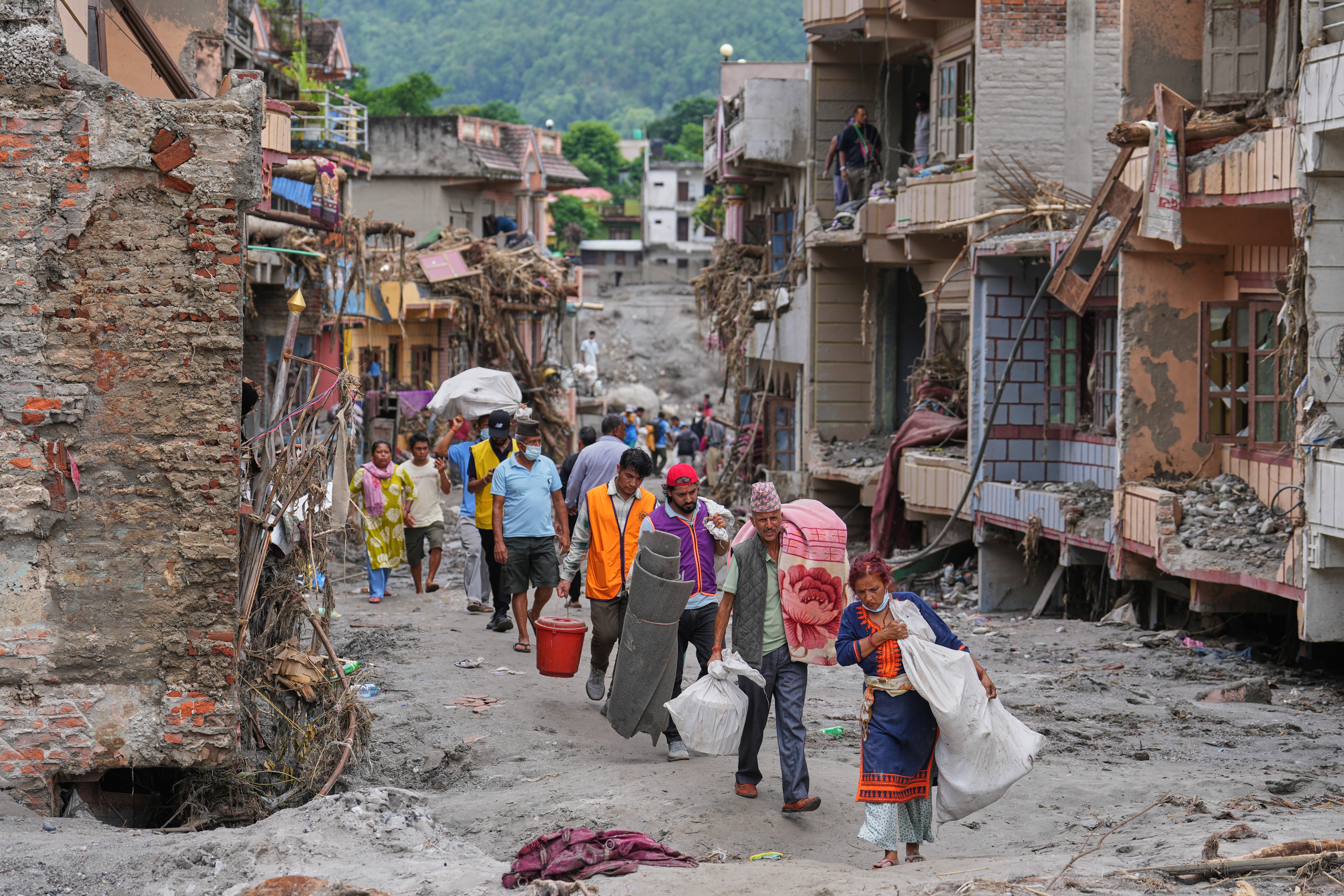
Singapore has announced a comprehensive humanitarian response to the devastating flash floods that ravaged Nepal's border region with China, committing both specialist personnel and material resources to support the country's emergency relief operations. The Foreign Ministry confirmed on Monday that the city-state would deploy trained personnel from the Singapore Police Force alongside civilian and military supplies to assist with recovery and identification efforts in the disaster zone. This commitment follows formal coordination between Singapore's Foreign Minister Dr Vivian Balakrishnan and Nepalese Foreign Minister Shisir Khanal, during which the scope of Singapore's assistance was confirmed and aligned with Kathmandu's most urgent operational needs.
The tragedy unfolding in Nepal represents one of the region's most severe natural disasters in recent years. Official accounts indicate that at least 919 people have lost their lives in the sequential flash floods and mudslides triggered by extreme weather conditions near the Nepal-China border region. The disaster, which began six days before Singapore's commitment announcement, has created an ongoing crisis of staggering proportions, with nearly 4,800 individuals categorised as missing. Particularly troubling is the composition of the missing: among them are 853 foreign nationals whose families and governments remain without clarity on their whereabouts or circumstances, adding an international dimension to an already complex humanitarian emergency.
The Singapore Police Force's Disaster Victim Identification specialists represent a critical technical contribution to Nepal's response capabilities. DVI work is among the most demanding and sensitive aspects of disaster response, requiring trained professionals to employ forensic and identification methodologies in environments where conventional record-keeping may have been destroyed. Nepal's request for SPF assistance specifically underscores the scale at which local capacity has been overwhelmed and the value that external specialist teams bring to coordinating identification efforts. These personnel will work within Nepal's broader recovery framework, collaborating with local authorities and other international teams already present in the affected areas.
Beyond personnel deployment, Singapore's material commitment encompasses both civilian supplies and resources from the Singapore Armed Forces. The nature of supplies typically deployed in such operations—including medical equipment, water purification systems, temporary shelter materials, and food provisions—addresses the immediate survival and health needs of displaced populations. SAF involvement signals Singapore's willingness to mobilise its full institutional capacity for regional humanitarian needs, a pattern consistent with how Southeast Asian nations approach major cross-border emergencies where geographic proximity and shared vulnerability underscore mutual responsibility.
Singapore's government response complements efforts from the private charitable sector, which has mobilised rapidly through the Singapore Red Cross. The Red Cross launched a public fundraising appeal specifically for Nepal relief, to which the government contributed US$100,000 (RM403,000) on Friday. As of the ministry's statement, the Singapore Red Cross had accumulated approximately S$1 million (RM3.16 million) through public donations, reflecting strong domestic engagement with Nepal's crisis. This combination of official aid and civil society mobilisation creates a multiplier effect, expanding the total assistance beyond what government channels alone could deliver.
The Foreign Ministry also highlighted that Singapore's Crisis Response Team has maintained a presence on the ground since August 27, dedicated specifically to providing consular assistance to Singaporean nationals affected by the disaster. This operational presence demonstrates how Singapore integrates diplomatic, consular, and humanitarian functions during regional emergencies. The team's on-site positioning enables real-time communication with the Nepalese government, coordination with international partners already operating in the region, and direct support to citizens navigating displacement, injury, or loss of contact with family members. Such embedded presence during emergencies serves both immediate protective functions and longer-term diplomatic relationship-building.
For Malaysia and other Southeast Asian nations observing Singapore's response, the deployment model offers instructive lessons in rapid institutional mobilisation. The coordination between multiple government agencies—foreign ministry, police, armed forces, and civil service—alongside activation of civil society channels creates redundancy and coverage that ensures assistance reaches affected populations through diverse pathways. This approach acknowledges that centralised government aid channels alone often prove insufficient in major disasters, particularly when the scale of need overwhelms local infrastructure and communication systems.
The disaster in Nepal carries broader implications for Southeast Asian disaster preparedness and regional solidarity frameworks. As climate-related extreme weather events become more frequent and intense, the Nepal flooding exemplifies how quickly natural phenomena can overwhelm national capacity, regardless of a country's development level or institutional sophistication. That Singapore, as a developed city-state, maintains specialist DVI teams for rapid deployment reflects recognition across the region that such capabilities represent public goods best maintained at a readiness that transcends immediate local need. Nepal's willingness to request such assistance and Singapore's capacity to provide it within days demonstrates functional regional cooperation in action.
The continuing commitment by Singapore's government to work collaboratively with Nepal authorities on delivering humanitarian assistance suggests this represents an opening phase of what may become extended engagement. Disaster recovery typically unfolds across months or years, extending well beyond the immediate emergency response phase. Singapore's statement of ongoing cooperation implies preparedness for sustained involvement in reconstruction, rehabilitation, and capacity-building support. For Malaysian policymakers and humanitarian professionals, Singapore's comprehensive and rapid response to a regional crisis offers a model of how national interest in regional stability can be operationalised through tangible, coordinated action during moments of acute vulnerability.

