Singapore's Internal Security Department has moved to detain three teenagers who became self-radicalised through exposure to violent extremist content online and developed plans to carry out separate attacks within the island nation. The detentions, announced on July 27, underscore a persistent challenge facing authorities across Southeast Asia: the vulnerability of young people to extremist propaganda disseminated through digital platforms and social media channels. The three cases, which are unrelated, reveal a troubling pattern of youth radicalisation that has prompted senior security officials to call for heightened public vigilance.
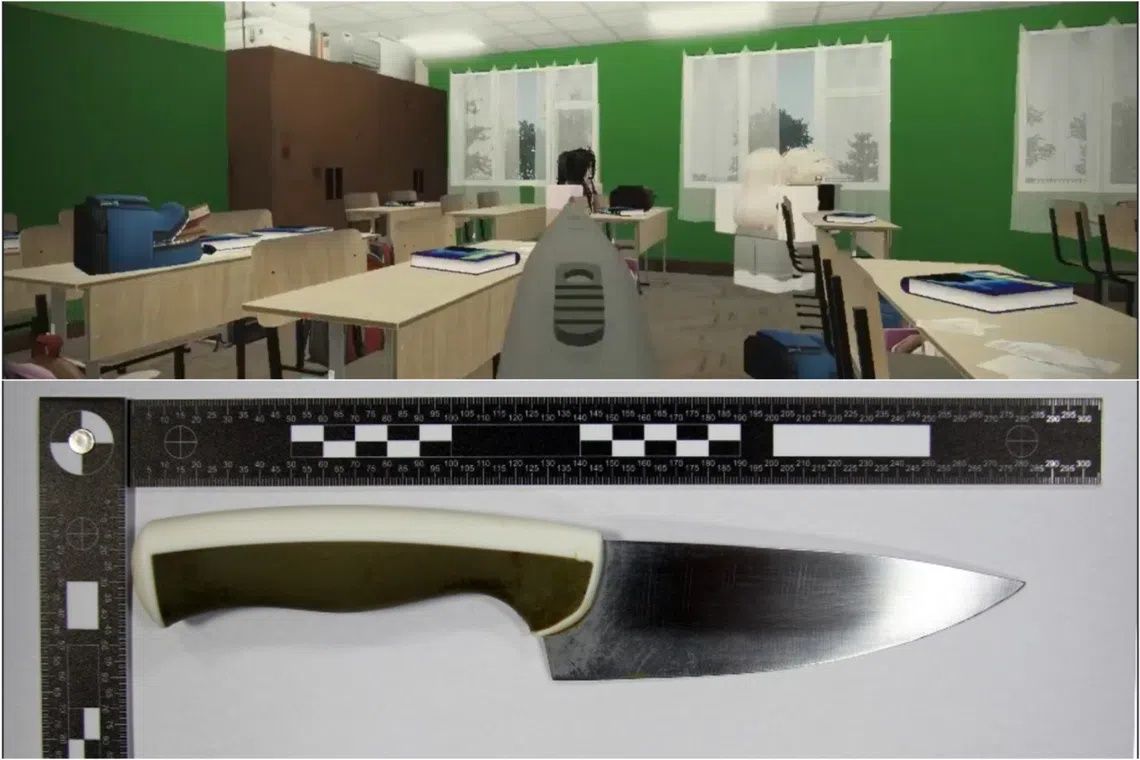
The most concerning case involves a 14-year-old Secondary 2 student who was arrested in May on the cusp of executing a planned mass stabbing at his secondary school during the June holidays. The boy had prepared extensively for the attack, drafting a comprehensive 21-page manifesto that outlined his tactical approach, specified his choice of weapons, and identified intended targets including non-Muslim teachers and students. This level of detailed planning suggests a teenager who had moved beyond mere ideological alignment toward concrete operational preparation. Senior Minister K. Shanmugam, who oversees national security and home affairs, characterised the situation with stark urgency when addressing media representatives, stating that authorities must succeed in prevention every single time, whereas a would-be attacker needs to succeed only once.
The 14-year-old's radicalisation trajectory illustrates how contemporary digital ecosystems can transform isolated grievances into violent intentions. His initial exposure to extremist content occurred on the online gaming platform Roblox in 2024, where he encountered first-person shooter games that normalised mass violence scenarios. His trajectory accelerated when he discovered social media content depicting the 2016 Pulse nightclub shooting in Orlando, Florida, carried out by Omar Mateen. Rather than viewing this attack with horror, the teenager idolised Mateen, identifying with the shooter's reported experience of bullying while simultaneously admiring the body count Mateen achieved. This parasocial connection between perpetrator and would-be copycat represents a dangerous phenomenon that security experts worldwide are grappling with as mass attack media becomes more accessible.
Personal circumstances within the teenager's school environment appear to have crystallised his violent intentions. By late 2025, compounded by what authorities describe as bullying by schoolmates and academic pressure from teachers, the boy began actively planning his attack against his school community. He deliberately selected timing around the June school holidays, calculating that fewer teachers would be present to intervene in his assault. He identified specific dates when both he and his intended targets would be at school for co-curricular activities, demonstrating tactical thinking rather than impulsive ideation. His initial preference for firearms proved impractical given Singapore's stringent gun control regulations, leading him to explore homemade explosives. When financial constraints and lack of suitable preparation space made bomb construction untenable, he settled on knives as his weapons of choice. He had already identified specific implements from his home and built confidence through repeated viewing of ISIS execution and stabbing instruction videos online.
The second detained teenager, 19-year-old tertiary student Tan Jun Jie, represents a different but equally alarming profile. Arrested in April with a detention order issued in May, Tan constructed a multi-faceted attack plan targeting Singapore Armed Forces personnel at Sembawang Air Base and LGBTQ students at his educational institution. Beyond physical violence, Tan attempted to conduct distributed denial-of-service cyberattacks against websites belonging to Muslim organisations he deemed theologically deviant. This combination of physical and cyber aggression suggests a more ideologically sophisticated operator than typical youth radicalisation cases, potentially influenced by online extremist networks that encourage diverse attack methodologies.
The third detained youth, a 15-year-old Secondary 4 student, harboured aspirations to advance ISIS's agenda through a pressure-cooker bomb attack within Singapore, which he viewed as an enemy of the militant group. Although he had not yet determined timing, location, or specific targets, he envisioned conducting his attack in an urban environment to maximise civilian casualties. His family members and friends were aware of his extremist views yet none reported him to authorities, highlighting a significant gap in community intervention mechanisms. The Internal Security Department expressed particular concern that this teenager had not yet crystallised concrete attack plans but was actively researching bomb-making methodologies online.
Across all three cases, a common thread emerged: the radicalised youths had disclosed their extremist views to family members, friends, schoolmates, and online associates rather than maintaining operational secrecy. The 14-year-old added family and friends to chat groups where he distributed ISIS propaganda material. The 19-year-old shared ISIS videos with schoolmates and friends. This openness about extremist sympathies suggests either a desire for ideological recruitment or a cry for intervention masked by extremist rhetoric—a distinction that remains difficult for parents and educators to navigate. Shanmugam appealed directly to Singapore's public, emphasising that parents and community members must exercise heightened vigilance and recognise warning signs of radicalisation among young people in their circles.
The statistical context provided by the Internal Security Department amplifies concerns about youth radicalisation trajectories in Singapore. Over the past decade, more than half of the 23 youths prosecuted under the Internal Security Act had explicitly intended to mount attacks within Singapore, and notably, the age profile of radicalised youth continues declining. This downward age trend mirrors observations in other developed nations where digital native populations engage with extremist content at younger developmental stages, when critical thinking capacities remain underdeveloped and peer influence exerts maximum psychological force. The ISD specifically flagged concern that the detained youths had identified readily available weapons, particularly bladed implements, and had successfully located online instruction for explosive device construction.
For Malaysia and other Southeast Asian nations, these Singaporean cases carry significant cautionary implications. The digital networks through which extremist content circulates operate across national boundaries, and youth vulnerable to radicalisation often share socioeconomic profiles, educational experiences, and exposure patterns across the region. Gaming platforms like Roblox, mainstream social media services, and encrypted messaging applications function as distribution channels for extremist propaganda reaching Malaysians as easily as Singaporeans. The integration of personal grievances—bullying, academic stress, family dysfunction—with accessible extremist ideologies creates a combustible psychological condition that transcends national contexts. Malaysia's approach to countering violent extremism among youth must account for these digital and psychological vectors rather than focusing exclusively on traditional ideological indoctrination pathways.
The operational sophistication demonstrated by these three teenagers, particularly their methodical research and tactical planning despite their young ages, suggests that extremist recruitment strategies have become more effective at converting ideological sympathy into actionable violence. The 14-year-old's decision-making process—cycling through multiple weapon options based on practical constraints rather than giving up entirely—demonstrates problem-solving behaviour applied to violent ends. Previous generations of radicalised youth might have abandoned attack plans upon encountering practical obstacles; these contemporary cases show persistence born from ideological conviction reinforced through online communities that celebrate and encourage violent action. Singapore's preventive detention approach, while controversial internationally, reflects official assessment that these individuals posed imminent physical danger requiring immediate incapacitation.
Moving forward, the Singapore cases illuminate critical intervention points that authorities and communities across Southeast Asia might target. Early identification of youth consuming extremist content, particularly when combined with observable vulnerability factors such as social isolation or bullying experiences, could enable preventive counselling and family engagement before ideological commitment hardens. Educational institutions require capacity-building to recognise radicalisation signals among students, balanced against privacy considerations and potential stigmatisation. Parents need accessible frameworks for understanding how contemporary digital platforms function as radicalisation vectors and what behavioural changes might signal concerning ideological shifts. Perhaps most fundamentally, these cases demonstrate that preventing youth violence requires addressing the genuine grievances—bullying, academic pressure, social exclusion—that extremist recruiters exploit, even as communities remain alert to the availability and appeal of violent ideological frameworks online.

