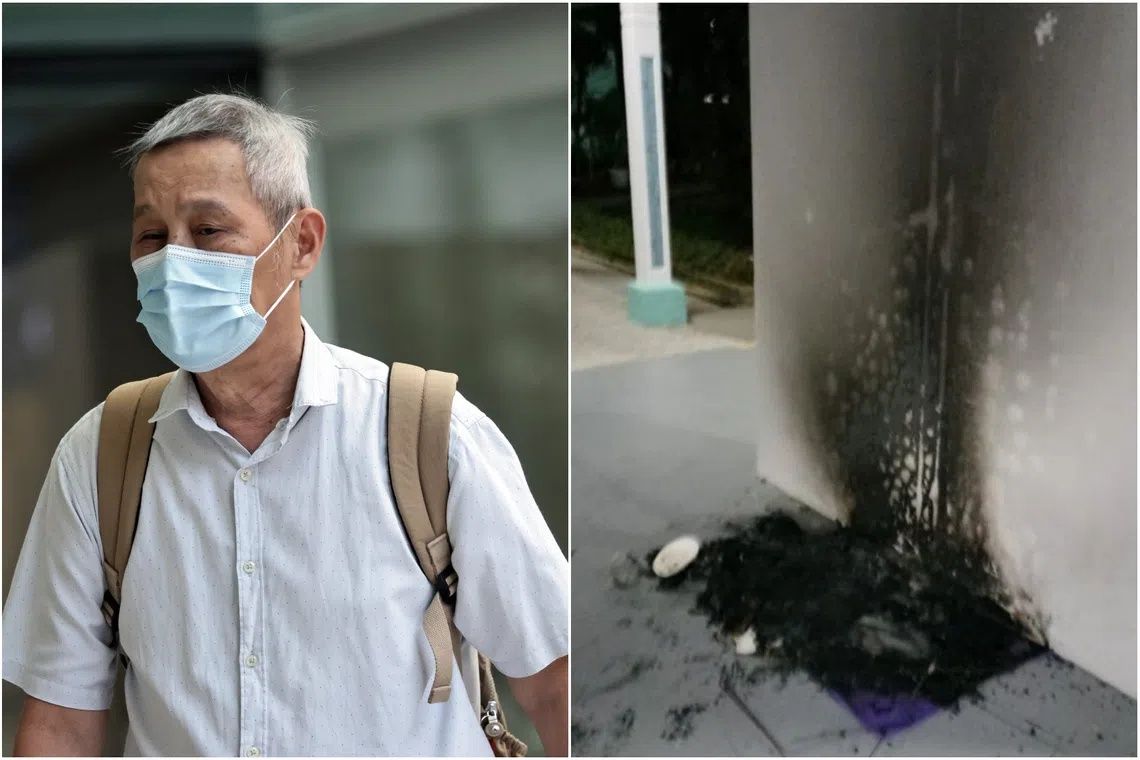
A Singapore court has sentenced a 68-year-old man to three months imprisonment for committing arson against cardboard cat shelters stationed near his home in Bukit Batok. Koh Teng Boo, a retiree residing at Bukit Batok East Avenue 4, was convicted after pleading guilty to committing mischief by fire on Tuesday, August 4. The case emerged from escalating frustration over community cat housing initiatives—structures designed to provide refuge and sustenance for stray felines—that had been installed in the void deck adjacent to his residence.
The conflict began in September 2025 when Koh first observed the appearance of cardboard cat houses positioned around a pavilion and void deck area. According to Deputy Public Prosecutor Stephen Yeo, these structures served a welfare purpose, stocked with food and water to support the neighbourhood's stray cat population. However, Koh's perspective diverged sharply from the intentions of those who established the shelters. He became preoccupied with secondary consequences of the initiative, claiming that the cat houses attracted birds and created conditions favourable to pest infestations. These concerns prompted him to lodge a formal complaint with his Member of Parliament, seeking intervention to have the structures removed.
When no visible remedial action materialised following his parliamentary appeal, Koh took matters into his own hands. In October 2025, he removed three cat houses from their location and deposited them into an incense burner bin, subsequently igniting them. The arson destroyed the cardboard structures entirely, but his actions failed to deter replacement installations. Within two days, additional cat houses had been erected around his block, intensifying his frustration and sense of powerlessness. Rather than escalating his complaints through formal channels, Koh's patience deteriorated markedly.
On November 17, Koh returned to his MP's office to reiterate his grievances, maintaining that his objections stemmed from hygienic concerns rather than antipathy toward cats themselves. He highlighted that residents were littering within the cat houses, exacerbating what he viewed as an unsanitary situation. The MP's apparent inaction—or inability to remove the shelters—appeared to convince Koh that peaceful advocacy would prove futile. This assessment set the stage for escalating criminal conduct that would ultimately result in his conviction.
The second and decisive phase of Koh's destructive campaign unfolded over consecutive nights. On November 19 at approximately 1.30am, while returning home after consuming alcohol, Koh used a lighter to ignite one of the cat houses. He departed the scene without ensuring the fire was properly extinguished, leaving the blaze unattended and creating a serious hazard in a residential block where sleeping occupants could have been endangered. Remarkably, investigators could not definitively establish when or how this particular fire was eventually brought under control—a concerning gap that underscores the danger posed by his actions.
Undeterred by the previous incident, Koh repeated his offence the following day, setting another cat house ablaze. This time, two passers-by observed the fire and intervened to extinguish it before it could spread, likely preventing more extensive damage and potential harm to the block's residents. Koh's arrest followed shortly thereafter, ending his campaign against the cat shelters. His actions, however brief their duration, resulted in tangible harm requiring substantial remediation.
The Jurong-Clementi-Bukit Batok Town Council incurred S$913 in repair costs to restore the flooring and walls damaged by the fires. Significantly, Koh has made complete financial restitution to the town council, demonstrating at least partial recognition of his wrongdoing and willingness to compensate for the material consequences. Nevertheless, the law provided no leniency for this remediation; the three-month custodial sentence proceeded as determined by the court.
The sentencing carries broader implications for understanding community tensions in Singapore's high-density neighbourhoods. Animal welfare initiatives, while genuinely intended to address the needs of vulnerable animals, can generate resistance among residents who perceive them through different lenses—whether environmental concerns, hygiene worries, or simple neighbourhood aesthetics. Koh's case illustrates what occurs when such disputes escalate without effective mediation mechanisms or when residents feel their concerns are dismissed by authorities and implementing organisations.
Under Singapore's penal framework, those convicted of committing mischief by fire with intent to cause property damage face sentences up to seven years imprisonment and fines. By this standard, Koh's three-month term represents substantial leniency, possibly reflecting his advanced age, the relatively limited material damage, and his guilty plea. The case nonetheless establishes clear boundaries: destruction of community infrastructure, regardless of one's objections to its purpose, will be prosecuted severely.
For Malaysian observers, the incident offers pertinent reflection on how rapidly neighbourhood disputes can escalate into serious criminal conduct. As urbanisation intensifies across Southeast Asia and diverse community initiatives proliferate in shared residential spaces, mechanisms for mediating conflicting perspectives become increasingly vital. Whether through community councils, formal arbitration, or enhanced communication channels between residents and implementing agencies, jurisdictions must develop pathways that allow grievances to be heard and addressed before frustration metastasises into destructive illegality.

