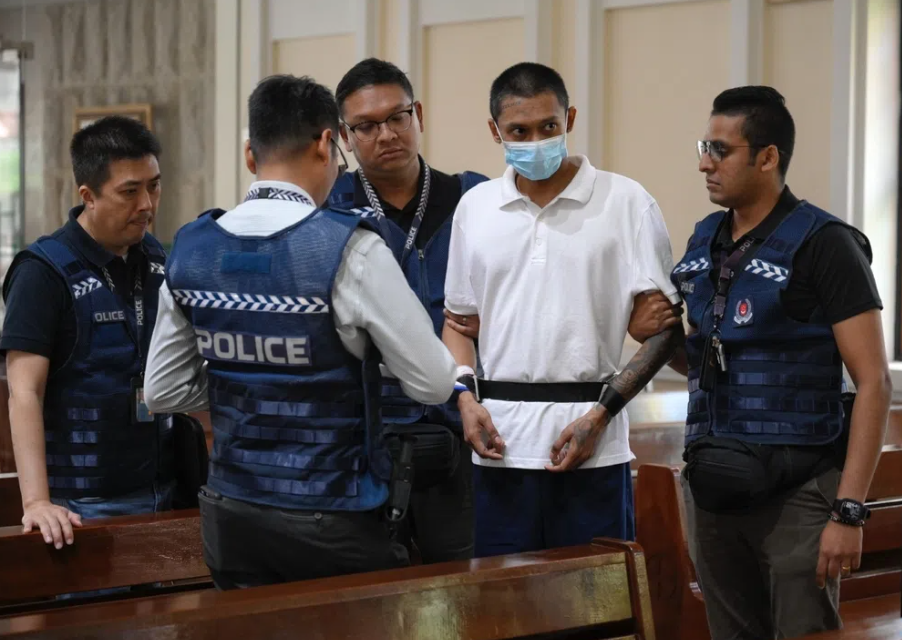
A 38-year-old Singapore man has received a jail sentence of four years and three months along with nine strokes of the cane for attacking a Catholic priest during a crowded religious service last year. Basnayake Keith Spencer pleaded guilty on Friday to charges of voluntarily causing grievous hurt with a dangerous weapon and illegal weapon possession, nearly two years after the November 2024 incident at St Joseph's Church that shocked Singapore's faith community.
The assault unfolded during an evening mass on November 9, 2024, when approximately 900 worshippers gathered for what was designated as a children's service. Basnayake arrived at the church around 5:30 pm and initially sat alone in a pew in the middle of the hall. Prior to the service reaching communion, he consumed five pills in total—two to maintain focus and three more to calm himself once he realised the mass was specifically for children, according to court testimony.
During the communion segment at approximately 6:15 pm, Reverend Christopher Lee, 57, stood alongside another priest to administer sacraments to the congregation. Basnayake had queued behind one priest but deliberately repositioned himself in Father Lee's line. When his turn arrived, he abruptly withdrew a foldable knife measuring 23 centimetres in overall length with a 10-centimetre blade and thrust it directly into the priest's mouth with violent force.
The severity of the injury was immediately apparent. Father Lee recoiled, blood streaming from the wound, but acted with remarkable presence of mind by grabbing Basnayake's rear jeans pocket to prevent further attacks on other parishioners. Quick-thinking members of the congregation, including an off-duty police officer present at the service, physically restrained Basnayake and alerted authorities. He was apprehended at the scene while Father Lee was rushed to hospital with significant facial trauma.
Medical assessments revealed extensive injuries inflicted by the blade. The priest sustained an eight-centimetre laceration across his tongue, a three-centimetre cut on his upper left lip, and a four-centimetre wound at the corner of his mouth. Hospitalisation lasted six days, after which Father Lee required 40 days of medical leave and months of subsequent speech therapy to address the functional consequences of his injuries. The psychological impact of the violent incident within a sacred space during worship cannot be understated for both the victim and the traumatised congregation.
Police discovered additional weapons in Basnayake's possession following arrest, including a 14.5-centimetre penknife, a flip knife, and a fishing gaff—a pole featuring a sharp hook. This arsenal suggested premeditation or at minimum an intention to inflict serious harm. The prosecution's case emphasized that despite Basnayake being intoxicated and in a drug-induced psychotic state at the time of the assault, he retained sufficient awareness to deliberately select and execute his violent actions.
Barbasnayake's criminal history provided crucial context for the sentencing deliberations. In 2019, he had been convicted of voluntarily causing hurt with a dangerous weapon after stabbing his then-girlfriend in the buttocks with a kitchen knife while under methamphetamine influence, receiving a one-year jail sentence. This prior conviction demonstrated a troubling pattern of knife violence and substance-related aggression, factors that weighed significantly in judicial calculations regarding risk assessment and proportionate punishment.
The prosecution argued for a custodial sentence between four years three months and four years eleven months, along with nine cane strokes, citing both the severity of the physical harm and the dangerous nature of the offender. Basnayake's legal representative from the Public Defender's Office, Ashwin Ganapathy, sought leniency by requesting a term below four years, emphasising his client's remorse, shame, and regret while arguing for proportionality in sentencing. However, the court found the aggravating circumstances outweighed mitigation arguments.
District Judge Shaiffudin Saruwan delivered the sentence on Friday, declaring that the unprovoked assault caused severe physical trauma to a defenceless individual and that punishment must fully reflect the gravity of the offences. The judge specifically highlighted that the timing of the attack—precisely during the sacred moment of communion—created genuine potential for mass panic and additional injuries among the crowded congregation of worshippers, many of them children. This observation underscores how the violence transcended individual harm to threaten broader public safety within a sanctuary space.
Barbasnayake had remained in remand custody for more than nineteen months since December 2024, when bail was denied after prosecutors argued he represented a highly dangerous individual with substantial reoffending risk. The lengthy remand period reflected the seriousness with which authorities treated the incident. Under Singapore law, the offence of voluntarily causing grievous hurt with a dangerous weapon carries potential sentences ranging from life imprisonment to fifteen years in custody, with provisions for fines and caning, making Basnayake's sentence relatively moderate within the statutory range available to the courts.
This incident has resonated across Singapore's religious communities and neighbouring Southeast Asian nations where Catholic populations worship, serving as a sobering reminder of security vulnerabilities within places of worship. The attack occurred despite what appeared to be a normal, crowded religious gathering and raises questions about protective measures and threat identification in faith settings across the region. For Catholic institutions in Malaysia and Singapore, where interfaith harmony remains a cornerstone of social policy, such violent incidents challenge assumptions about safety within religious spaces and have prompted broader community conversations about security protocols.

