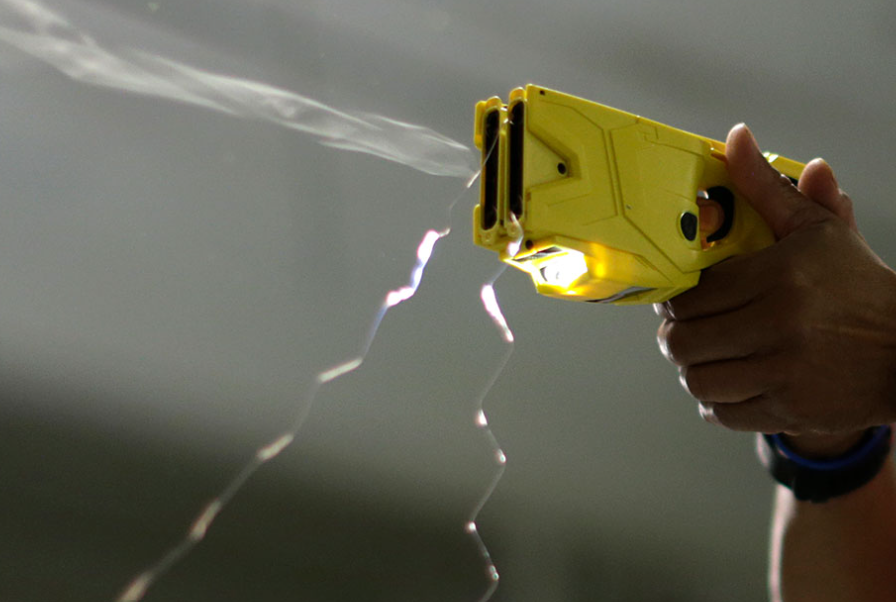
A volatile incident unfolded in Singapore's Bedok North neighbourhood on July 5 when police responded to reports of a man brandishing a saw near a residential Housing Board block. The 55-year-old suspect was eventually subdued with a Taser after he persistently defied officers' attempts to defuse the situation through verbal commands and warnings.
Authorities received an emergency call requesting police assistance at Block 539 Bedok North Street 3 at approximately 3.25pm that afternoon. Officers arrived to find the man in an agitated state, swinging the saw in what police described as a threatening manner. The immediate risk posed by someone wielding a cutting tool in a densely populated residential area—where the Housing Board block would typically contain hundreds of families and residents—necessitated swift intervention to prevent potential harm to bystanders.
The suspect's behaviour escalated rather than improved as police attempted to resolve the matter through conventional de-escalation techniques. Officers issued repeated verbal warnings instructing him to release the saw, but the man refused to comply. His conduct grew increasingly erratic, with officers reporting that he began shouting incoherently—a pattern consistent with individuals experiencing acute psychological distress or the effects of intoxicating substances. This combination of weapon possession, non-compliance, and apparent mental agitation created a deteriorating standoff that threatened public safety.
Given the immediate threat posed by a man refusing to relinquish a saw while in an unstable mental state, police determined that deployment of a Taser was the proportionate response to contain and de-escalate the incident. The electroshock weapon allowed officers to incapacitate the suspect without requiring physical confrontation that could have resulted in more serious injury to either the man or responding officers. The decision to use the Taser appears to have been effective; the man was brought under control and remained conscious throughout the incident.
Following his subdual, the suspect was transported to Changi General Hospital for medical evaluation. Police subsequently charged him with multiple offences reflecting the seriousness of his behaviour: public nuisance for creating a disturbance in a residential area, possession of an offensive weapon in a public place for the illegal saw, and suspected consumption of a controlled drug based on observations during arrest. Notably, no other individuals were reported injured during the entire incident, suggesting that police intervention successfully prevented escalation to a more dangerous scenario.
The suspected drug-related offence identified during arrest has been referred to Singapore's Central Narcotics Bureau for further investigation. This development raises important questions about the intersection between substance use and public safety incidents. The man's incoherent shouting, refusal to comply with reasonable police instructions, and aggressive behaviour with the saw may indicate either drug intoxication, psychological crisis, or a combination of both factors. Such incidents highlight the ongoing challenge facing law enforcement agencies across Southeast Asia in responding appropriately to individuals experiencing mental health crises or substance-related emergencies.
Singapore's approach to this incident reflects broader regional trends in police responses to armed individuals refusing compliance. The use of non-lethal force options such as Tasers represents a middle ground between purely verbal de-escalation and more dangerous physical restraint, particularly when dealing with armed subjects. However, the incident also underscores the need for specialised training and mental health resources to manage situations where weapons possession intersects with apparent psychological distress or substance use.
For Malaysian readers and observers across Southeast Asia, this incident offers practical insights into contemporary policing challenges. The Bedok North case demonstrates that public safety crises involving armed individuals can escalate rapidly in residential neighbourhoods, necessitating quick decision-making by responding officers. The integration of non-lethal options like Tasers into police arsenals has become increasingly common across developed Asia-Pacific jurisdictions, though debate continues regarding their appropriate use and potential for misuse.
The referral to the Central Narcotics Bureau indicates Singapore's systematic approach to investigating potential drug connections in public disturbance cases. This institutional separation of drug enforcement from general policing allows specialists to pursue substance-related investigations independently. For Malaysian law enforcement and other regional police services, such structured approaches to incident investigation and follow-up can provide models for improving investigative rigour and accountability.
Still unfolding are the detailed investigations into how the man obtained the saw and whether he posed any prior threat to police knowledge. The circumstances that led to him being in an agitated state near a densely populated residential block remain under examination. Understanding these background factors—whether they involve mental health deterioration, substance misuse, personal crisis, or other triggers—will be important for determining appropriate charges and whether preventative interventions might have been possible.
This incident ultimately illustrates the complex reality of modern policing in developed Asian cities. Officers must balance immediate public safety imperatives with proportionate use of force, mental health awareness, and investigative diligence. As Singapore and other Southeast Asian nations continue refining their police capabilities and training protocols, incidents like the Bedok North case provide evidence for evaluating whether current systems and procedures adequately protect both public safety and individual rights.

