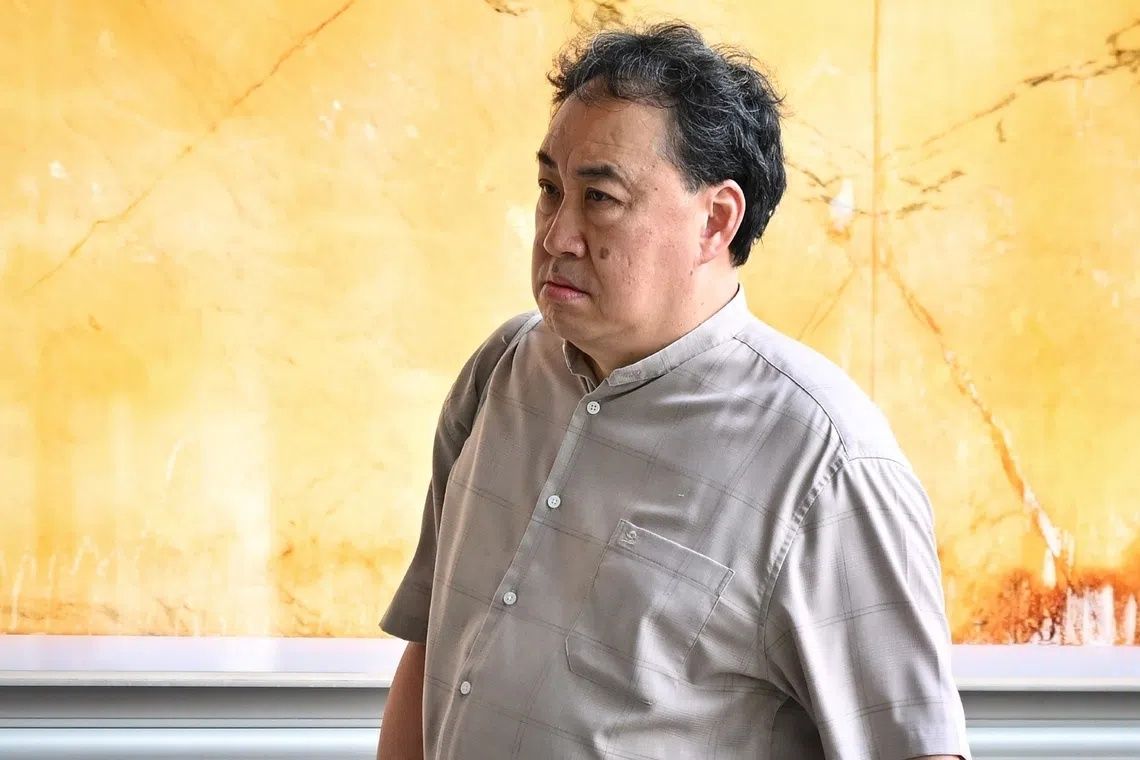
Lawyer and opposition politician Lim Tean has been apprehended by the Royal Malaysia Police in Johor Bahru following the issuance of a court warrant in Singapore. The arrest on August 6 came after Lim failed to appear at the State Courts three days earlier to commence his custodial sentence, prompting swift cooperation between law enforcement agencies across the causeway to enforce the Singapore court's orders.
Lim's legal troubles stem from his practice of law whilst lacking a valid practising certificate, a serious breach of professional standards that triggered both criminal prosecution and disciplinary proceedings. He was initially convicted in July 2024 on three charges under the Legal Profession Act and received a sentence of six weeks' imprisonment alongside a $1,000 fine from a district judge in February 2025. His failure to comply with this sentence by the August 3 deadline triggered the arrest warrant that saw him detained in Malaysian territory.
The Singapore Police Force confirmed it was coordinating with counterparts across the border to facilitate Lim's return to Singapore, underscoring the bilateral arrangements in place for handling cross-border legal matters. A spokesperson stated that the SPF was actively engaged with the Royal Malaysia Police to secure his custody and transfer back to Singapore jurisdiction, where he remains subject to outstanding court orders.
The underlying legal violations occurred between April and June 2021, when Lim attended court hearings and filed documents on 32 separate occasions whilst his practising certificate was not in force. His failure to renew the certificate by the March 31, 2021 deadline stemmed from difficulties in obtaining professional indemnity insurance, a mandatory prerequisite for certificate renewal in Singapore's tightly regulated legal profession. This procedural lapse initiated a cascade of legal consequences that have unfolded over several years.
Lim contested his conviction by appealing to the High Court, but prosecutors simultaneously pursued a stricter penalty, arguing for between five and eight months' imprisonment rather than the original six weeks. In February 2026, the High Court judge sided with the prosecution, substantially increasing the sentence to three months and one week—more than five times the original term. This enhancement reflected judicial concern about the seriousness of practising without proper credentials and the protection of Singapore's legal system's integrity.
Further disciplinary action compounded his difficulties when Lim appeared in April 2026 in a separate case involving his handling of a $30,000 cheque designated for a client. The Court of Three Judges imposed a $30,000 fine after considering his apparent indifference to professional obligations regarding client money management. Notably, the Law Society of Singapore had advocated for his complete removal from the legal profession roll, but the court opted for financial penalties rather than permanent disqualification, though the substantial fine and enhanced prison sentence represented considerable censure.
The court's reasoning in imposing the heavier fine explicitly acknowledged Lim's status as a senior practitioner boasting more than 25 years of professional experience at the time of the violations. Rather than mitigating his circumstances, his seniority was treated as an aggravating factor, suggesting that more experienced lawyers face higher expectations regarding compliance with professional standards and fiduciary duties. This judicial approach reflects Singapore's framework for maintaining professional accountability proportionate to a lawyer's standing within the profession.
Lim's political profile adds a dimension of public interest to what might otherwise remain a routine disciplinary matter. He serves as secretary-general of the People's Alliance for Reform, a broader coalition for political change, and founded the opposition party Peoples Voice. His high visibility in Singapore's civil society and political spheres means developments in his legal cases receive considerable media attention and form part of broader discussions about judicial independence and political accountability in the city-state.
The arrest in Malaysia raises questions about how opposition figures navigate legal systems during periods of vulnerability. Lim's decision to flee Singapore rather than surrender at the State Courts in early August, though ultimately unsuccessful, highlights the pressures facing politically active individuals facing custodial sentences. The swift cooperation between Singapore and Malaysian authorities demonstrates the practical limitations of seeking refuge in neighbouring jurisdictions, particularly when formal legal instruments such as arrest warrants are in place.
For Malaysian readers, the case illustrates how commonwealth legal systems maintain mutual enforcement mechanisms and cross-border cooperation despite differing political contexts. The incident also underscores Singapore's rigorous approach to legal profession regulation and the consequences individuals face when flouting professional obligations, standards that differ somewhat from Malaysia's own approach but reflect the broader regional principle that professional credentials carry serious legal implications.
The timing of events—with the High Court's sentence enhancement occurring in February 2026 and Lim's disciplinary fine imposed in April 2026—created mounting pressure on the opposition figure. His apparent non-compliance by the August 3 surrender deadline suggests either inability to accept the prison sentence or a miscalculation regarding his ability to remain outside Singapore's jurisdiction. The arrest outcome indicates that modern law enforcement cooperation mechanisms render such attempts largely futile, particularly involving territorial neighbours with established administrative protocols.

