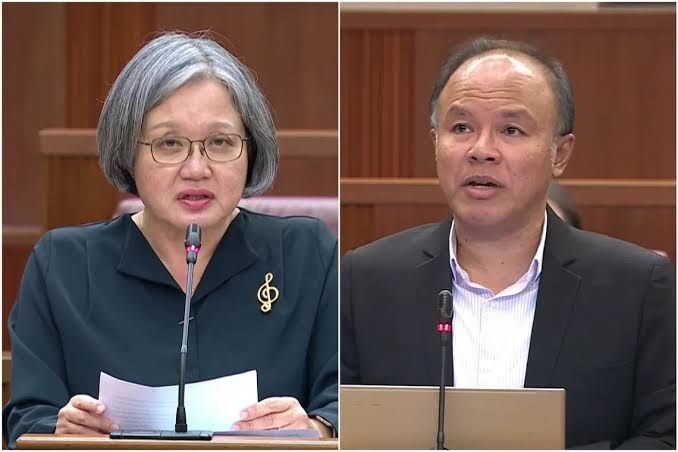
Singapore Parliament has formally concluded its pursuit of penalties against Workers' Party leaders Sylvia Lim and Faisal Manap for providing false statements to a parliamentary committee, with Leader of the House Indranee Rajah announcing on July 7 that statutory time constraints now prevent further disciplinary action. The decision effectively ends a multi-year investigation that stemmed from the 2021 case involving former Sengkang GRC MP Raeesah Khan, who fabricated an anecdote about police conduct during a parliamentary speech—an incident that triggered a broader scandal engulfing senior party officials.
The legal framework preventing action reflects the Parliament (Privileges, Immunities and Powers) Act (PPIPA), which imposes strict temporal boundaries on Parliament's authority to punish members for breaches of parliamentary conduct. Under Section 22 of the legislation, Parliament can only impose penalties for offences committed during the immediately preceding session or the final session of the previous parliamentary term. Since the falsehoods occurred during the first session of the 14th Parliament, and the 15th Parliament commenced following the 2025 general election after the 14th Parliament was dissolved, the current legislative body lacks jurisdiction to proceed with disciplinary measures against Lim and Faisal, despite confirmation of their misconduct through subsequent court proceedings.
The underlying controversy originated when Khan, then serving as Sengkang GRC MP, delivered a fabricated narrative in Parliament concerning her purported interaction with police. Following investigation by Parliament's Committee of Privileges, it emerged that three senior Workers' Party figures had misrepresented facts to the committee during its inquiry. Party leader Pritam Singh was found to have instructed Khan to "take her lie to the grave" during an August 8, 2021 meeting, while Lim and Faisal, both MPs for Aljunied GRC at the time, falsely denied that this conversation had taken place when questioned by the committee. Singh's conduct was deemed substantially more culpable, leading Parliament to refer him to public prosecutors for independent criminal investigation and prosecution.
Indranee's statement underscores Parliament's deliberate decision to defer action against Lim and Faisal pending the outcome of Singh's criminal case, a procedural approach designed to ensure fairness to the two subordinate figures. Singh was convicted by the District Court in February 2025 for lying to Parliament, subsequently appealed, and saw his conviction upheld by the High Court in December 2025. This judicial confirmation of the Committee of Privileges' findings established the factual foundation for misconduct by all three leaders, yet the passage of time through parliamentary cycles has rendered Parliament's enforcement mechanisms inaccessible for the two junior figures.
The divergent treatment of the three party officials reflected assessments of individual culpability within the misconduct hierarchy. While Singh faced the most severe allegations—actively orchestrating the cover-up—Lim and Faisal were characterized as playing "subsidiary" roles and as having demonstrated limited cooperation with investigators, albeit somewhat helpful within narrow parameters. Parliament's initial forbearance toward the junior leaders, coupled with the procedural delay while Singh's criminal case wound through the courts, inadvertently created the temporal loophole now preventing their discipline. Indranee acknowledged that under ordinary circumstances, such conduct would trigger immediate parliamentary process under the PPIPA, with most violations addressed within a single session.
Parliament retains residual options for expressing institutional disapproval despite the inability to impose formal penalties. The House could pass a motion of regret directed at Lim and Faisal's conduct, a symbolic gesture reflecting parliamentary censure. However, Indranee noted that such action becomes redundant given Parliament's January declaration that Singh was unsuitable to serve as Leader of the Opposition—a motion that fundamentally signalled the House's unequivocal repudiation of lying to Parliament and its committees. This earlier resolution effectively demonstrated Parliament's institutional stance on the gravity of such misconduct without specifically targeting the subordinate figures.
The Workers' Party has largely moved beyond the controversy through its internal political processes. At the party's June 28 elections and general meeting, members voted to retain Pritam Singh as party leader despite his conviction, signalling grassroots acceptance of his continued leadership despite the legal proceedings and parliamentary findings. This internal resolution preceded Parliament's formal closure of the matter, suggesting the party had already processed and absorbed the scandal within its organizational structures. For Malaysian observers of Singapore politics, the episode demonstrates how parliamentary procedure and statutory limitation periods can constrain institutional accountability mechanisms, even when misconduct is established and acknowledged.
The expiration of Parliament's enforcement authority raises important questions about the adequacy of statutory time limits in parliamentary privilege frameworks. Indranee conceded that if circumstances had differed—specifically if Parliament had acted more expeditiously prior to the dissolution of the 14th Parliament—different outcomes might have followed. The gap between initial investigation and ultimate court confirmation, spanning several years and crossing parliamentary cycles, created unintended jurisdictional voids. For Commonwealth parliaments and legislatures across Southeast Asia, including Malaysia's own Parliament, this case illustrates potential vulnerabilities in privileges legislation where temporal constraints may prevent accountability despite factual confirmation of wrongdoing.
The formal conclusion of proceedings against Lim and Faisal does not erase the substantive findings of misconduct or the High Court's confirmation of Singh's conviction for lying to Parliament. The judicial validation of the Committee of Privileges' core determinations remains part of the permanent record, irrespective of Parliament's inability to impose additional sanctions. For the Workers' Party, the resolution removes ongoing legal uncertainty surrounding the two officials, though both remain politically marked by their association with a scandal that damaged party credibility and prompted widespread public criticism. Lim's measured response during Parliament, neither objecting to Indranee's statement nor seeking additional vindication, reflected apparent acceptance of the procedural closure.
This episode carries implications extending beyond Singapore's immediate political context. The Workers' Party's experience with parliamentary accountability mechanisms, combined with the operation of statutory time limits, offers cautionary lessons regarding the design of privileges legislation in Westminster-influenced systems. Malaysia's Parliament, operating within comparable legal frameworks, faces similar constraints and procedures governing member discipline and misconduct investigations. The case demonstrates how procedural regularity and statutory compliance, while essential to the rule of law, can sometimes prevent the application of remedies that substantive justice might otherwise support, creating tensions between procedural legitimacy and accountability outcomes that parliamentary reformers across the region may wish to consider.

